
Air Sealing Attic: Spot Sealing vs Unvented Attics in Bryan–College Station
In Bryan–College Station, many homes struggle with uneven temperatures, elevated energy bills, and moisture-related concerns that trace back to one overlooked issue: air leakage at the attic level. While insulation often gets the attention, insulation alone does not control airflow. Without proper air sealing attic assemblies, conditioned air escapes, humid air enters, and mechanical systems work harder than they should.
For homeowners researching attic air sealing, the conversation often centers on two approaches: targeted spot sealing or converting to an unvented attic assembly. Both strategies can be effective when applied appropriately, but they solve different problems and are not interchangeable solutions.
Understanding how air moves through a home and how climate influences those decisions is essential to choosing the right approach.
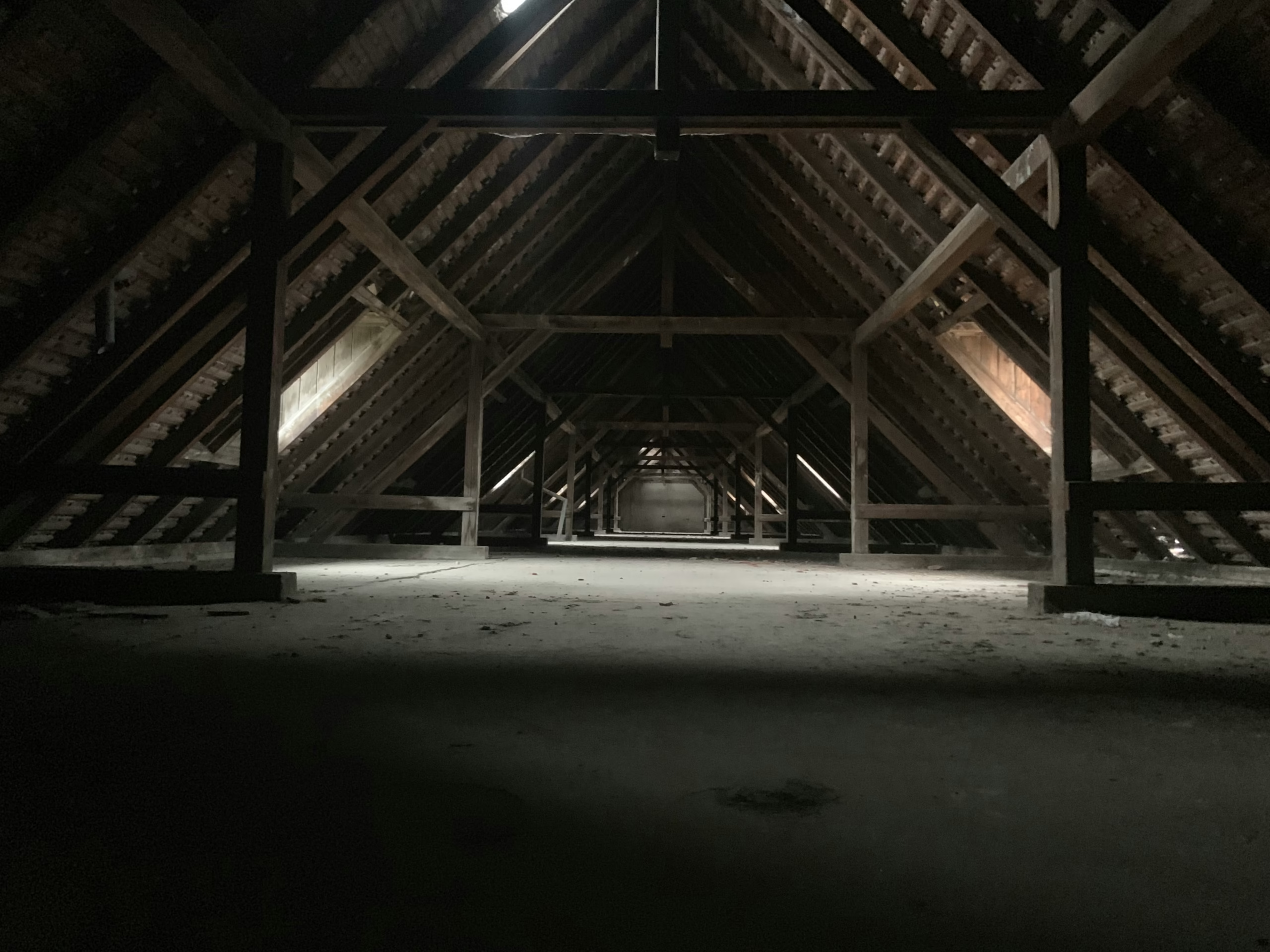
Why Air Sealing the Attic Matters in Hot, Humid Climates
In hot, humid regions like Bryan–College Station, air leakage is not just an efficiency concern. It is also a pressure and moisture issue tied directly to how homes perform over time.
Air moves through buildings because of pressure differences created by wind, mechanical systems, and temperature gradients. In cooling-dominated climates, conditioned air frequently escapes through ceiling penetrations and attic bypasses while hot, humid outdoor air is pulled into the home to replace it. This movement is strongly influenced by the stack effect, where warmer air naturally rises and escapes at higher points in the structure while replacement air enters through lower openings. In Bryan–College Station, that replacement air is often hot and humid, increasing indoor moisture levels and placing additional demand on cooling systems.
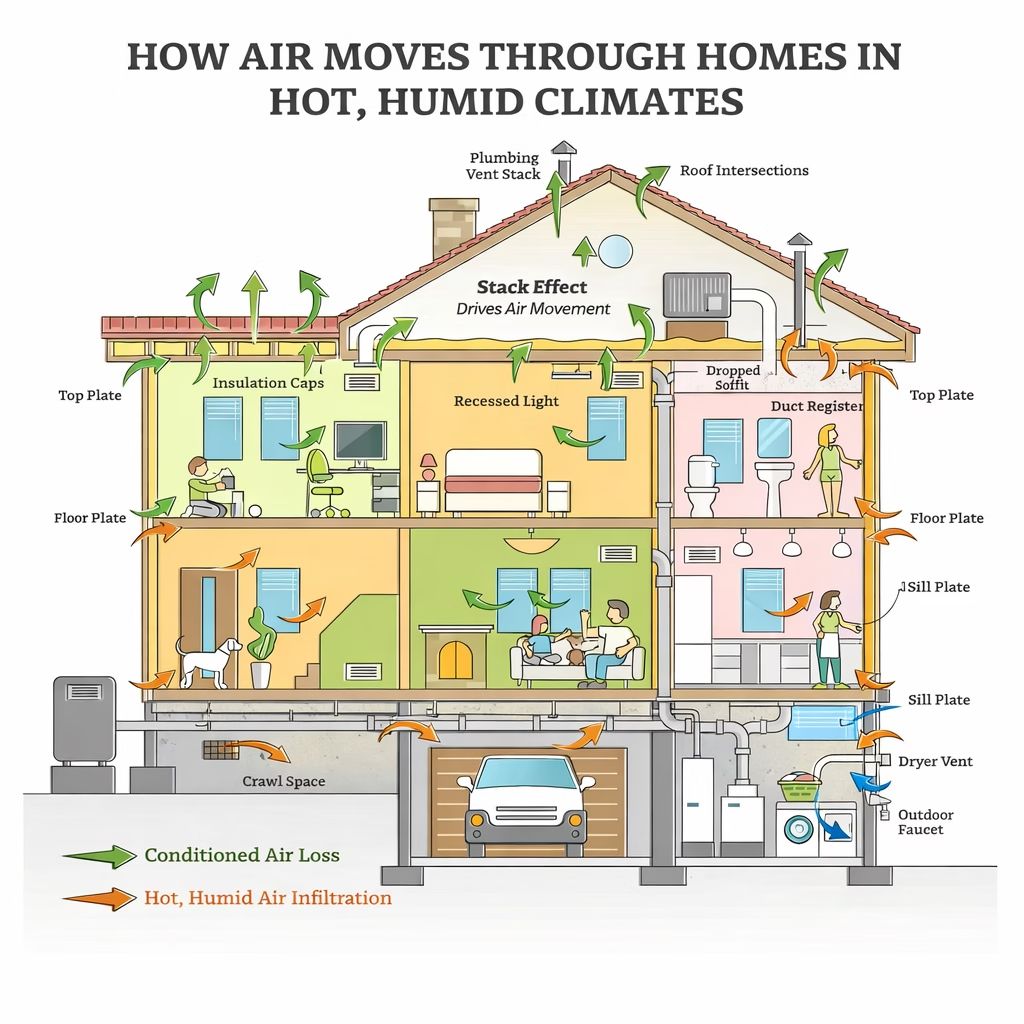
When attic assemblies are not properly sealed at the ceiling plane, several performance issues often follow:
• conditioned air escapes into the attic
• humid air enters through lower openings
• cooling systems run longer to maintain comfort
• moisture risks increase around ducts and framing
Air sealing the attic establishes a continuous pressure boundary that limits unintended airflow and allows insulation and mechanical systems to function as intended.
Where Air Leaks Typically Occur in Texas Homes
Most homes have predictable leakage points that become clear during attic air sealing evaluations. These gaps are rarely dramatic individually, but together they create significant airflow pathways.
Common leakage areas include:
• top plates along interior partition walls
• plumbing and electrical penetrations
• recessed lighting housings
• attic access hatches
• duct boots and return connections
Effectively air sealing the attic focuses on identifying and closing these small but numerous openings to reduce uncontrolled air movement across the ceiling plane.
Spot Sealing: When Targeted Air Sealing Works Best
Spot sealing refers to sealing individual leakage points while maintaining a traditional vented attic design. In many homes, this approach provides measurable improvements in comfort and efficiency without major structural changes.
Targeted attic air sealing is often appropriate when:
• ductwork is largely within conditioned space
• ventilation systems are functioning properly
• leakage is concentrated at identifiable penetrations
• broader retrofits are unnecessary
However, spot sealing has limits. When duct systems are located in the attic or leakage pathways are extensive, targeted sealing alone may not fully resolve comfort or humidity concerns.
Unvented Attics: When a Whole-System Approach Makes More Sense
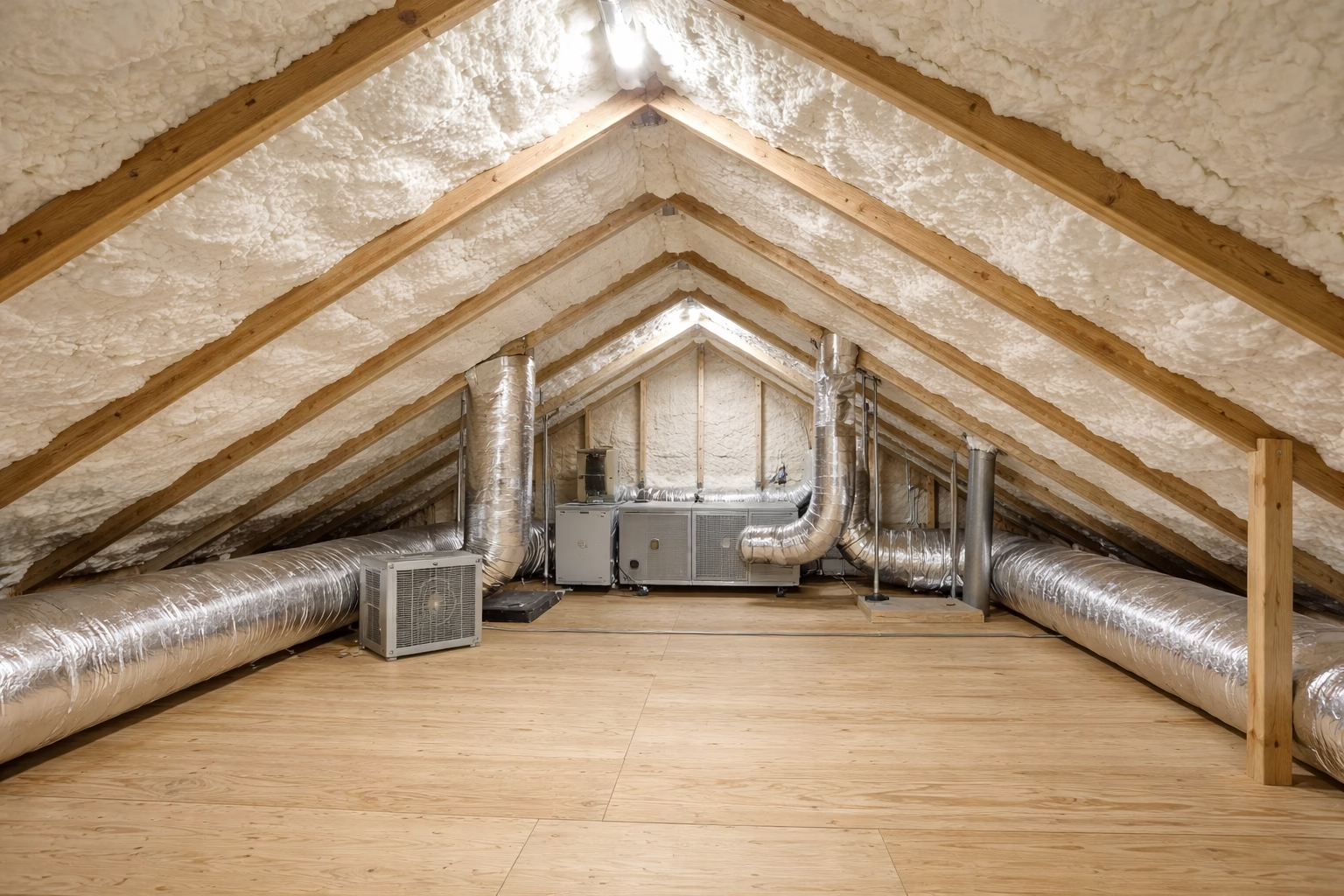
An unvented attic moves the air and thermal boundary from the ceiling plane to the roofline, bringing the attic into the conditioned envelope. Instead of ventilating with outside air, the attic becomes part of the interior environment.
This approach often makes sense when:
• HVAC equipment and ducts are located in the attic
• homes experience persistent comfort imbalances
• moisture issues relate to duct condensation
• long-term energy performance is a priority
Unvented assemblies can significantly improve performance outcomes, but they require careful design, material selection, and execution. They represent a fundamentally different strategy rather than an upgrade to spot sealing.
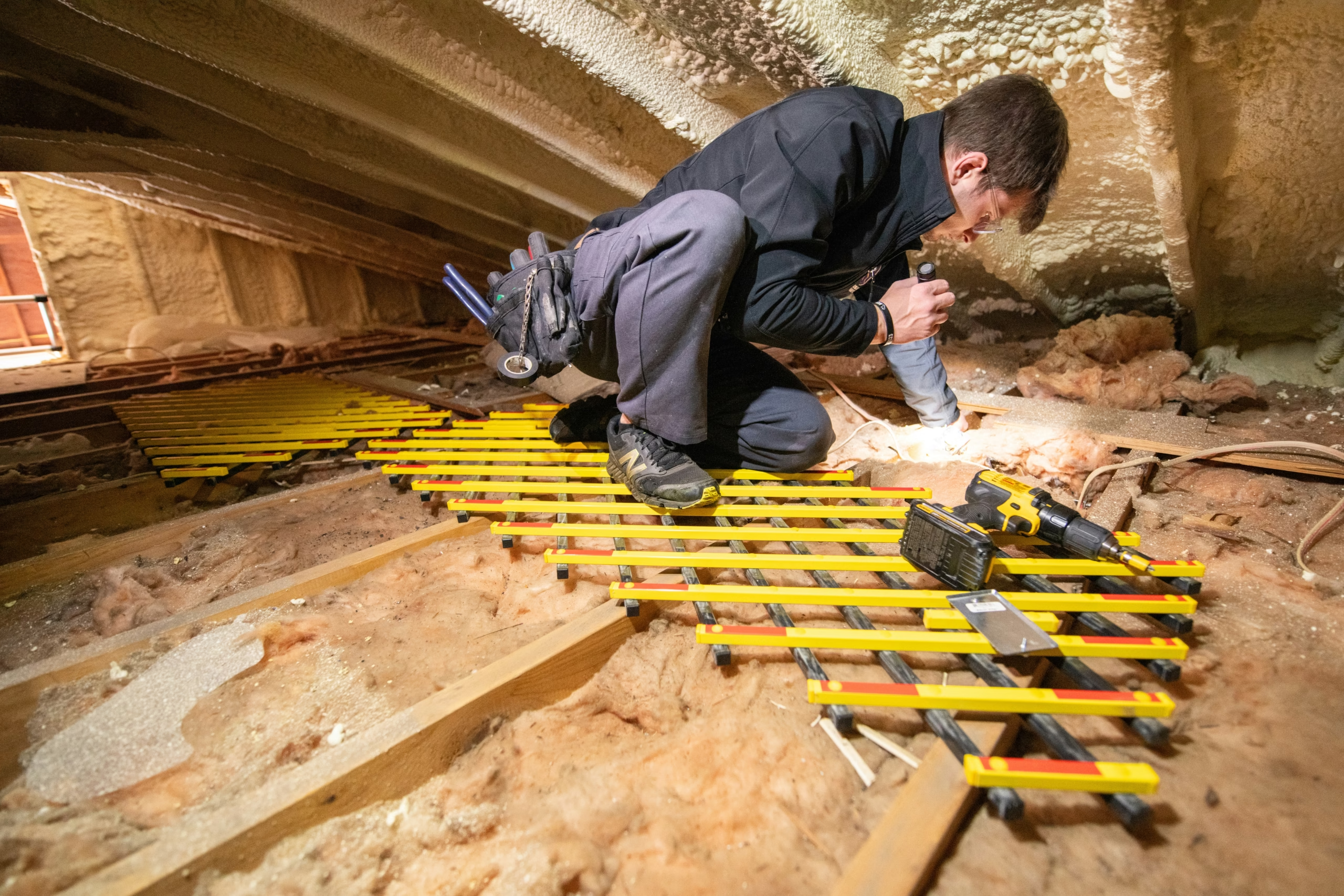
Spot Sealing vs Unvented Attics: How To Decide
Homeowners frequently ask how to air seal attic spaces effectively, but the right answer depends on how the home is built and how it performs today. Choosing between targeted sealing and an unvented assembly requires evaluating several factors together.
Key considerations include:
• mechanical system location
• leakage severity and distribution
• roofline configuration and accessibility
• long-term ownership goals
Homes with mechanical systems in the attic often benefit from bringing those systems inside the pressure boundary. In contrast, homes with moderate leakage and well-performing systems often see meaningful gains through targeted improvements alone. The goal is not simply reducing air leakage but improving overall system performance.
How to Air Seal Attic Spaces the Right Way
Effective air sealing attic assemblies requires a systematic approach focused on continuity and sequencing rather than isolated fixes.
Professional work typically begins with identifying leakage pathways through inspection and diagnostic testing such as blower door analysis. Once pathways are identified, sealing proceeds methodically:
• larger penetrations and bypasses addressed first
• smaller seams and cracks sealed afterward
• materials selected based on opening size and location
Common materials include expanding foam for irregular gaps, sealants for smaller joints, and rigid blocking for larger openings. The objective is not simply to close visible gaps but to create a continuous air barrier across the ceiling plane.
Verification is also critical. Without testing, it is difficult to confirm performance improvements or identify remaining leakage pathways. While some homeowners attempt air sealing the attic independently, piecemeal work often leaves critical areas untreated and rarely improves overall performance in a meaningful way.
How Stearns Design Build Approaches Attic Air Sealing
At Stearns Design Build, attic air sealing decisions begin with understanding how the home currently performs rather than applying a standard solution. Because homes in Bryan–College Station vary widely in age, construction type, and mechanical layout, solutions must be tailored rather than standardized.
Our process typically includes evaluating airflow patterns, identifying leakage pathways through inspection and testing, assessing mechanical system placement, and recommending either targeted improvements or system-level strategies accordingly. The goal is to improve comfort, efficiency, and durability without introducing unintended consequences or unnecessary scope.
Frequently Asked Questions
Is attic air sealing worth it in Bryan–College Station?
Yes. In hot, humid climates, controlling air movement improves comfort, reduces cooling demand, and helps manage indoor humidity levels over time.
Can insulation alone fix attic air leakage?
No. Insulation slows heat transfer but does not stop airflow. Air sealing the attic is necessary for insulation to perform effectively.
How long does attic air sealing take?
Most targeted projects can be completed within a day, though larger homes or unvented conversions may take longer depending on scope.
Is DIY attic air sealing effective?
Some minor improvements are possible, but comprehensive results typically require diagnostic testing, proper sequencing, and system-level understanding.