
Phantom Loads in Homes: How Hidden Energy Use Impacts Your Utility Bill
Phantom loads in homes are small, continuous draws of electricity from devices that are plugged in but not actively in use. These loads come from electronics in standby mode or simply connected to power. While each device may seem insignificant, together they create a steady drain on energy that quietly increases your utility bill.
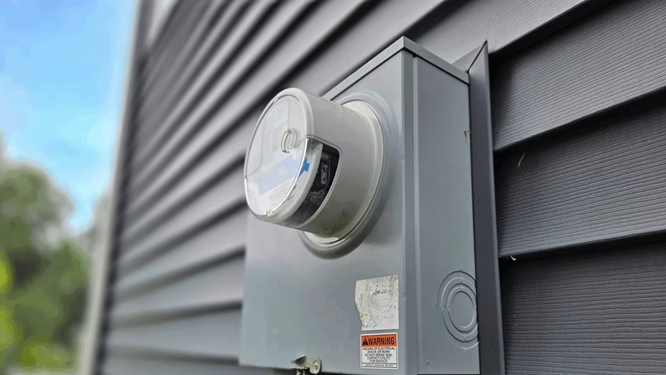
Why Phantom Loads in Homes Matter More Than Most People Realize
Most homeowners think of energy use in terms of what is turned on. Lighting, HVAC systems, and appliances get the attention. The issue is that many devices never fully turn off.
That constant draw adds up over time.
Phantom loads in homes can account for a noticeable portion of monthly energy use, especially in homes filled with modern electronics. Televisions, kitchen appliances, office equipment, and chargers all contribute. The result is not just higher utility costs, but a home that is using energy without delivering any real benefit.
From a broader perspective, this also affects how efficiently your home operates. When energy use is happening without intention, it becomes harder to control overall performance.
Why Phantom Loads Often Go Unnoticed
This type of energy use is easy to overlook because nothing appears to be running.
Devices with digital displays, remote controls, or quick-start features are designed to stay partially active. That convenience comes with a tradeoff. The device is always ready, but it is also always drawing power.
In many homes, electronics are spread across multiple rooms. A few watts here and there does not feel significant in isolation. Across an entire home, those small loads compound into something measurable.
The challenge is not awareness alone. It is that there is no clear visual signal that energy is being used.
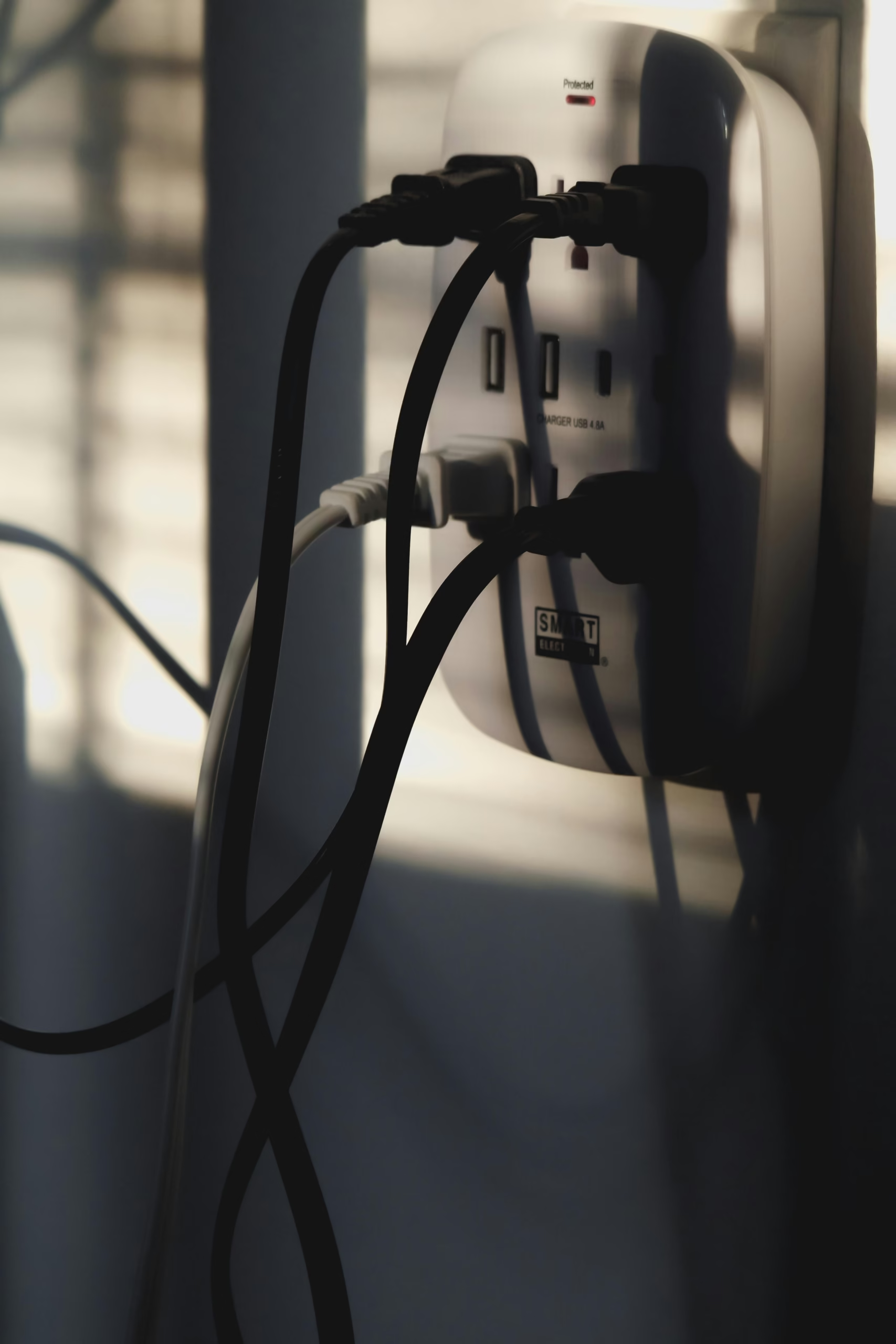
What Items in Your Home Act as a Phantom Load
Phantom loads are not limited to one category of devices. They show up anywhere electricity is available.
Common examples include:
- Entertainment systems with televisions, streaming devices, and speakers
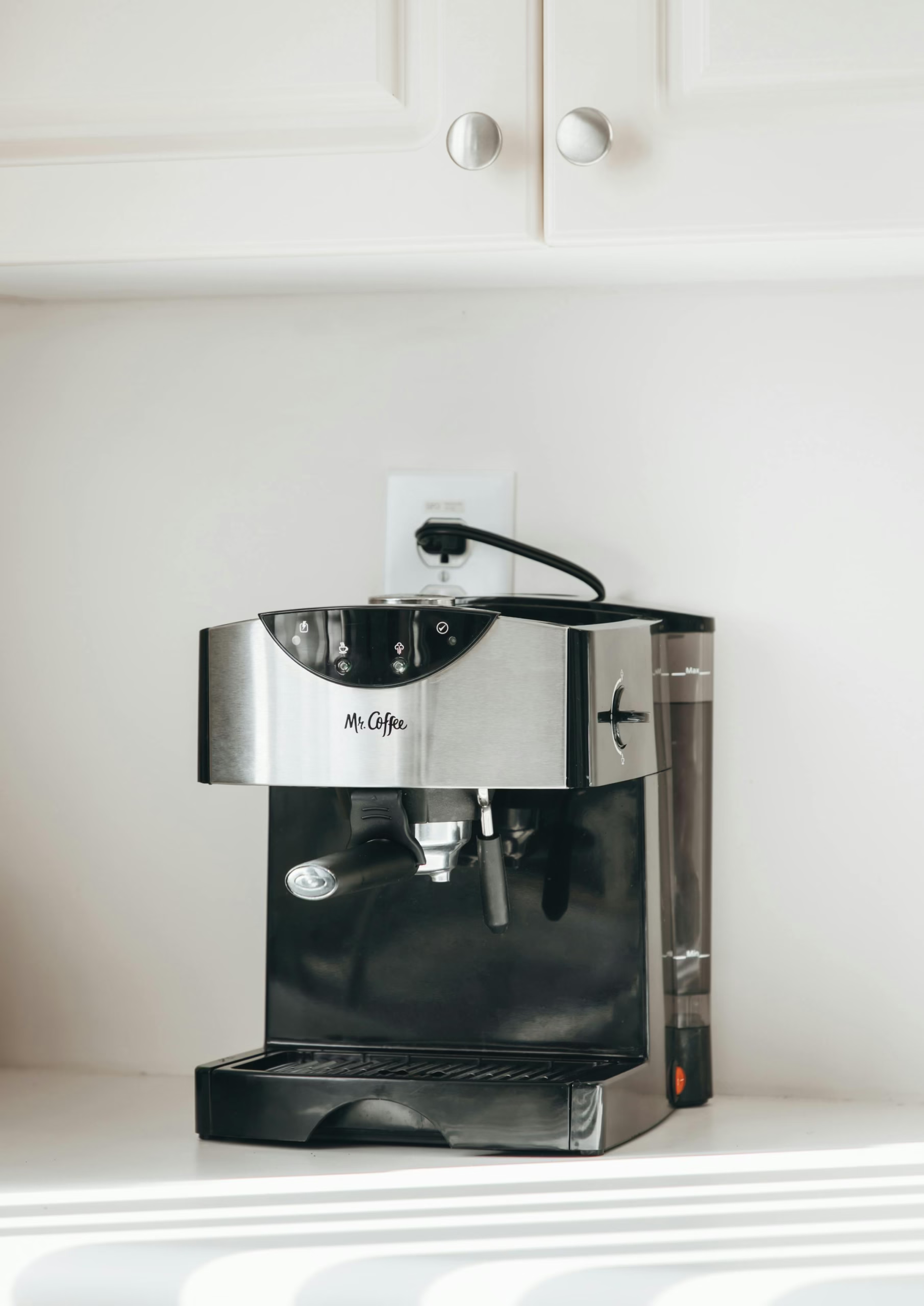
- Kitchen appliances with clocks or touch panels such as microwaves and coffee makers
- Office setups with computers, monitors, and printers
- Chargers left plugged in without an active device
- Gaming systems and cable boxes that remain in standby mode
Some of these devices draw very little power individually. Others, especially those designed for quick startup, can draw more energy when “off” than expected.
How to Reduce Phantom Loads Without Constantly Unplugging Everything
The goal is not to make daily life more difficult. It is to create simple control over where energy is being used.
A few adjustments can significantly reduce phantom loads in homes:
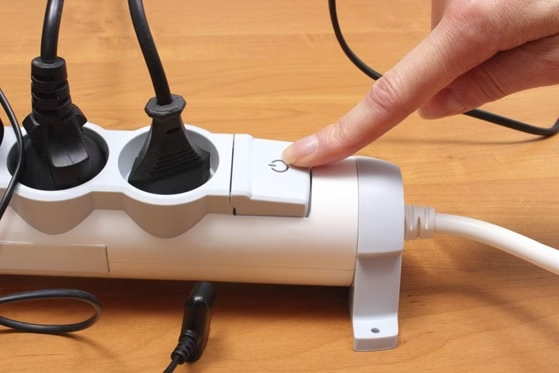
- Use power strips for grouped electronics
This allows multiple devices to be fully turned off with one switch instead of managing each plug individually. - Install advanced or smart power strips
Some systems detect when a primary device is turned off and automatically cut power to connected accessories. - Be intentional with high-use areas
Entertainment centers and home offices tend to have the highest concentration of standby devices. - Look for ENERGY STAR–rated products when upgrading
Many newer appliances are designed to reduce standby energy use as part of their performance standards.
The key is not perfection. It is reducing the constant, unnecessary draw that happens throughout the day.
Common Mistakes When Trying to Reduce Phantom Loads
Efforts to reduce phantom loads often stall because the approach becomes unrealistic.
One common mistake is trying to unplug everything manually. That approach rarely lasts. It adds friction to everyday routines and is easy to abandon.
Another issue is focusing only on one device at a time. The bigger impact comes from grouping and controlling multiple devices together.
There is also a tendency to overlook older electronics. These often have higher standby energy use compared to newer, more efficient models.
The most effective approach is built around convenience. If the solution is easy to maintain, it is far more likely to stick.
How Reducing Phantom Loads Impacts the Performance of Your Home
Reducing phantom loads does more than lower your utility bill.
It gives you a clearer understanding of how your home actually uses energy. When unnecessary background consumption is removed, it becomes easier to identify where meaningful improvements can be made.
This is especially important when evaluating larger upgrades. Insulation, HVAC systems, and air sealing all depend on accurate assumptions about energy use. Phantom loads distort that picture.
By reducing them, you create a more honest baseline. That leads to better decisions and a home that performs more predictably over time.
How Stearns Design Build Approaches Energy Awareness
Energy efficiency is not one decision. It is a series of smaller decisions that shape how a home performs every day.
Phantom loads in homes are one of the easiest places to start because they do not require construction to address. They simply require awareness and a plan.
This is the kind of issue that shows up during a broader look at how a home is functioning. When energy use is understood clearly, it becomes easier to prioritize what actually needs attention and what does not.
The goal is not to chase every minor improvement. It is to focus on the areas that create meaningful change without adding complexity to how you live.
Frequently Asked Questions
Do phantom loads really make a difference on utility bills?
Yes. Individually they are small, but across an entire home they create a continuous energy draw that adds up over time.
Are newer appliances better at reducing phantom loads?
In many cases, yes. Products designed with energy efficiency standards, such as ENERGY STAR, often have lower standby energy use.
Is unplugging devices the only way to stop phantom loads?
No. Power strips and smart control systems allow you to reduce phantom loads without changing your daily routine.
Which areas of the home should I focus on first?
Start with spaces that have multiple electronics grouped together, such as living rooms and home offices.
Are phantom loads a sign of a bigger energy problem?
Not necessarily, but they can make it harder to understand how your home is performing overall if they are not accounted for.