
What Causes Bottlenecks in a Home and How Better Design Improves Daily Flow
Home bottlenecks are areas where routines, movement, and daily tasks begin competing for the same space. In residential design, these pressure points affect comfort, stress levels, organization, and how smoothly a home supports everyday life. When addressed intentionally, better home flow design can reduce frustration, improve routines, and create spaces that feel calmer and easier to live in.
Most homeowners can feel when something in their home is not working well, even if they cannot immediately explain why. Mornings feel rushed. Laundry constantly piles up. The kitchen becomes crowded the moment more than one person walks into it. Entryways collect clutter faster than they can be cleaned.
Over time, these small frustrations create mental friction. The home starts feeling like something you are constantly managing instead of something that supports you.
In many cases, the issue is not the people living in the house. It is the way the house was designed to function.
What Home Bottlenecks Mean in Residential Design
The term “bottleneck” is often used in manufacturing or logistics to describe a point of congestion that slows down everything around it. Homes experience the same kind of pressure points.
In residential design, home bottlenecks happen when multiple routines, storage needs, or circulation paths overlap in ways that create friction. These areas interrupt flow and make ordinary tasks feel harder than they should.
Common examples include:
- An entryway overloaded with shoes, backpacks, keys, and mail
- A kitchen where multiple people cannot move comfortably at the same time
- Bathrooms that force several people into the same routine schedule
- Laundry rooms located far from bedrooms or clothing storage
- Closets without enough structure to support shared use
- Kitchen tables doubling as workstations, homework desks, and storage surfaces
Many older homes were designed around lifestyles and routines that look very different from modern family life. Storage expectations, work-from-home needs, and household traffic patterns have all changed significantly over time.
Functional home design is not just about adding more square footage. Often, it is about improving how existing spaces support movement, routines, privacy, and organization.
Why Bottlenecks Affect Daily Life More Than Homeowners Realize
Design friction creates emotional friction. When spaces constantly work against routines, homeowners spend more energy compensating for the layout itself. Over time, this can affect stress levels, patience, focus, and overall comfort at home.
A poorly functioning layout often creates:
- Constant visual clutter
- Repeated decision fatigue
- Tension during busy routines
- Difficulty maintaining organization
- Reduced privacy
- A feeling that the home never fully settles
This is especially noticeable during transitional moments throughout the day:
- Getting ready in the morning
- Preparing meals
- Managing children’s routines
- Returning home after work or school
- Cleaning and resetting spaces
Homes with better flow tend to reduce unnecessary friction. Movement feels more natural. Storage supports routines instead of fighting them. Shared spaces become easier to use without constant coordination or compromise.
Research has also shown that cluttered, inefficient environments can contribute to stress and mental fatigue over time. The Cleveland Clinic notes that cluttered homes are often associated with higher levels of fatigue, stress, and emotional overwhelm, reinforcing how strongly our surroundings influence focus, routines, and overall well-being.
Intentional home design can influence not only how a house looks, but also how it feels to live there every day.
Common Misunderstandings About Home Flow
“We just need more storage.”
Storage helps, but poor layout design often creates the real issue. Adding cabinets or shelving without improving flow can simply relocate clutter instead of resolving the underlying bottleneck.
“Our family is just messy.”
Many homeowners blame themselves for spaces that were never designed around real routines. A home layout design that lacks proper circulation, zoning, or storage logic naturally creates buildup and congestion.
“The house is too small.”
Square footage is not always the problem. Some smaller homes function extremely well because the layout supports movement and daily use intentionally. Larger homes can still feel stressful when flow is poorly planned.
“Open concept fixes everything.”
Open layouts can improve visibility and circulation, but they can also create new bottlenecks when zoning is not thoughtfully planned. A completely open space without structure often struggles to support multiple activities happening at once.
How Better Flow Shows Up in Real Homes
Improving home flow usually comes from a combination of layout adjustments, storage planning, and understanding how the household actually functions day to day.
Entryways That Reduce Clutter and Stress
Entry points often become catch-all spaces because they handle multiple transitions at once.
Improving these areas may involve:
- Mudrooms with built-in cubbies
- Dedicated mail and key storage
- Separate guest and daily-use circulation paths
- Better connection between garage access and storage zones
These changes help reduce visual clutter and simplify routines before homeowners even fully enter the home.
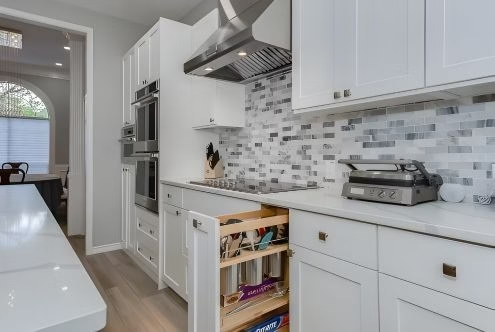
Kitchens Designed Around Movement
Kitchens experience some of the highest traffic in the house. Poor circulation can quickly make the space feel crowded and stressful.
Improving kitchen flow may include:
- Zone-based layouts
- Separate prep and cleanup areas
- Wider circulation paths
- Appliance placement based on cooking habits
- Islands that support multiple users comfortably
Good kitchen design supports both movement and interaction without forcing everyone into the same narrow pathway.
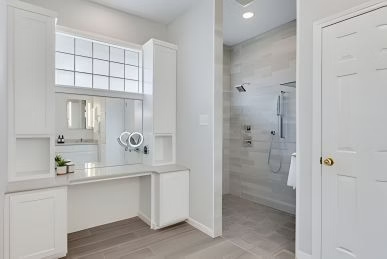
Bathrooms That Support Shared Routines
Bathroom bottlenecks become especially noticeable during busy mornings.
Design for daily routines often includes:
- Double vanities
- Separate sink and shower zones
- Private toilet rooms
- Additional powder baths
- Better storage integration
These changes help create more flexibility and reduce pressure during overlapping schedules.
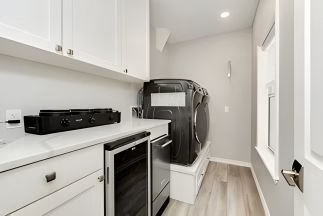
Laundry Spaces That Function Naturally
Laundry often becomes stressful when the room is disconnected from where clothing is actually used.
Improving flow may involve:
- Relocating laundry closer to bedrooms
- Adding sorting and folding space
- Integrating hampers into closet systems
- Improving storage for supplies and linens
Functional placement reduces the amount of effort required to maintain routines consistently.
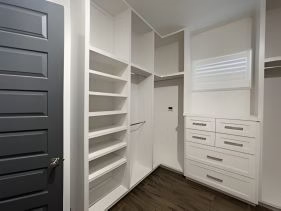
Closets and Storage That Support Real Use
Closets frequently fail because they are treated as leftover space rather than intentional storage systems.
Better organization may include:
- Dual-sided storage layouts
- Vertical shelving
- Integrated dressing zones
- Closet islands
- Hidden laundry integration
When storage reflects actual habits and routines, the entire home often feels calmer and easier to maintain.
How Stearns Design Build Approaches Functional Flow
At Stearns Design Build, improving home flow starts long before construction begins.
Rather than approaching remodeling as a collection of isolated rooms, the process focuses on understanding how homeowners move through daily life and where friction repeatedly appears.
That often means asking questions like:
- Where does your morning routine feel rushed?
- What spaces collect clutter the fastest?
- Where do people constantly cross paths?
- Which daily tasks feel harder than they should?
- What parts of the home create stress instead of support?
These conversations help identify the deeper design issues behind recurring frustrations. The goal is not simply to create a prettier space. The goal is to create a home that supports the way people actually live.
That may involve:
- Reworking circulation paths
- Adding intentional storage where it is truly needed
- Improving transitions between rooms
- Creating better zoning for shared spaces
- Designing flexibility into everyday routines
This approach aligns closely with the broader design philosophy that homes should reduce friction, support emotional well-being, and create clarity within daily life.
When intentional home design is approached thoughtfully, even small changes can dramatically improve how a home feels to live in.
Frequently Asked Questions
What causes bottlenecks in a home?
Home bottlenecks are usually caused by poor circulation, overlapping routines, insufficient storage planning, or layouts that do not reflect modern living patterns. They commonly appear in kitchens, entryways, bathrooms, laundry areas, and shared storage spaces.
Can remodeling improve home flow without adding square footage?
Yes. Many flow issues are caused by layout inefficiencies rather than home size. Strategic remodeling can improve circulation, storage, and zoning within the existing footprint of the home.
Why do some homes feel stressful even when they look nice?
A home can appear visually attractive while still functioning poorly. If routines constantly create congestion, clutter, or friction, the emotional experience of living in the space often feels stressful regardless of aesthetics.
What rooms create the most congestion in a house?
Kitchens, bathrooms, entryways, laundry rooms, and closets tend to create the most bottlenecks because they support multiple daily routines and high traffic patterns.
How does intentional design improve daily life?
Intentional design aligns the layout of a home with the routines, habits, and needs of the people living there. This often reduces stress, improves organization, and creates spaces that feel calmer and easier to maintain.
Can older homes be redesigned for better flow?
Yes. Many older homes can be thoughtfully remodeled to improve circulation, storage, and functionality while still preserving their original character and architectural identity.