
How Induction Cooktops Work and What to Consider Before Installing One
Induction cooktops use electromagnetic energy to heat compatible cookware directly, offering faster temperature changes and reduced energy loss compared with conventional cooking methods. For homeowners planning a kitchen remodel, understanding how induction works and what installation requires can help determine whether this technology is suitable for their home.
Why Induction Cooktops Are Worth Understanding
Gas and traditional electric cooktops have long been familiar options in residential kitchens. Induction cooktops offer another approach to cooking, with differences that affect everyday use and the planning required for installation.
Unlike a gas burner, induction cooking does not require an open flame. It also operates differently from a conventional electric cooktop, which heats an element that transfers heat into the cookware.
These differences influence how quickly food heats, how much energy is used, and how the surrounding kitchen responds to cooking.
For homeowners replacing an existing appliance or planning a larger kitchen remodel, understanding these characteristics can help guide appliance selection before electrical work and cabinetry decisions are finalized.
How Do Induction Cooktops Work?
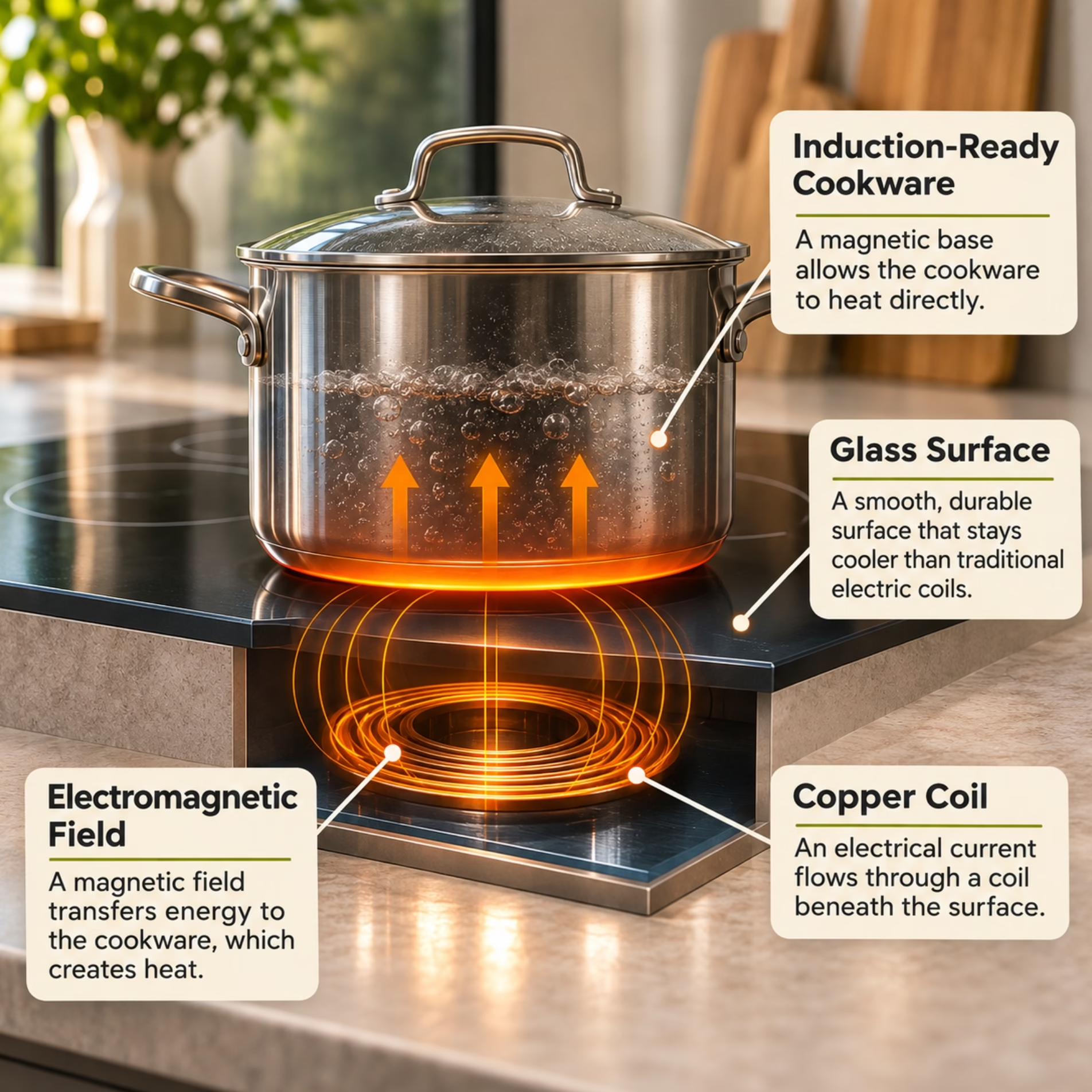
Induction cooktops use an electromagnetic field to generate heat within compatible cookware.
Beneath the glass-ceramic cooking surface are electrical coils. When electricity passes through these coils, an alternating magnetic field develops. Placing compatible cookware within that field produces electrical currents in the metal, generating heat directly in the pot or pan.
The cookware then transfers heat to the food.
Because the heating process occurs within the cookware, induction responds quickly when the cooking power is adjusted. Removing the pan also stops the induction heating process.
The glass surface does not need to heat up first to cook food. However, heat from a hot pan can transfer back into the glass, leaving the cooking area hot after use. Induction cooktops should therefore never be assumed safe to touch immediately after cooking.
This distinction is particularly important when evaluating the appliance’s safety features.
Common Misunderstandings About Induction Cooking
Several assumptions about induction cooktops can lead homeowners to overlook important considerations.
The glass surface never gets hot: Although induction does not directly heat the glass in the same way as a conventional electric element, hot cookware can raise the surface temperature. Residual heat indicators should be observed after cooking.
Any metal cookware will work: Induction requires cookware with a magnetic base. Some stainless steel cookware is compatible, while other stainless steel products are not.
Switching from gas to induction is a simple appliance replacement: Some homes require electrical modifications before a full-size induction cooktop can be installed. Existing wiring, circuit capacity, and appliance specifications need to be evaluated.
Induction cooking eliminates all indoor cooking pollutants: Induction avoids pollutants associated with burning gas at the appliance, but cooking food can still produce airborne particles and other pollutants. Kitchen ventilation remains important.
Understanding these limitations helps homeowners evaluate the technology without relying on general claims about convenience or safety.
What Should Homeowners Consider Before Induction Cooktop Installation?
Installing an induction cooktop involves more than choosing an appliance that fits the available counter space. During a kitchen remodel, the electrical system and appliance specifications should be reviewed before installation decisions are finalized.
A typical planning sequence includes:
- Review the existing cooking appliance.
Determine whether the kitchen currently uses gas, conventional electric, or another cooking system. - Evaluate the electrical supply.
Confirm whether the existing circuit, wiring, and electrical panel can accommodate the selected induction appliance. - Review the manufacturer’s installation requirements.
Verify the appliance’s electrical specifications, ventilation and clearance requirements, and required installation dimensions. - Coordinate necessary modifications.
Any electrical upgrades, countertop changes, or gas-line decommissioning should be planned before the appliance is installed. - Confirm installation and operation.
The completed installation should be checked against applicable requirements and the manufacturer’s instructions.
Many full-size induction cooktops require a dedicated 240-volt electrical circuit, although requirements vary by model. Some smaller portable induction units operate using standard household receptacles.
Homes that previously used gas cooking may need additional electrical work. Existing gas connections must also be properly addressed by a qualified professional when they are no longer needed.
These considerations can affect the scope and cost of an appliance replacement.
Cookware Compatibility and Everyday Use
Induction cooktops require cookware made with a suitable magnetic material. Cast iron and many types of enameled cast iron are compatible. Stainless steel cookware may also work, depending on its construction.
Copper, aluminum, and glass cookware generally will not function on induction unless the cookware includes an induction-compatible magnetic base.
A simple way to evaluate existing cookware is to place a magnet against the bottom. If it attaches firmly, the cookware is likely compatible. Manufacturer labeling can provide additional confirmation.
The cookware’s base should also be reasonably flat and appropriate for the cooking zone.
Induction cooking can require some adjustment for people accustomed to gas burners or traditional electric elements. Because temperature changes occur quickly, users may need to become familiar with different power settings and cooking times.
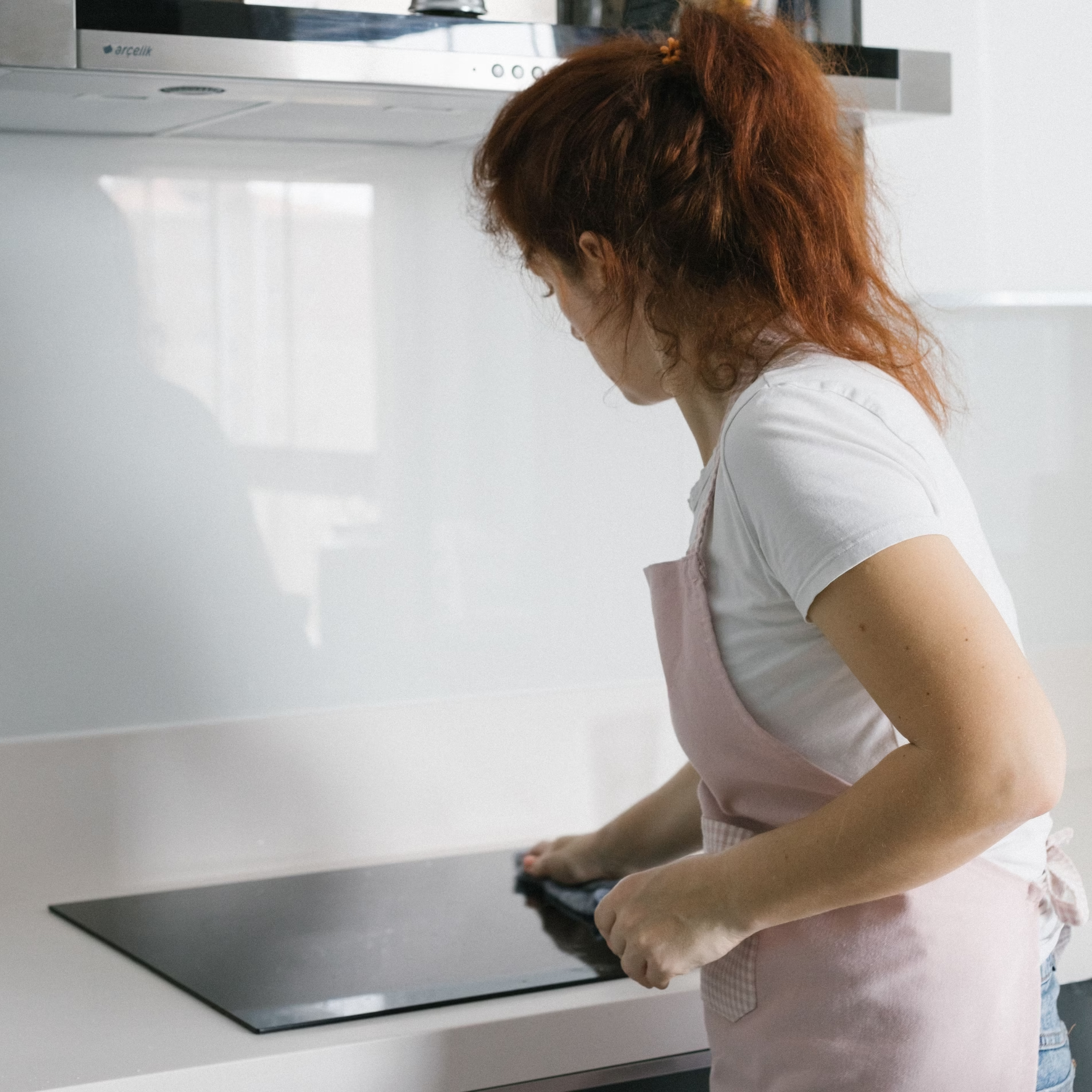
The smooth glass surface makes routine cleaning relatively straightforward, although care is needed to avoid scratching or damaging it with cookware.

How Induction Cooktops Affect Kitchen Efficiency and Long-Term Use
Energy efficiency is one of the primary reasons homeowners consider induction cooking. Traditional gas cooktops release a substantial portion of their heat into the surrounding air. Conventional electric cooktops use heated elements to transfer energy into cookware. Induction transfers energy more directly into the pan.
According to ENERGY STAR, approximately 85% of the heating energy from induction cooking reaches the contents of the cookware, compared with roughly one-third for gas cooking. This improved transfer of energy can reduce the time required to heat food or boil water. It also reduces the amount of excess heat released into the kitchen during cooking.
Actual household energy savings depend on cooking habits, appliance performance, electricity and gas rates, and how frequently the cooktop is used.
The appliance’s long-term value also depends on installation costs and maintenance. A homeowner who already has compatible wiring and cookware may face fewer initial expenses than someone converting from a gas appliance that requires electrical upgrades.
When evaluating an induction cooktop during a kitchen remodel, these upfront requirements deserve consideration alongside the potential efficiency benefits.
Induction Cooking, Indoor Air Quality, and Aging in Place
Induction cooking can contribute to a kitchen designed around changing household needs.
Gas burners produce combustion-related pollutants, including nitrogen oxides and carbon monoxide. Because induction uses electricity rather than burning fuel at the cooktop, it avoids these emissions during operation.
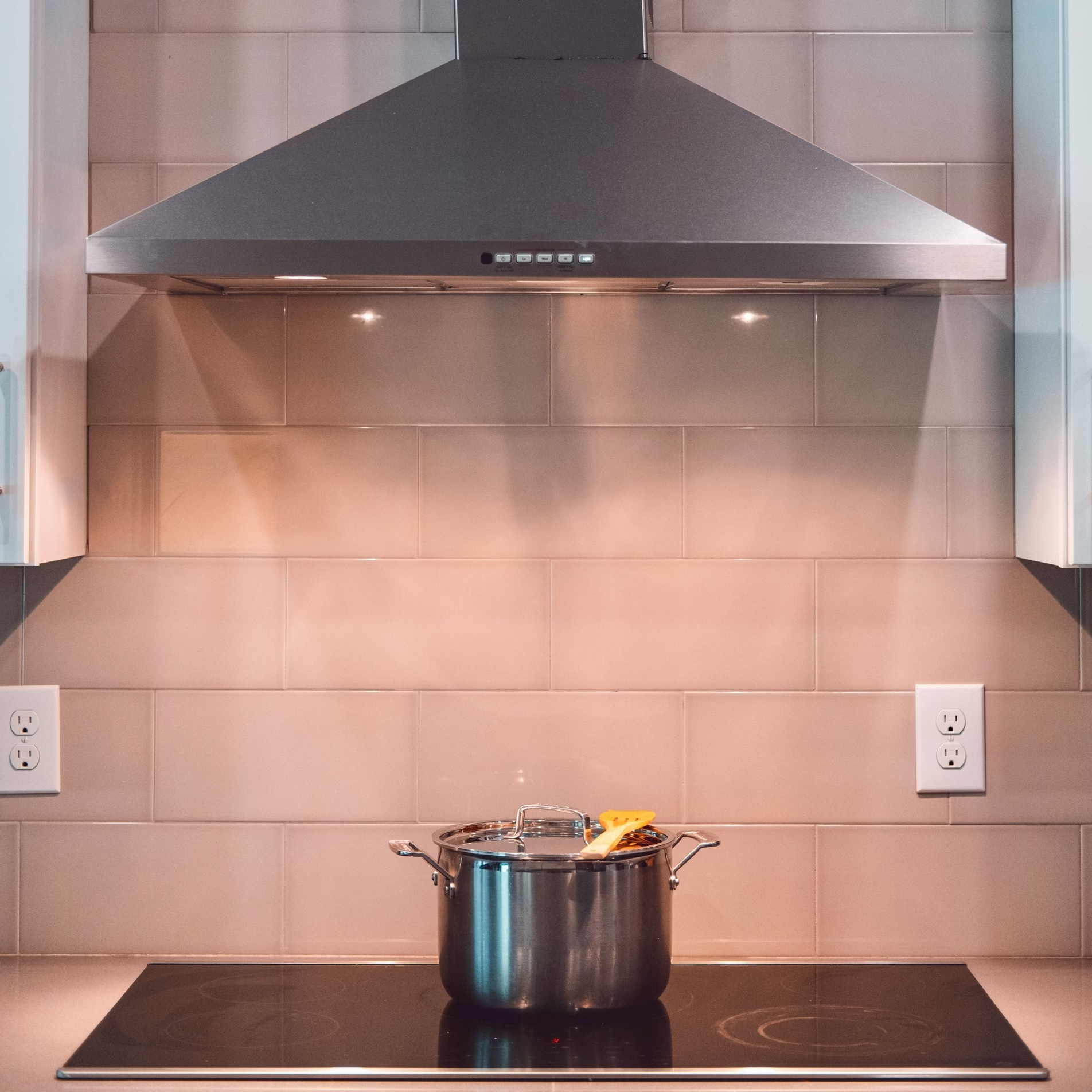
Ventilation is still necessary to help remove pollutants generated by cooking food.
Induction also eliminates the open flame associated with gas cooking. Many models include features such as automatic pan detection, residual heat indicators, and controls that can reduce the likelihood of unintended operation.
These features may be useful when planning a kitchen for aging in place, although their effectiveness depends on the appliance and the individual using it.
Control placement, visibility, and ease of operation should also be considered. A smooth cooking surface alone does not establish whether an appliance meets accessibility requirements or suits someone with limited mobility.
One additional consideration involves implanted medical devices. The electromagnetic field produced by induction cooking may interfere with certain pacemakers or similar devices. Anyone with an implanted electronic medical device should consult their healthcare professional and device manufacturer before selecting an induction appliance.
How Stearns Design Build Approaches Kitchen Appliance Planning
Appliance selection can influence several decisions during a kitchen remodel, particularly when a homeowner wants to change the type of cooking technology already installed.
The selected cooktop’s dimensions and electrical requirements need to be understood before related construction decisions are finalized.
Considering these requirements during design helps homeowners understand whether an appliance change will require additional work and how that work may affect the project budget.
At Stearns Design Build, our design-build approach emphasizes evaluating the practical requirements of a project before construction begins. For a kitchen remodel, that means considering how appliance selections relate to the existing home and the intended design.
Induction cooking may offer meaningful benefits for some households, but its suitability depends on the homeowner’s needs and the conditions of the kitchen.

Frequently Asked Questions
Are induction cooktops more energy-efficient than gas cooktops?
Generally, yes. Induction transfers a greater proportion of its energy into cookware than gas cooking. Actual utility savings depend on local energy prices and how frequently the appliance is used.
Can an induction cooktop replace a gas stove?
Yes, although the conversion may require electrical upgrades and professional work to safely decommission the existing gas connection. The home’s electrical capacity and the selected appliance’s requirements should be reviewed before installation.
Do induction cooktops require special cookware?
They require cookware with a magnetic base. Cast iron and many stainless steel products are compatible, while ordinary copper, aluminum, and glass cookware generally require an added induction-compatible layer.
Are induction cooktops suitable for aging in place?
They can be a useful option because they eliminate open flames and may include automatic shutoff features. Accessibility depends on the appliance’s controls, the kitchen layout, and the individual homeowner’s needs.
Are government rebates available for induction cooktops?
Some federal, state, and utility programs may offer incentives for qualifying electric cooking appliances. Availability, eligibility, and application procedures vary, so homeowners should confirm current Texas program requirements before including a rebate in their project budget.
Is an induction cooktop worth considering during a kitchen remodel?
Induction can be worth evaluating when energy efficiency, temperature responsiveness, or reducing gas combustion inside the home are priorities. Reviewing electrical requirements and cookware compatibility during design can help homeowners understand the full implications of making the change.