
What Is Tailored Home Design and Why It Creates More Functional, Connected Living Spaces
Tailored home design is the practice of shaping a home, its outdoor spaces, and even its surrounding community around how people actually live. Instead of following standard layouts or oversized trends, it focuses on fit. When applied intentionally, it leads to spaces that feel more comfortable, more usable, and more connected to daily life.
What This Means in Residential Design
Most homes are not designed around the people living in them. They are designed around assumptions.
Rooms are sized based on resale expectations. Layouts follow familiar patterns. Front yards are left open because that is what most houses do. Over time, this creates homes that look complete on paper but feel disconnected in real life.
Tailored home design starts in a different place. It asks what the home needs to support the people living in them, and then builds around that.
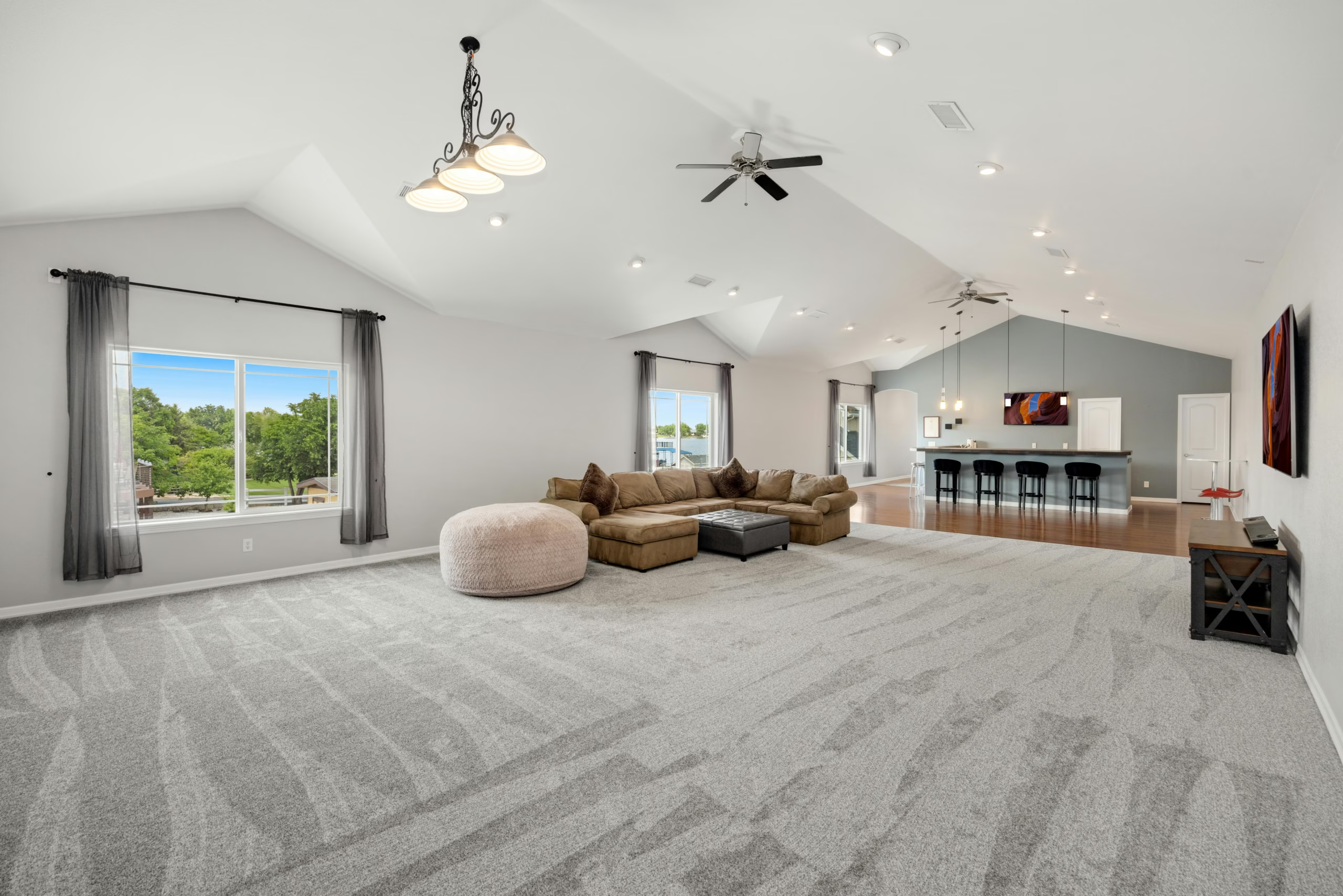
That often means rethinking scale. Bigger rooms are not always better. Large, open areas can feel empty when used by one or two people. On the other hand, smaller, more defined spaces tend to support how people naturally gather, talk, and spend time together.
It also means questioning which rooms deserve space at all. Formal living rooms and formal dining rooms once had a clear role. Today, many sit unused. That square footage still has to be built, heated, cooled, and maintained whether it is used or not.
When a home is tailored, space is treated as something valuable. Every area has a purpose. Some spaces become more flexible. Others become more specific. The goal is not to reduce for the sake of reducing. The goal is to create a home that fits.
Why This Matters to the Way You Live
The impact of tailoring shows up in small, everyday moments.
It affects how a space feels when you walk into it. Ceiling height, lighting, and how walls define a room all shape whether it feels comfortable or overwhelming. It affects how easily you move through your home. It changes whether spaces support your routines or work against them.
It also changes how your home handles different situations.
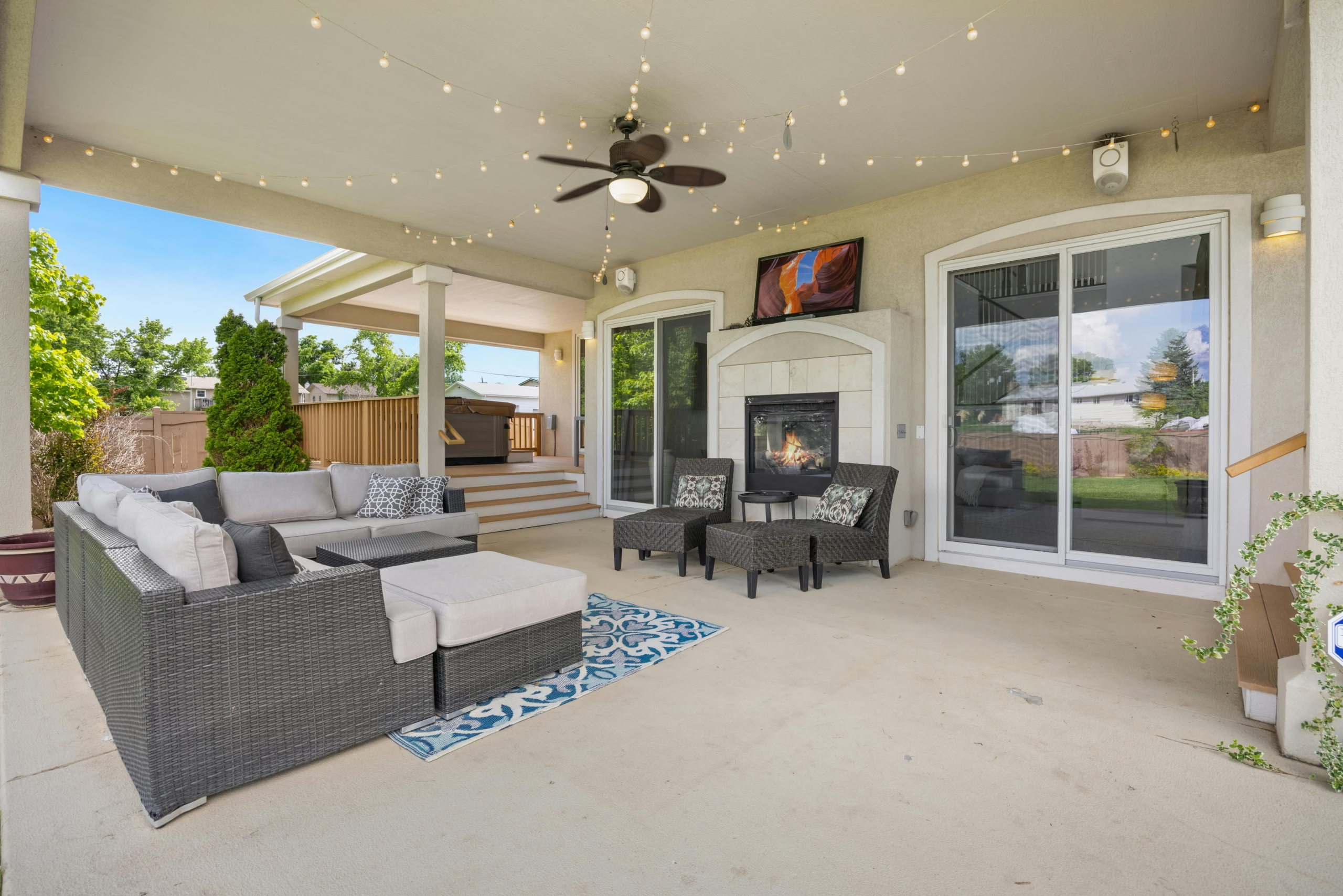
A well-tailored home can shift between quiet daily use and larger gatherings without feeling strained. Instead of one oversized room trying to do everything, the home offers a range of spaces. Some are more open. Some are more intimate. People naturally find where they are comfortable.
This approach also extends beyond the walls of the house.
Many front yards exist as leftover space. They are technically part of the home but do not function like it. There is no clear boundary between public and private, so they are rarely used.
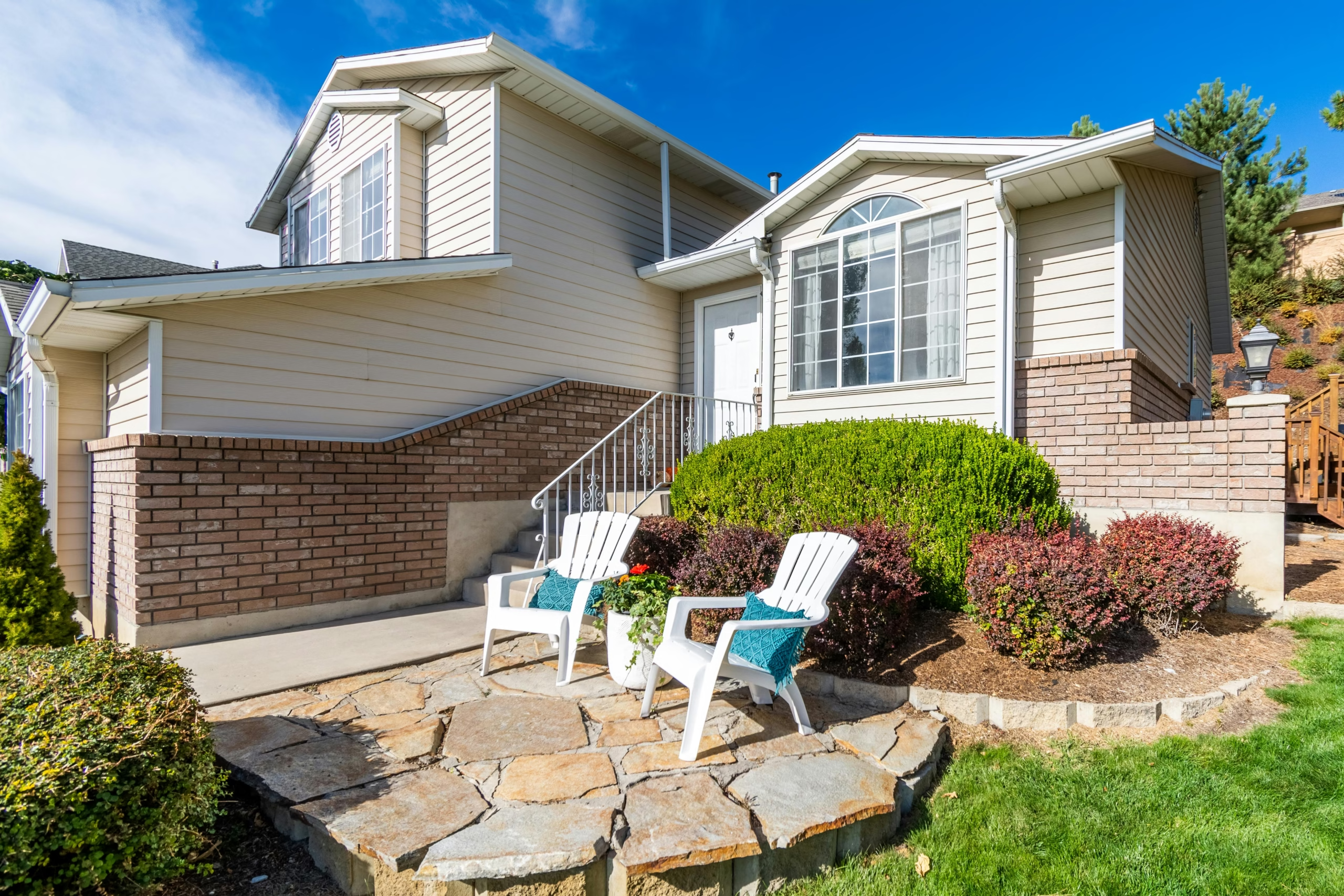
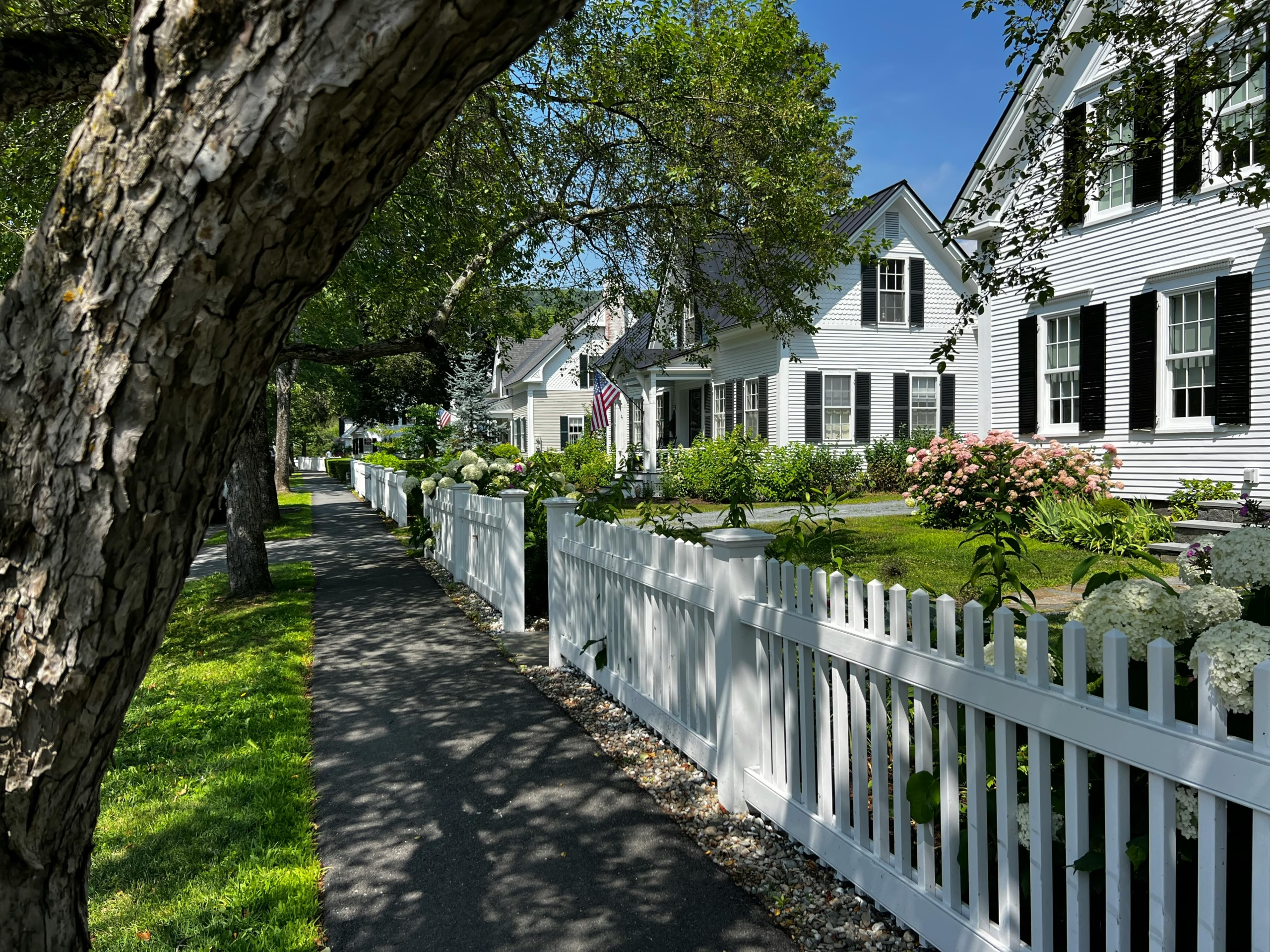
When that space is shaped intentionally, it becomes something else entirely. A defined front garden or forecourt creates a place to sit, read, or talk to neighbors. A low wall, a path, and thoughtful landscaping begin to establish a sense of place. The home starts to engage with the street instead of turning away from it.
Over time, these small shifts influence how connected people feel. Not just inside the home, but to the neighborhood around them.
Common Misunderstandings About Tailored Home Design
“Tailored means smaller.”
Not necessarily. The goal is not to shrink everything. It is to use space intentionally. Some areas may grow. Others may disappear.
“Open concept solves everything.”
Open layouts can work well, but they are not a universal answer. Without defined zones, large spaces can feel unfocused and harder to use day to day.
“Unused rooms are fine to keep.”
Unused space still carries a cost. It affects construction, energy use, and how the rest of the home functions.
“Outdoor space doesn’t need design.”
Front yards, side yards, and leftover areas often have the most potential. Ignoring them leaves part of the home unfinished in how it functions.
“This is just about aesthetics.”
Tailoring is not about style. It is about how a home supports real life, from daily routines to long-term comfort.
How This Shows Up in Real Homes
Tailored design often reveals itself in subtle decisions rather than dramatic changes.
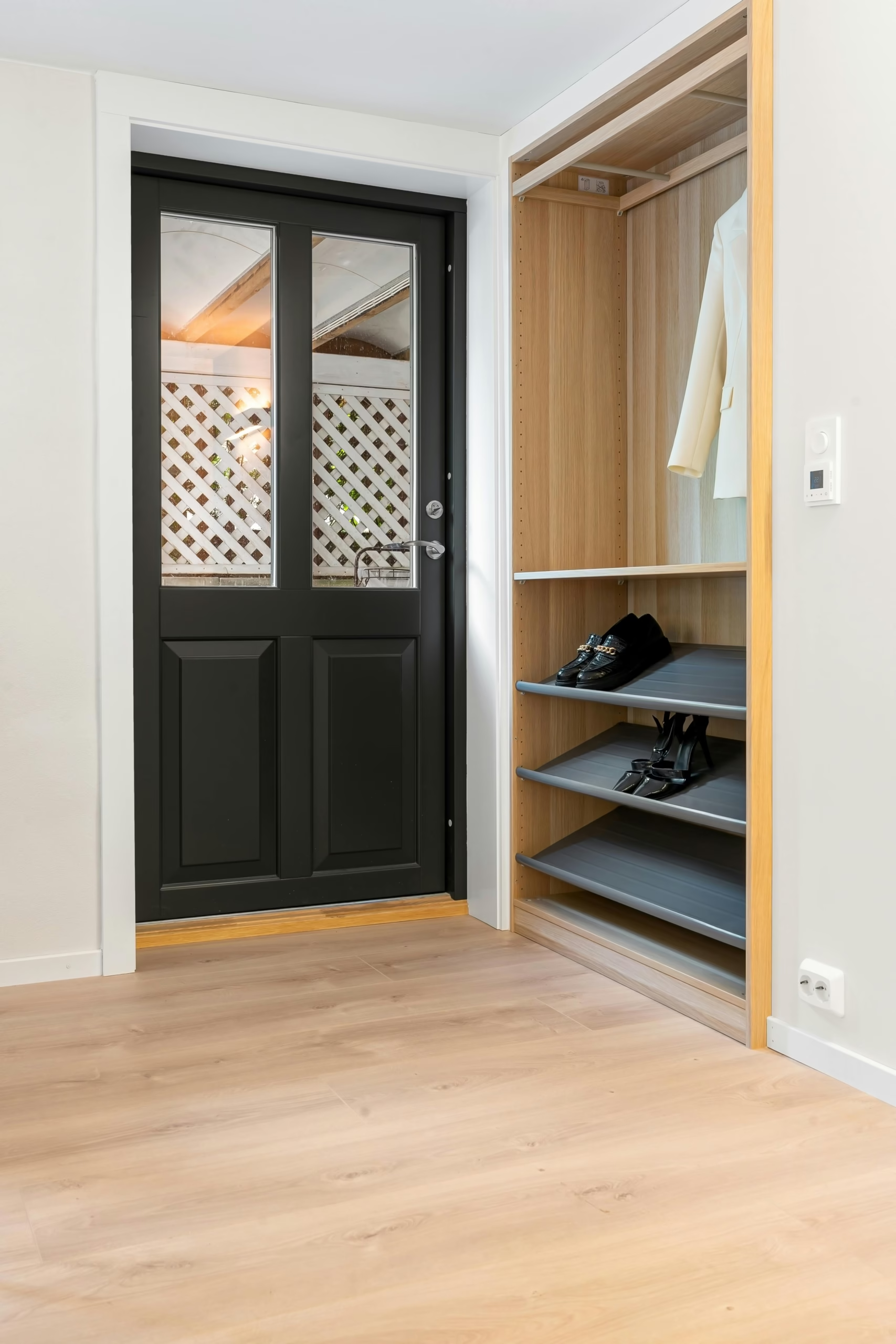
A hallway becomes more than a passage by adding built-in storage or shelving. An underused room is reworked into a space that supports daily routines. Entry areas begin to carry more purpose, whether that is storage, transition, or even a small workspace.
Vertical space becomes part of the solution. Expanding upward can add usable square footage without increasing the footprint of the home. In some cases, conditioning an attic not only creates new living space but also improves how the home performs by reducing heat buildup.
Outdoor areas begin to function as extensions of the home. A front yard becomes a defined, semi-private space. Seating areas, pathways, and planting choices work together to create a place people actually use.
At a broader level, this thinking connects to how neighborhoods function.
Walkable areas, mixed-use spaces, and small community centers make daily life more accessible. These ideas are reflected in the principles outlined by the Congress for the New Urbanism, which emphasize designing communities around people rather than cars. When homes, streets, and shared spaces are all considered together, the experience of living there changes. The distance between daily needs shrinks. The sense of connection grows.
This is where design moves beyond the individual house and begins to shape the quality of life in a community.
How Stearns Design Build Approaches This Concept
Tailoring a home is not something that happens by accident. It requires slowing down early and asking the right questions before design begins.
That starts with understanding how the home is currently used and where it falls short. From there, decisions are made in a sequence that keeps the project grounded. Layout, scale, and flow are addressed before materials or finishes are considered.
This approach protects homeowners from investing in spaces that look good but do not function well. It also reduces the risk of rework later, when changes become more expensive and more disruptive.
The goal is to translate how you live into something that can be built with clarity. Not just a collection of rooms, but a home that supports your routines, your priorities, and how you want to experience the space over time.
Frequently Asked Questions
What is the difference between tailored home design and custom home design?
Custom design often focuses on creating something unique. Tailored design focuses on creating something that fits. A home can be custom without being well-tailored if it does not reflect how the homeowner actually lives.
Does tailoring a home reduce resale value?
When done thoughtfully, it often improves it. Homes that feel functional and comfortable tend to appeal more broadly than homes with oversized or unused spaces.
Can an existing home be tailored, or does this only apply to new builds?
This approach works especially well in remodeling. Reconfiguring layouts, repurposing rooms, and improving flow can significantly change how an existing home functions.
Is tailored design more expensive?
Not inherently. In many cases, it reduces unnecessary square footage and avoids building spaces that do not add value to daily life.
How does this relate to sustainability?
Using space efficiently reduces material use and energy demand. A right-sized, well-functioning home naturally aligns with long-term sustainability goals.