
Kitchen Sink Considerations: How to Choose the Right Sink for Function, Maintenance, and Daily Use
A kitchen sink affects far more than appearance. It impacts prep space, cleanup workflow, maintenance, countertop usability, and how the kitchen functions throughout the day. Kitchen sink considerations should include material durability, bowl configuration, mounting style, and how the sink supports the way the homeowner actually lives and cooks.
Why Kitchen Sink Selection Matters
Many homeowners spend significant time selecting cabinets, countertops, and appliances during a kitchen remodel while treating the sink as a smaller decision that can wait until later. In reality, the sink is one of the most heavily used parts of the kitchen.
Most kitchen tasks revolve around the sink in some way. Food prep, washing produce, filling pots, cleaning cookware, rinsing dishes, and daily cleanup all happen there. A sink that looks appealing in a showroom or online photo may not support how the kitchen functions once the space is in everyday use.
This is why kitchen sink considerations should go beyond appearance alone. The material, depth, configuration, and mounting style all influence maintenance, comfort, workflow, and long-term durability.
In smaller kitchens especially, sink size and layout decisions can significantly affect available counter space. In larger kitchens, the wrong sink configuration can still create inefficiencies that become frustrating over time.
A kitchen remodel works best when decisions are made in the right order and evaluated within the context of the entire space. The goal is not simply selecting a sink that looks good in isolation. The goal is choosing a sink that supports how the kitchen functions every day.
Common Mistakes When Choosing a Kitchen Sink
Choosing Based Only on Appearance
Farmhouse sinks, oversized single bowls, and dramatic materials can look appealing in photos, but scale matters. A sink that feels balanced in a large kitchen may overpower a smaller one and reduce valuable countertop workspace.
Sometimes homeowners prioritize the look of the sink without evaluating how much prep space remains around it afterward.
Ignoring Maintenance Requirements
Different kitchen sink materials age differently and require different levels of maintenance.
Some materials show scratches quickly. Others are more vulnerable to chipping, staining, or water spotting. A sink that initially appears clean and polished may become difficult to maintain depending on the household’s habits and expectations.
Overlooking Workflow
Kitchen sink configurations influence how easily the kitchen operates during cooking and cleanup.
For example:
- Deep bowls may help with large cookware but can feel uncomfortable for some users over long periods of use.
- Divider height affects how easily large pots can move between sink bowls.
- Drain placement impacts stacking space and water flow.
These details may seem minor during product selection but become noticeable during daily use.
Selecting a Mounting Style Without Considering the Countertop
Not every mounting style works with every countertop material.
Undermount sinks have become popular because they simplify cleanup, but they are not ideal for every countertop application. Laminate and tile countertops often require different mounting approaches than stone surfaces.
How to Evaluate a Kitchen Sink During a Remodel
There is no universally “best” kitchen sink. The right choice depends on the kitchen layout, the homeowner’s routines, maintenance preferences, and the overall goals of the remodel.
A thoughtful evaluation process typically includes the following considerations.
1. Evaluate How the Kitchen Is Used
Some homeowners cook extensively and regularly wash oversized cookware. Others prioritize prep space and only need moderate sink capacity.
A family that entertains frequently may use the sink very differently than a household focused on quick daily meals.
Understanding how the kitchen functions day to day helps determine:
- bowl size
- sink depth
- divider configuration
- drain placement
- material durability
2. Consider Available Counter Space
Large sinks reduce usable countertop area. In smaller kitchens, this tradeoff becomes especially important.
The sink should feel proportionate to the kitchen rather than becoming the dominant feature in the layout.
According to the National Kitchen & Bath Association, single-bowl sinks are often more practical in smaller kitchens, while larger kitchens may comfortably accommodate double- or triple-bowl configurations.
3. Compare Material Performance
Different kitchen sink materials offer different strengths and compromises.
The best choice often depends on balancing:
- durability
- maintenance expectations
- noise levels
- repairability
- visual style
4. Evaluate Long-Term Maintenance
Some homeowners are comfortable with materials that develop visible wear over time. Others prefer surfaces that maintain a cleaner appearance with less upkeep.
Understanding these expectations early helps avoid frustration later.
Kitchen Sink Materials and Their Functional Differences
Stainless Steel Sinks
Stainless steel remains one of the most common kitchen sink materials because it is durable, practical, and cost-effective.
High-quality stainless-steel sinks are:
- relatively easy to clean
- resistant to many forms of damage
- widely compatible with different kitchen styles
However, stainless steel also has tradeoffs:
- scratches become visible quickly
- water spots can be noticeable
- thinner sinks may produce more noise
Sound-deadening material beneath the sink can help reduce noise and improve rigidity. Stainless-steel sinks also vary by gauge, with lower gauge numbers indicating thicker metal.
Cast Iron Sinks
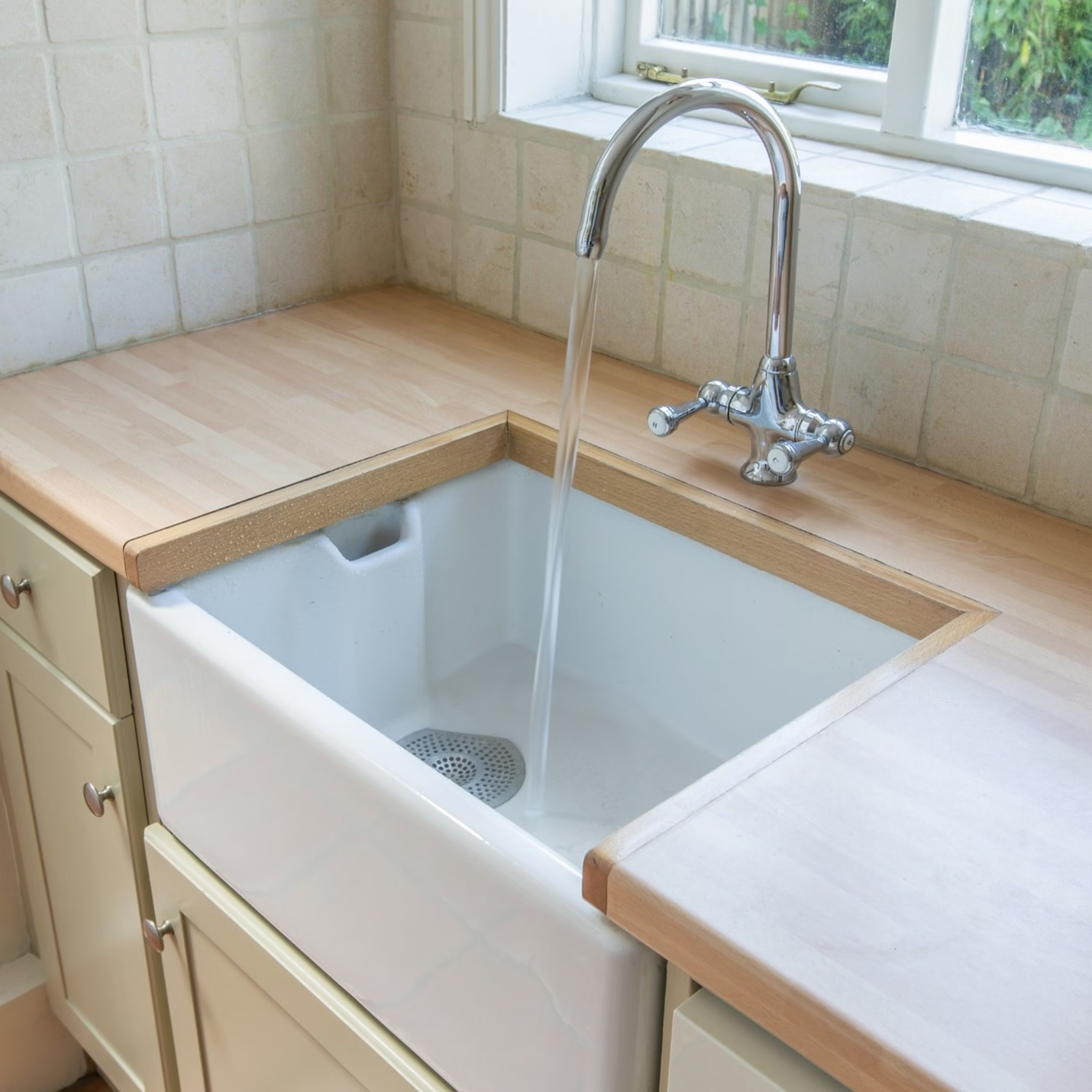
Cast iron sinks are durable and easy to maintain under normal use. Their enameled surface creates a classic appearance that works well in many kitchen styles.
At the same time:
- abrasive cleaners can damage the finish
- enamel may chip or scratch over time
- the material is significantly heavier than many alternatives
The added weight may influence cabinet and installation planning during a kitchen remodel.
Solid Surface Sinks
Solid surface sinks create seamless transitions when paired with matching countertops.
These sinks are often valued for:
- integrated appearance
- repairability
- softer impact resistance for dishes and cookware
They can also simplify cleaning because there are fewer visible seams and transitions.
Composite or Artificial Stone Sinks
Composite sinks offer strong scratch resistance and good heat tolerance.
Many homeowners choose them because they combine durability with a more textured or matte appearance compared to stainless steel.
However, scuffs and surface wear can sometimes be more difficult to repair or remove depending on the finish.
Acrylic Sinks
Acrylic sinks are generally one of the more economical options available.
While lightweight and affordable, they are:
- less heat tolerant
- more vulnerable to staining
- more susceptible to wear from certain products
For some kitchens, these tradeoffs may be acceptable. For others, long-term durability concerns may outweigh the lower upfront cost.
Kitchen Sink Configurations and Mounting Styles
Bowl Configuration
Single-bowl sinks provide uninterrupted washing space and are often helpful for large cookware.
Double-bowl sinks allow separation between washing, rinsing, soaking, and prep tasks. Lower dividers can improve flexibility and reduce overflow issues between bowls.
Triple-bowl sinks are less common but may support highly specialized workflows in larger kitchens.
Sink Depth
Deeper sinks help contain splashing and accommodate larger items, but excessive depth may become uncomfortable for some users during extended use.
Balancing comfort and function is important.
Offset Drains
Offset drains move the drain placement away from the center of the sink, creating more uninterrupted usable space while improving stacking flexibility.
This also allows water to drain more effectively when cookware or dishes are soaking.
Drop-In Sinks
Drop-in sinks install from above and rest on the countertop surface.
They are often easier to retrofit into existing countertops, but the exposed rim can collect debris and require more detailed cleaning.
Flush Mount Sinks
Flush mount sinks sit level with the countertop surface.
This style was more common with laminate countertops and older kitchen designs. While visually cleaner than traditional drop-in installations, the mounting transition can still collect grime over time.
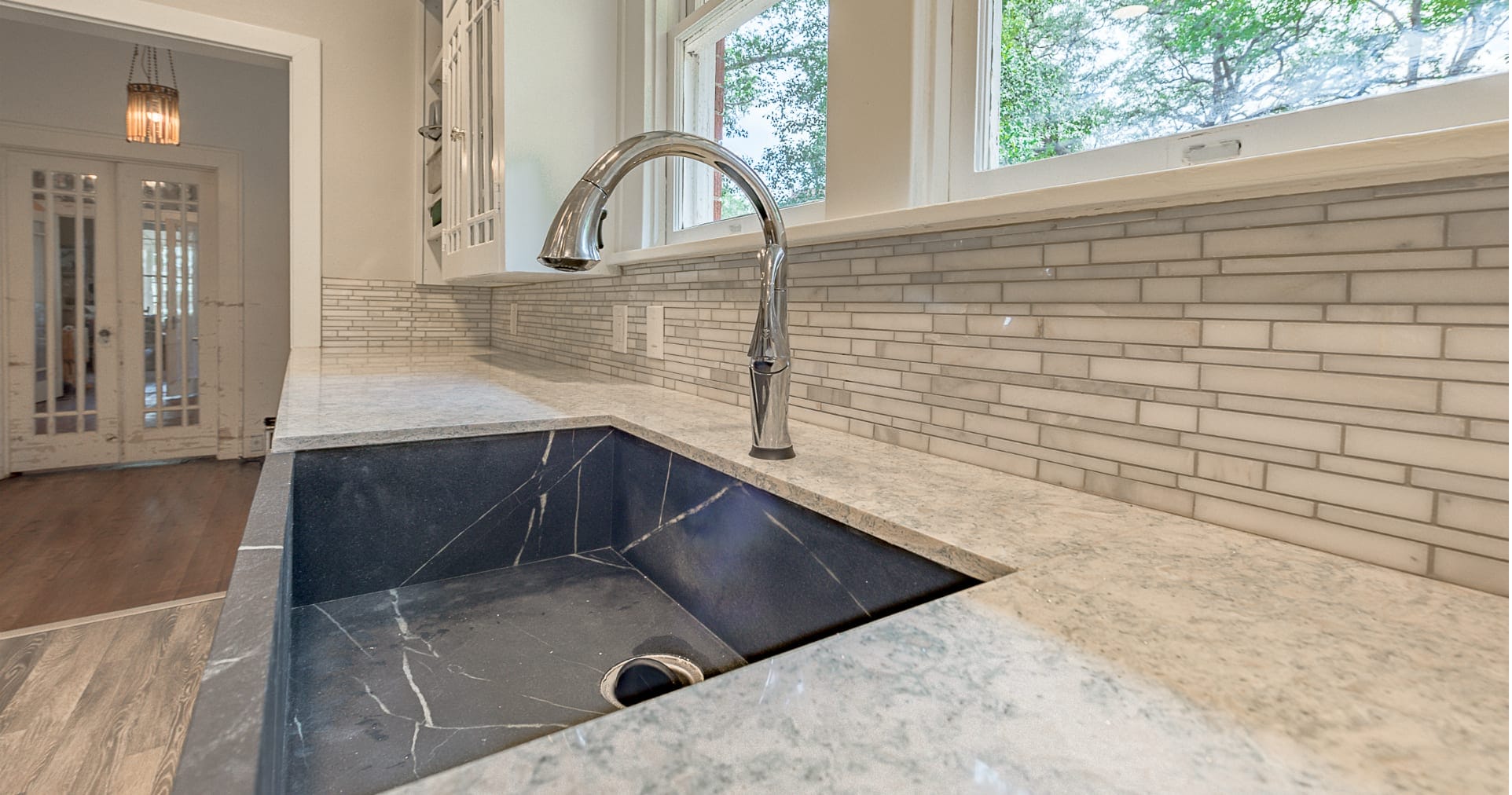
Undermount Sinks
Undermount sinks remain one of the most popular modern mounting styles because cleanup is simpler. Water and debris can be wiped directly into the sink without a raised edge interrupting the countertop.
However, undermount installations are not ideal for every countertop material and require proper support and planning during installation.
How Kitchen Sink Decisions Affect Long-Term Kitchen Function
Kitchen sink considerations influence daily life more than many homeowners initially expect.
The right sink can:
- improve kitchen workflow
- reduce cleanup frustration
- support cooking habits
- simplify maintenance
- preserve usable workspace
The wrong sink may create small inconveniences that repeat every day for years.
This is why kitchen planning should evaluate the sink within the context of the entire kitchen rather than as an isolated fixture selection.
Good remodeling decisions are rarely about finding the “best” product in a vacuum. They are about choosing systems and layouts that support how the homeowner actually lives.
How Stearns Design Build Approaches Kitchen Sink Planning
At Stearns Design Build, kitchen sink considerations are evaluated as part of the overall kitchen workflow rather than treated as a disconnected finish selection.
That process includes:
- understanding how the homeowner uses the kitchen
- evaluating prep and cleanup patterns
- balancing sink size with countertop function
- reviewing maintenance expectations
- coordinating sink selection with countertop materials and cabinet layouts
This planning process exists to reduce surprises later and help homeowners make decisions with real context rather than relying only on trends or isolated product photos.
A kitchen remodel functions best when decisions are made intentionally and in the right order. The sink is one of many components that contribute to how the kitchen performs over time.
Frequently Asked Questions
What is the most durable kitchen sink material?
Several materials offer strong durability, but durability depends on how the kitchen is used and maintained. Stainless steel, cast iron, and composite sinks are all commonly selected for long-term performance.
Are farmhouse sinks always a good idea?
Not necessarily. Farmhouse sinks can be highly functional, but they also reduce available cabinet and countertop space. Their scale should be evaluated within the full kitchen layout.
Are undermount sinks better than drop-in sinks?
Undermount sinks simplify countertop cleanup and remain popular in modern kitchens, but they are not compatible with every countertop material. The right choice depends on the countertop system and project goals.
What size kitchen sink should I choose?
The ideal sink size depends on kitchen size, workflow, cooking habits, and available counter space. Larger sinks are not automatically better if they reduce functionality elsewhere in the kitchen.
What kitchen sink material is easiest to maintain?
Maintenance expectations vary by homeowner preference. Stainless steel is practical and common, while solid surface materials can offer seamless cleaning advantages. Every material has tradeoffs that should be evaluated during planning.