
How Life Cycle Assessment Helps Create Homes That Perform Better Over Time
When choosing materials or planning a remodel, the immediate result is only part of the decision. Life cycle assessment in home design looks further ahead, considering the resources that go into a product or building decision, how it performs as it ages, its environmental impact over time, and what happens at the end of its useful life. This broader view can reveal consequences that are easy to miss when evaluating one characteristic at a time.
Why Life Cycle Assessment Matters in Home Design
Life Cycle Assessment, commonly shortened to LCA, is a method used to evaluate environmental impacts associated with a product, process, or service. An assessment considers relevant energy and material inputs, what happens as those inputs age, their potential environmental impacts throughout their lifespan, and how that information can inform a decision.
For a home, that creates a different way to think about materials and design choices. A countertop, floor covering, or plumbing fixture has an impact that continues after installation. Materials wear, require maintenance, may eventually need replacement, and can have different possibilities for reuse or recycling.
Looking at those factors together can expose trade-offs that may be missed when a decision is based on a single attribute. The original purpose of LCA is quantitative environmental accounting, but its broader value comes from encouraging a more complete view of how a choice performs throughout its life.
What Does a Life Cycle Assessment Consider?
At a high level, life cycle assessment follows a sequence that connects the beginning of a product’s life with what happens after it has served its original purpose.
- Identify the inputs. The assessment begins by accounting for relevant energy and materials associated with the product, process, or project.
- Consider what happens over time. The aging of those inputs and their environmental impacts are evaluated across their useful lifespan.
- Interpret the full picture. That information can then be considered together rather than evaluating a material according to one isolated characteristic.
For homeowners, the technical calculations behind a formal LCA may be less important than understanding the principle behind it. A decision that looks favorable at installation can look different when its full lifespan enters the conversation.
Cradle to Grave and Cradle to Cradle
Two terms commonly associated with lifecycle thinking are cradle to grave and cradle to cradle.
Cradle to grave follows a material from its beginning through its eventual disposal. Cradle to cradle continues the evaluation by considering how that material may enter another useful cycle through reuse or recycling.
That distinction changes the endpoint of the evaluation. If two materials serve a similar purpose in a home, their long-term impact may differ because of how they are produced, how they age, or what can happen to them after removal.
This is one reason lifecycle thinking can be useful during design. The material sitting in front of you is one stage in a much longer process.

Common Mistakes When Thinking About Material Lifecycles
One limitation of evaluating materials individually is that a single positive characteristic can overshadow the rest of the material’s lifecycle. A product may perform well in one category while presenting trade-offs elsewhere.
Another common limitation is stopping the evaluation at installation. Homes are expected to function for years, while many of their individual components will be repaired, replaced, reused, or discarded during that time. Considering those later stages provides more context for the original decision.
Lifecycle thinking also becomes less useful when every decision is treated in isolation. A house operates as a collection of connected materials and systems. Decisions made in one area can influence how the home performs and how it will need to be maintained later.
Materials and Systems Viewed Through a Lifecycle
Life cycle assessment can apply to familiar remodeling selections such as kitchen sinks, countertops, and floor coverings. The same thinking can extend across other materials and systems used throughout a house.
The question becomes larger than what a material looks like when it is new. Its expected lifespan, environmental impact, aging process, and eventual disposal or reuse all become relevant pieces of information.
This does not mean that every selection will produce one obvious answer. One of the stated advantages of LCA is its ability to expose trade-offs that a single-attribute comparison may overlook. Those trade-offs give the design team and homeowner more information to consider as the project develops.
A Home Has Another Lifecycle to Consider
Materials are only one part of a home’s lifespan. The people living there change too.
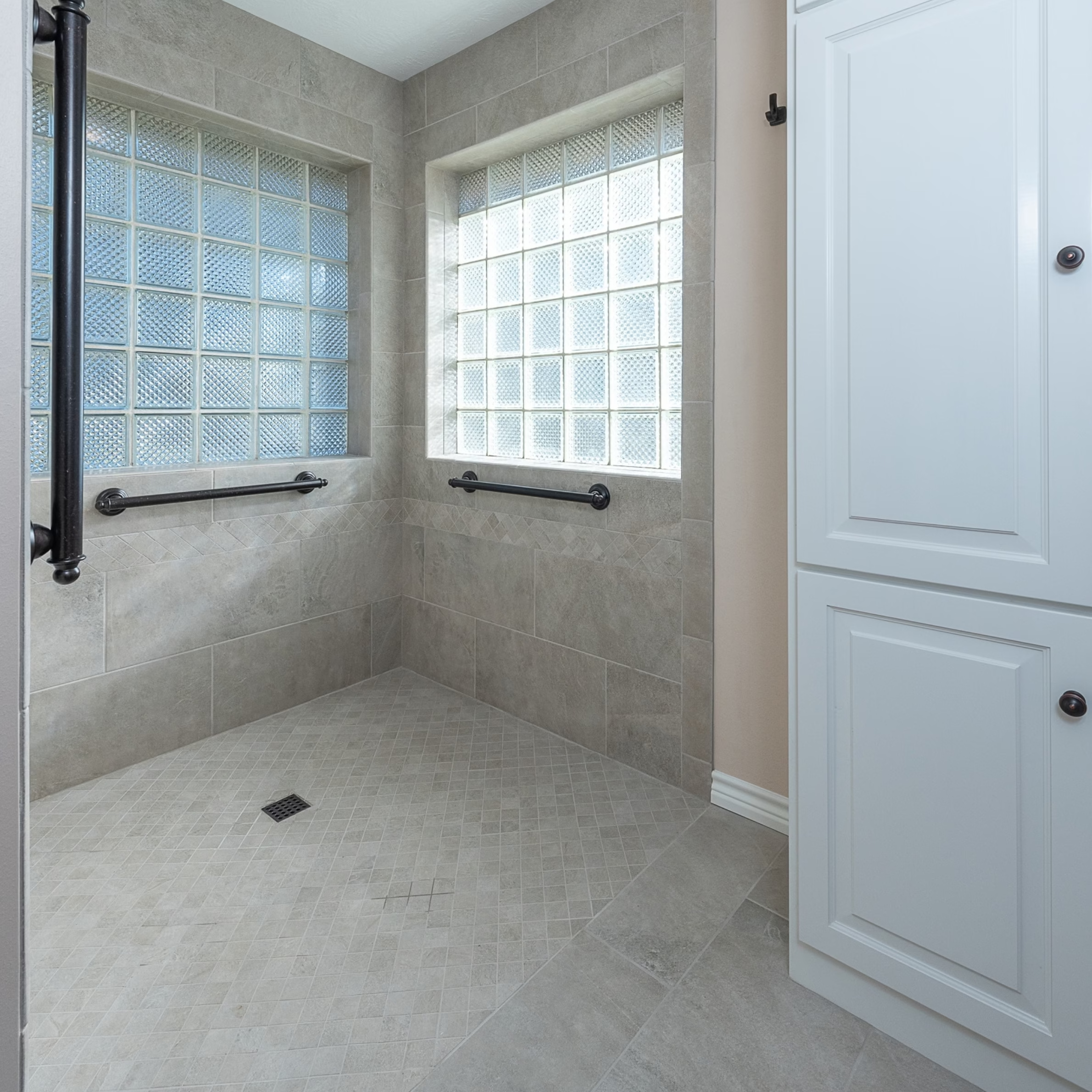
A house that works well for someone today may need to support different physical needs or living arrangements years later. Thinking about the lifecycle of the occupants can therefore influence design decisions alongside the lifecycle of the building itself. The size of the home, number of stories, presence of steps, and features such as grab bars can all affect how comfortably someone can continue using the space.
This is where lifecycle thinking connects with aging in place. Planning for changing needs can support a person’s ability to remain in their residence independently or with assistance. The original article also identifies potential effects on cost, independence, sustainability, and quality of life.
The connection is useful because a home’s performance cannot be separated entirely from the people it was designed to serve. Long-term design asks what happens to the building over time while also considering how the people using it may change.
How Lifecycle Thinking Can Affect the Longevity of a Remodel
A remodel changes a home at one point in what may be a much longer lifespan. Looking ahead can help put today’s decisions into that larger timeline.
Some components will wear faster than others. Some materials may have opportunities for reuse or recycling when their original purpose ends. Certain design decisions may continue serving the household even as the occupants’ needs change.
Thinking this way does not require predicting exactly what will happen decades from now. It creates a framework for considering consequences beyond installation day.
That is particularly valuable during remodeling because an existing home already has a history. Some elements may continue to perform well, while others have reached a point where replacement makes sense. Lifecycle thinking provides another lens for evaluating those conditions rather than assuming that everything old needs to go or everything existing should remain.
How Stearns Design Build Applies Long-Term Thinking
Whether we are remodeling an existing home or planning a custom home, we consider the different lifecycles involved in the house. The goal is to understand how design decisions may affect the home and the people living there over time.
That thinking begins during planning, when there is still room to evaluate options before construction decisions are locked in. Our design-build process gives us an opportunity to consider how a choice fits into the larger project instead of treating each selection as an isolated decision.
For the homeowner, that means technical considerations can be translated into questions that are easier to use during design. How is this expected to age? What happens when it eventually reaches the end of its useful life? Does the design still support the way the household expects to use the home later?
Those conversations help connect decisions made during design with the home that will actually be lived in after construction is complete. They also reflect our larger approach to planning: decisions are made with real information and with an understanding of what those choices are intended to accomplish. This aligns with Stearns Design Build’s process standard of translating technical steps into their meaning for the homeowner.
Frequently Asked Questions
What is life cycle assessment in home design?
Life cycle assessment is a method for considering the environmental impacts associated with a product, process, or service throughout its lifespan. In home design, that perspective can be applied to materials and other project decisions so their long-term impacts are considered alongside their immediate use.
What is the difference between cradle to grave and cradle to cradle?
Cradle to grave follows a material through disposal at the end of its useful life. Cradle to cradle considers the possibility of another cycle through reuse or recycling.
Does life cycle assessment only apply to building materials?
The formal environmental assessment focuses on products, processes, and services, but lifecycle thinking can also inform how a home is designed for the people who will occupy it. Changes in mobility or living arrangements can influence how well the house continues to serve its residents over time.
Can lifecycle thinking be used when remodeling an older home?
Yes. The original article specifically applies this perspective to both custom homes and existing-home remodels. In a remodel, the existing house becomes part of the evaluation because materials and features are already at different points in their useful lives.
Does life cycle assessment identify one correct material?
Life cycle assessment provides information for evaluating impacts and trade-offs. One of its advantages is revealing trade-offs that may be hidden when a product is judged according to only one attribute. The information can then support a more informed design decision.