
 How We Use Houzz in the Remodeling Design Process
A remodeling design starts with a lot of information that can be difficult to put into words. You may know that a kitchen feels too dark, that you want your bathroom to feel warmer, or that certain spaces immediately catch your attention. Turning those reactions into a clear design direction takes conversation, exploration, and visual references.
At Stearns Design Build, Houzz is one of the tools we use to make that communication easier. It gives our clients a place to explore design ideas and show us what catches their attention. We also maintain our own Ideabooks to help clients who need a starting point, along with collections of completed Stearns projects that show ideas brought to life.
Why We Use Houzz for Remodeling Inspiration
Houzz works somewhat like Pinterest, but its photo library is centered specifically on homes, design, and remodeling. That focus makes it particularly useful during the early stages of design.
A homeowner can begin with something broad, like kitchen or bathroom photos, and gradually narrow the results. Houzz offers filters for design style, color, and room-specific characteristics. A kitchen search, for example, can be refined by kitchen size, cabinet finish, countertop material, backsplash color, flooring, number of islands, budget, and even metropolitan area.

Those filters can help when a client has a general idea but needs to see more examples. Someone interested in a farmhouse kitchen can explore that style, then narrow the results based on other characteristics that matter to them. Someone who does not yet know which style to search for can start more broadly.
The photos they find can then be saved into Houzz Ideabooks for reference throughout the design process.
Our Starting-Point Ideabooks and Your Client Ideabook Serve Different Purposes
We use two types of Ideabooks with clients, and the distinction between them is important.
Stearns maintains public Ideabooks organized around established design themes and specific areas of interest. A client’s Ideabook becomes a private working collection where their individual preferences can develop throughout the design process.
One helps you find a direction. The other helps us understand your direction in much greater detail.
Stearns Ideabooks Give You Somewhere to Begin
You do not need to know your design style before starting a remodel.
Some homeowners come to us already knowing that they prefer Traditional or Modern design. Others know what they like when they see it but would have a hard time putting a name to it. Our public Houzz Ideabooks give those clients an easier starting point.
We maintain collections organized by design themes such as Traditional, Modern, and Farmhouse, along with Ideabooks focused on specific areas of the home or design considerations, such as kitchen storage.
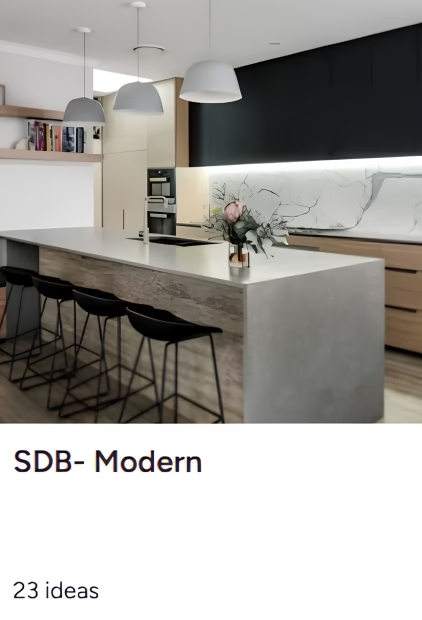
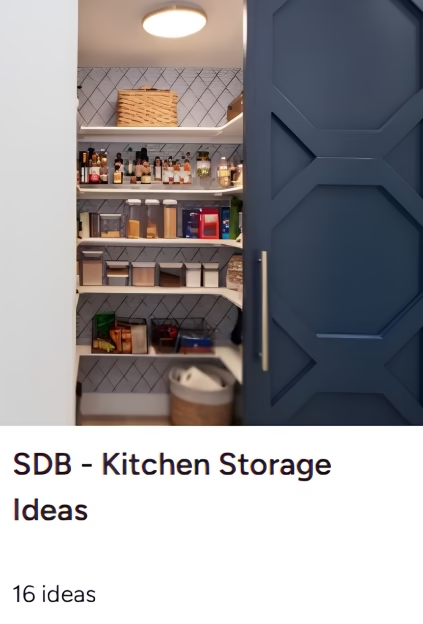
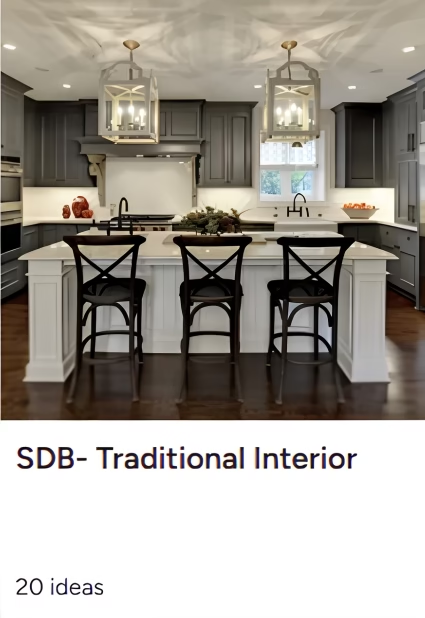
Browsing several of these collections can help a client notice which directions consistently appeal to them. Equally useful is noticing what does not.
Maybe the warmth of Traditional interiors feels right, but some of the detailing does not. Perhaps the simplicity of Modern design catches your attention, but you want more texture or color in your own home. Those reactions begin giving us useful information without requiring you to choose a design label and commit to everything associated with it.
Our starting-point Ideabooks can also give clients better language for their own Houzz searches. Once you have a clearer sense of the themes or features that interest you, you can explore Houzz’s larger photo library and begin building a much more personal collection.
Your Private Ideabook Helps Us Learn What You Like
A client’s Ideabook has a different job.
This collection is specific to your project and kept private rather than being available for public browsing. It becomes a shared visual reference between you and the Stearns team.
The images in it do not need to match. In fact, trying to make every saved room conform to one style can leave out some of the most useful information.
You might save a Traditional kitchen because you love the cabinetry and a much more contemporary kitchen because you like its island. A third photo might be there solely because of the lighting. Another room may catch your attention because of one small storage detail.
We want to know what made you stop and save each one.
Houzz allows notes to be added directly to saved items, which makes those individual images much more informative. You can tell us that you like the cabinet color but dislike the hardware. You might save a bathroom because you like the shower but make a note that the flooring feels too busy.
What you don’t like can be just as helpful as what you do. Those comments give our design team context that the photo alone cannot provide. Without the note, we may see several possible reasons you saved an image. With it, we have a much clearer idea of where to focus and what should stay out of the conversation.
What We Learn From Your Ideabook
One image gives us a clue. A growing collection gives us more to work with.
As clients save photos and explain their reactions, we can begin looking across the collection for preferences that may not have been obvious at first.
You may repeatedly save kitchens with natural wood even though the rooms represent several different styles. Storage solutions may keep catching your attention. Maybe the images you like tend to feel brighter and more open than your current home.
We can also see where your preferences vary from room to room or where a particular feature matters more than an overall aesthetic.
That is more useful than assigning your project a style based on a handful of photos.
During design conversations, we can return to those examples and ask more specific questions. The Ideabook gives us a shared visual reference, while the conversation helps us understand what those images mean to you.
Inspiration Gives Us Direction, Not a Blueprint
Every photo on Houzz belongs to another space.
Its dimensions may be different from yours. The windows may face another direction, or the architecture may come from an entirely different type of home. The people who use that room may have different routines and priorities.
We use the ideas within an inspiration image rather than treating the entire room as something to reproduce.
A kitchen photo may tell us that you prefer a lighter visual feel. A bathroom might reveal an interest in a certain storage arrangement. Another image may show a material combination you had never known how to describe.
Our design process takes that information and considers it alongside your existing home and the goals established for your project. Over time, a collection of external inspiration helps us define a design that belongs specifically to you.
Completed Stearns Projects Offer Another Source of Ideas
Houzz also gives us a place to share the other end of the design process: completed work.
Our project collections allow homeowners to browse spaces Stearns Design Build has actually designed and built.
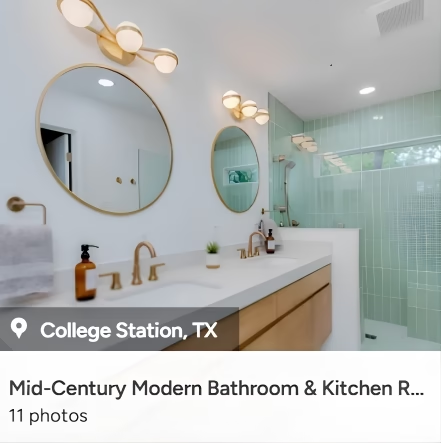
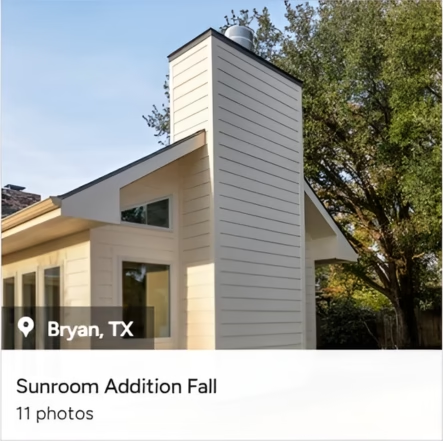
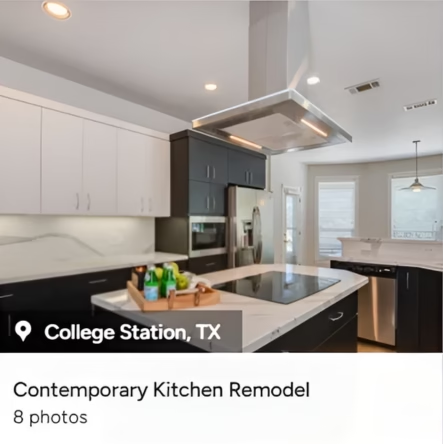
These photos can serve as another source of inspiration, but they also provide context that an image from an unfamiliar project cannot.
When a client points to a feature in one of our completed projects, our knowledge does not stop at what appears in the photograph. We know the project behind it. That can make a completed Stearns space particularly useful when something in it relates to a design conversation we are having with a current client.
It also completes the cycle of how we use Houzz. Finished projects become inspiration that another homeowner can explore, just as previous inspiration helped earlier clients communicate the direction they wanted to pursue.
How Houzz Supports the Stearns Design Process
Houzz helps us replace some of the ambiguity that naturally comes with talking about design.
A client does not have to learn professional design terminology to explain every preference. They can show us. Our starting-point Ideabooks help when someone is unsure where to begin, while private client Ideabooks allow those early reactions to become increasingly specific.
The platform also gives clients room to explore between meetings. You can browse when you have time, save something that catches your attention, and leave a note while your reaction is still fresh.
By the time we are developing the design in greater detail, we have more than a collection of attractive rooms. We have a record of the things you have responded to along the way.
That gives our designers better information to work from as we translate your ideas into a design that makes sense for your home and the way you want to live in it.
Frequently Asked Questions
Do I need to know my design style before working with Stearns?
No. Our public starting-point Ideabooks are there in part to help you explore different design directions. Seeing examples of Traditional, Modern, Farmhouse, and other styles can help you identify what catches your attention before you begin searching more specifically.
Do all of the photos in my client Ideabook need to match?
No. Save the individual ideas that interest you, even when the rooms look completely different. A note explaining what you like about each photo helps us understand why it belongs in your collection.
Should I save photos of things I don’t like?
A photo can still be useful when there is something you want us to avoid. If you like one part of a room but dislike another, save it and use the note to explain both reactions. Knowing what feels wrong to you can help us better understand the boundaries of your preferences.
Are my project Ideabooks visible to everyone on Houzz?
Stearns’ general inspiration Ideabooks are public so homeowners can explore them. Client-specific Ideabooks used for individual projects are kept private and shared with the client and Stearns team rather than being available for public browsing.
Can I search Houzz even if I don’t know exactly what I want?
Yes. Houzz’s home-design focus lets you start with a broad category, such as kitchens, and narrow your search as you discover what interests you. Filters vary by category and can include characteristics such as style, color, room size, materials, budget, and location.
Can I look at completed Stearns projects on Houzz?
Yes. We use our Houzz profile to share completed Stearns Design Build projects as another resource for homeowners gathering ideas and learning more about our work.