
How to Choose a Contractor in College Station and Why Design Build Matters
Most homeowners start the same way when planning a home remodel in College Station. They gather a few bids, compare numbers, and try to make a responsible decision.
It feels like due diligence.
But this is where many projects quietly go off track. Price comparisons only work when everything being compared is equal, and in remodeling, that is rarely the case. Behind every number is a completely different level of planning, communication, and accountability.
Choosing a contractor is not about finding the lowest cost. It is about understanding how the work will be approached and what kind of experience you are stepping into.
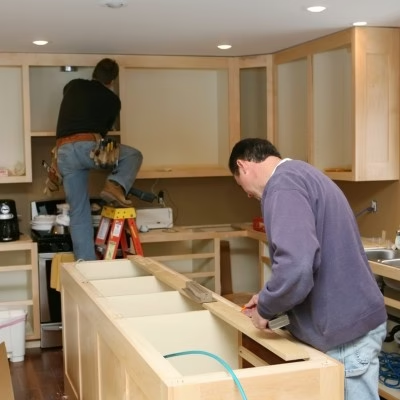
Why Choosing a Contractor Is More Than Comparing Prices
In Texas, you need a license to sell a house or even cut hair, but not to build or remodel a home.
That reality changes how decisions should be made.
Without a strong regulatory filter, the responsibility shifts to the homeowner. The difference between contractors often comes down to internal standards rather than external requirements. That is why two bids for the same project can look similar on the surface but lead to completely different outcomes.
Lower bids are often built on missing information. Scope gaps, vague allowances, or optimistic assumptions can make a price look appealing early. Those same gaps tend to show up later as change orders, delays, or compromises in quality.
In some cases, low bids are not just incomplete, they are intentionally structured to win the job and adjusted later through change orders.
If a number feels too good to be true, it usually reflects uncertainty that has not been addressed yet.
What You Are Actually Hiring When You Choose a Contractor
When you hire a contractor, you are not just hiring someone to build.
You are hiring a system.
That system includes how decisions are made, how problems are handled, how information is communicated, and how your home is treated while work is happening. Some companies operate with clear processes that guide each phase of a project. Others rely on experience alone and make decisions as they go.
The difference shows up quickly once work begins.
A design build firm approaches a project as a coordinated process from the beginning. Planning, design, and construction are connected, which allows decisions to be made earlier and with more clarity. That structure reduces the number of unknowns that typically surface later in a remodel.
A project can look similar at completion no matter who builds it.
What most homeowners remember is everything that happened along the way.
That experience is not accidental. It comes from how the contractor plans, communicates, and manages decisions from the beginning.
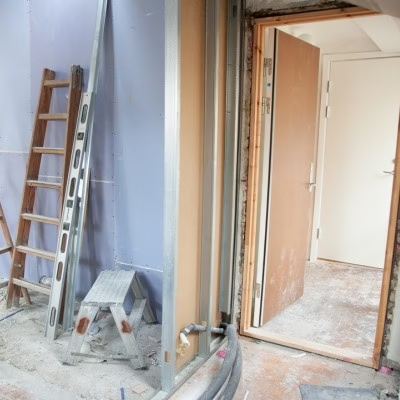
How to Choose a Contractor Without Relying on Surface-Level Signals
Most advice on how to choose a contractor comes in the form of checklists. The problem is that lists can make everything seem equally important, when in reality, certain signals tell you far more about how a project will unfold.
Signals of Stability
Professional standing, insurance coverage, and time in business are foundational.
These factors help you filter out risk early. A contractor should be able to clearly explain their insurance, show proof of coverage, and demonstrate that they have operated long enough to refine their approach. Experience is not just about years. It reflects how many situations they have already worked through.
Your home should not be where those lessons are first learned.
Signals of Accountability
Reputation is less about star ratings and more about patterns.
Look for consistency in how past clients describe communication, follow-through, and problem resolution. A remodeler in College Station who is invested in the local community has more at stake than completing a single job. That connection tends to influence how they handle challenges when they arise.
Signals of Process
Cleanliness on a jobsite is often treated as a preference. It is actually a sign of structure.
Dust control, debris removal, and jobsite organization do not happen by accident. They come from repeatable routines. When a contractor can explain exactly how they manage these elements, it usually reflects a broader level of organization across the entire project.
The same applies to pricing.
Ask how a contractor arrives at a number. You are not looking for markup details. You are listening for whether there is a clear method behind it. Disorganized pricing often leads to disorganized projects.
Signals of Capability
Remodeling is not static. Materials, building science, and best practices continue to evolve.
A strong contractor maintains a learning mindset. They stay current on topics like moisture control, insulation, and indoor air quality, not because it is trendy, but because it directly affects how a home performs over time.
Signals of Fit
Communication is one of the most overlooked factors, yet it has one of the biggest impacts.
You should feel comfortable asking questions, raising concerns, and having honest conversations. If communication feels unclear or rushed early, it rarely improves once construction begins. A general contractor in Bryan should be able to explain decisions in a way that makes sense without avoiding the details.
Why the Lowest Bid Often Leads to the Worst Outcome
Choosing the lowest bid often feels like a smart financial move.
In practice, it usually introduces more uncertainty.
Many low bids are structured to look competitive upfront. Missing scope, unclear specifications, or lower-quality materials can reduce the initial number. As the project progresses, those gaps begin to surface. Costs increase, timelines shift, and the original expectation starts to unravel.
We have seen homeowners go through this more than once.
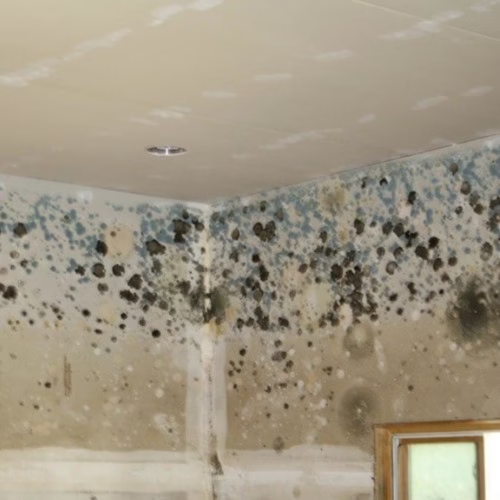
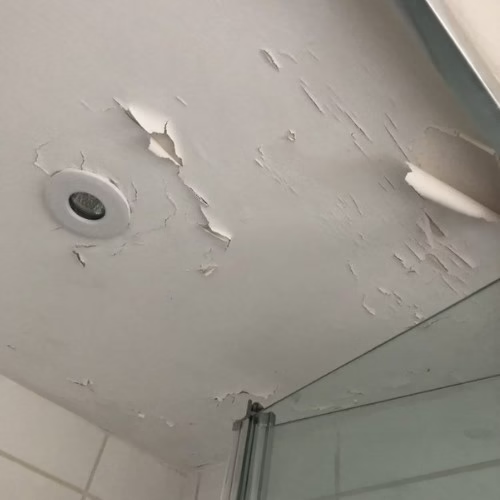
One client came to us after hiring a contractor based on price. Within a year, mold had started growing on the bathroom walls. On top of that, the paint was peeling, and the cabinet drawers were already failing.
When they tried to get the contractor back out to address the issues, the calls stopped being returned.
What looked like a cost savings upfront turned into a full redo of the project.
A predictable project comes from clarity, not from the lowest starting number.
What Is the Difference Between a Design-Build Firm and a General Contractor?
This is one of the most important distinctions to understand.
A general contractor typically enters the process after design is complete. They are responsible for building what has already been planned. If the design exceeds the budget, adjustments happen after the fact, often requiring redesign and added time.
A design build firm, like ours in College Station, integrates design and construction from the beginning.
That means the team responsible for building the project is involved while decisions are still being made. Budget, materials, and feasibility are considered alongside design, not after it.
This alignment allows homeowners to make informed decisions earlier, when changes are easier and less costly.
Why Design Build Creates a More Predictable Remodeling Experience
Predictability is what most homeowners are actually looking for, even if they describe it as staying on budget or avoiding stress.
Design build supports that in a few key ways.
Early collaboration keeps the project grounded in reality. Instead of designing first and pricing later, decisions are shaped by both vision and feasibility at the same time. That reduces the chance of major revisions.
It also creates a single point of responsibility.
When design and construction are handled by separate entities, it is common for responsibility to become unclear when issues arise. A design build approach removes that tension. The same team is accountable from start to finish.
For a home remodel in College Station, that level of alignment often translates into fewer surprises and a smoother experience overall.
That alignment is what creates a smoother experience.
Instead of reacting to problems, the project is guided with a plan. Instead of guessing on costs, decisions are made with real information. Instead of managing multiple parties, the homeowner has one team responsible for the outcome.
That shift is where most of the stress in remodeling is either created or avoided.
Are Contractor Matching Services Like HomeAdvisor Reliable?
Online platforms can be helpful as a starting point, but they come with limitations.
Services like HomeAdvisor provide access to a large number of contractors and include basic screening measures. In a state with limited oversight, that level of filtering can be useful.
At the same time, these platforms operate on paid participation.
Contractors pay to be listed and to receive leads. Many established contractors do not participate in these platforms at all because they do not rely on paid leads to stay busy. The pool you see is not always the pool of the best contractors.
These tools can help you gather names. They should not be the sole basis for your decision.
How Do You Know If a Contractor Has a Strong Process?
The best way to evaluate a contractor is to listen to how they think.
Ask about how they handle changes once a project begins. Ask how they communicate schedules. Ask how they approach design decisions that may not align with a homeowner’s initial preferences.
A few questions tend to reveal how a contractor actually operates:
- Tell me about a difficult client and what you learned from that experience
- How do you handle changes once a project has started
- Can you walk me through a real project schedule
Strong answers are specific.
You should hear how decisions are made, how information is shared, and how issues are resolved. Vague responses often indicate that these situations are handled reactively rather than through a defined system.

How Stearns Design Build Approaches Remodeling Projects
Most homeowners feel like they need to know the right questions before they ever talk to a contractor.
That is not how this should work.
Our role is to guide that process so you are not left guessing what matters and what does not.
We start with clarity. That means understanding how you live in your home, what is not working, and what a successful outcome actually looks like before decisions are made too quickly.
From there, planning becomes the tool that protects the project. Instead of jumping to pricing based on loose ideas, we build a clear scope and direction first. That prevents budget surprises and reduces the need for late changes.
As the project develops, design and construction stay aligned. The same team responsible for building your home is involved while decisions are still being made. That keeps expectations realistic and decisions grounded in how the project will actually be built.
Most of the issues homeowners associate with remodeling do not come from construction itself.
They come from decisions being made too late, information being unclear, or expectations not being aligned early.
That is what our process is designed to prevent.
Frequently Asked Questions
How do I choose the right contractor in College Station?
Look for clear communication, a structured process, verified insurance, and a consistent reputation. The right contractor should be able to explain how they manage decisions, pricing, and the day-to-day realities of a remodel.
Is the lowest remodeling bid usually the best option?
No. Lower bids often reflect missing scope, unclear assumptions, or lower-quality materials. A well-developed proposal is usually more accurate and leads to fewer surprises during construction.
What is the difference between a design build firm and a general contractor?
A general contractor builds from completed plans. A design build firm connects design and construction early so budget, feasibility, and design decisions stay aligned throughout the project.
Are services like HomeAdvisor reliable for finding a contractor?
They can help you gather names, but they do not show the full market. Many experienced contractors do not rely on paid lead platforms, so they may not appear there.
What should I ask before hiring a remodeler in College Station?
Ask how they handle changes, how they communicate schedules, how they develop pricing, and what they have learned from past projects. Specific, thoughtful answers usually indicate a stronger process.