
What Is the True Value of Remodeling Your Home?
The value of remodeling your home is measured by more than the initial project cost. A home carries daily routines, personal history, and years of memories. When homeowners compare remodeling, moving, or smaller updates, the long-term value comes from understanding what each choice requires and what each choice gives back.
What the Value of Remodeling Means in Residential Design
For many homeowners, the cost of remodeling is one of the biggest considerations when deciding what to do next with their home. That is understandable. Remodeling is a meaningful investment, and homeowners should feel confident about where their money is going.
However, evaluating the value of remodeling your home requires looking beyond the construction estimate alone. Every option has a cost attached to it. Some costs show up clearly on paper, while others appear through time, stress, inconvenience, or future repairs.
A home is rarely just a collection of walls and finishes. It is where routines are built, families grow, neighbors become familiar, and memories collect over time. For homeowners who already love where they live, remodeling can offer a way to preserve what works while improving what no longer supports their needs.
Why Remodeling Decisions Affect the Way You Live
One of the most common decisions homeowners face is remodeling vs moving. When a home no longer fits the way you live, moving can feel like the most direct solution. However, the full cost of moving is often much larger than the price difference between two homes.
Preparing a house for sale often comes with expenses before a homeowner ever reaches closing. Painting, landscaping, repairs, cleaning, inspections, and staging can quickly add up. Even moving within the same Bryan or College Station community can require a significant investment of time and money.
There are also costs that are harder to calculate.
Finding another home that fits your location, layout preferences, lifestyle, and future needs can take months. Packing and unpacking a household requires energy. Changing neighborhoods, routines, and familiar spaces impacts more than a budget.
For some homeowners, moving is absolutely the right choice. For others, the better question becomes whether the home they already love can be adapted to support their next chapter.
Common Misunderstandings About Remodeling Value
“DIY Remodeling Always Saves Money”
DIY projects can be a good fit for certain homeowners and certain types of improvements. Many people enjoy working on their homes, learning new skills, and being involved in the process.
The important part is understanding where personal ability, available time, and project complexity meet.
Home improvement shows often make remodeling appear simpler than it is. A project that looks straightforward on the surface may involve structural considerations, moisture management, electrical planning, plumbing systems, or other details that are difficult to see once everything is finished.
We once worked with a homeowner named Sally who had spent years restoring an older home she inherited. She was patient, detail-oriented, and had completed beautiful woodworking throughout the house. Her trim work showed a level of craftsmanship that genuinely stood out.
Years later, she noticed soft spots developing in her flooring and called us to investigate. The visible craftsmanship was excellent, but hidden moisture issues had caused damage beneath the surface.
The challenge was not a lack of effort or care. It was simply that finish work and building science require different types of knowledge.
A successful remodel depends on both what you see and what happens behind the walls.
“The Lowest Remodeling Bid Creates the Best Value”
When comparing remodeling contractors, it is natural to look closely at price. Homeowners want to make responsible financial decisions, and collecting multiple estimates is a common part of the process.
The challenge comes when estimates are treated as equal without understanding what is included.
Unlike many industries, residential remodeling in Texas does not require the same licensing standards homeowners might expect. The experience, planning process, documentation, and accountability behind each estimate can vary significantly.
A lower price may reflect efficiency, but it may also reflect missing details.
We have met homeowners who selected a lower bid only to discover later that important pieces of the project were unclear. In some cases, repairs or unfinished work ended up costing more than the original savings.
The number on the estimate matters, but the plan behind that number matters too.
“New Construction and Remodeling Costs Should Be the Same”
Another common misunderstanding is comparing remodeling costs directly to the square-foot cost of building a new home.
New construction and remodeling are different processes.
Many new homes are built through repeatable systems where materials, designs, and construction methods can be duplicated across multiple houses. Remodeling requires working within an existing structure that was built years or even decades earlier.
A remodeling team has to understand what is already there, solve existing challenges, protect the parts of the home that remain, and create something new within those conditions.
The value comes from creating a solution around a specific homeowner and a specific home.
How Value Shows Up in Real Homes
A successful remodel begins with understanding what a homeowner wants their home to support.
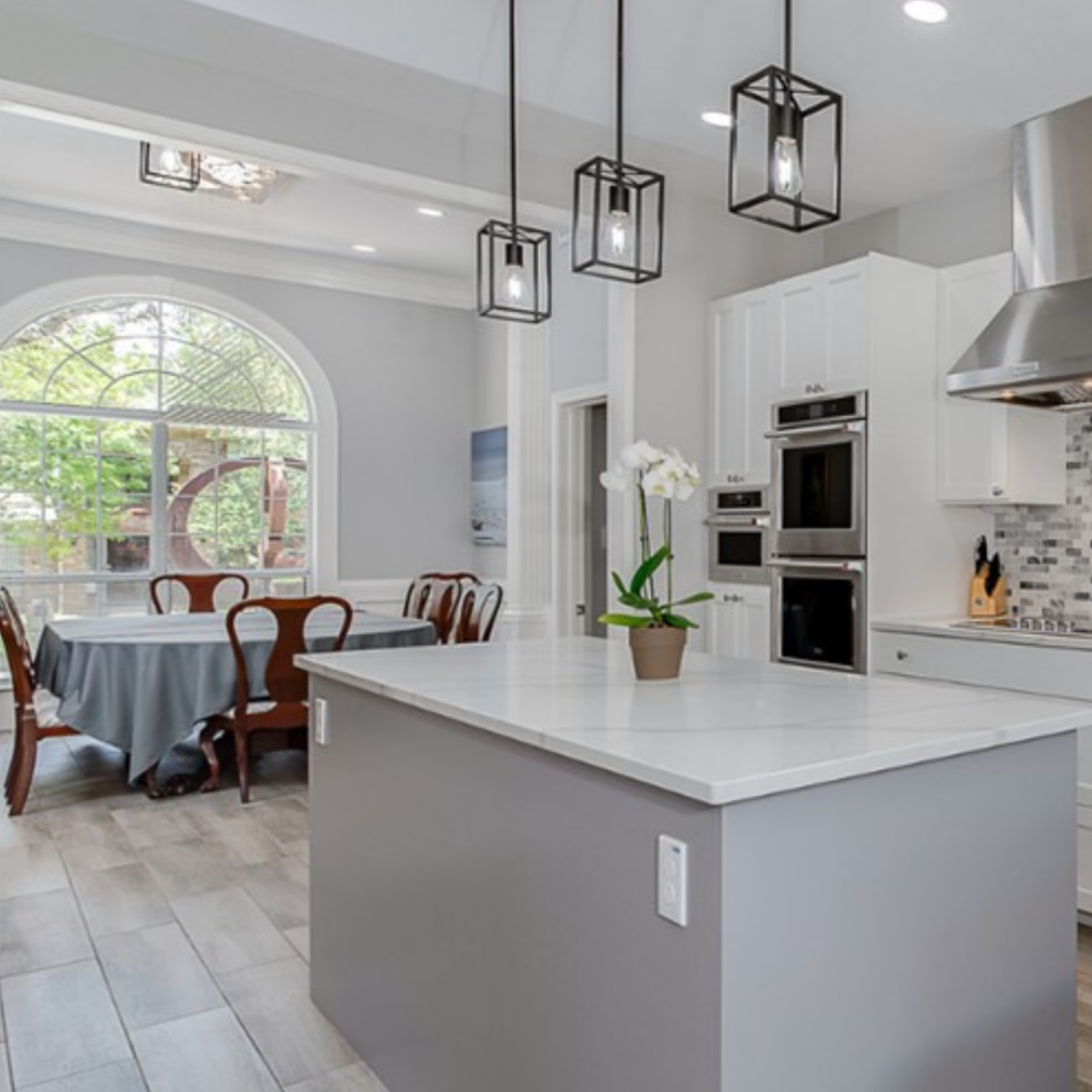
Sometimes that means improving a kitchen where everyone gathers but storage no longer works. Sometimes it means changing a bathroom so it feels comfortable for the future. Other times, it means adjusting the layout because the way a family lives has changed since they first moved in.
The value of remodeling comes from creating a home that fits the people living there. Research from the National Association of Realtors’ Remodeling Impact Report also highlights that homeowners often measure remodeling value through their experience living in the home, not only through financial return.
The best results happen when decisions are made intentionally. Design choices, budgets, materials, and construction plans all connect. When those pieces are aligned early, homeowners can make decisions with a better understanding of their investment.
How Stearns Design Build Approaches Remodeling Value
At Stearns Design Build, we believe homeowners deserve a clear understanding of their project before construction begins.
Our process is designed around making decisions in the right order. Before construction starts, we work through goals, existing conditions, design details, scope, and budget alignment so homeowners have real information guiding their decisions.
A remodeling investment should support the way you want to live in your home. That requires more than choosing finishes or updating a space. It requires understanding what matters most, what each of those goals cost to achieve, and creating a plan around those priorities.
Frequently Asked Questions
Is remodeling your home worth the investment?
Remodeling can be a worthwhile investment when you already love your home, location, or community but the space no longer supports your needs. The value depends on your goals, the condition of your home, and what improvements will create meaningful long-term benefits.
Is it better to remodel or move?
The right choice depends on what you want to change. Moving may make sense when location or major factors cannot be adjusted. Remodeling may be a better fit when you love your home but need it to function differently.
Why does remodeling sometimes cost more than homeowners expect?
Remodeling involves working within an existing structure, which requires careful planning and problem-solving. Costs are affected by the condition of the home, project complexity, material choices, and the level of detail included in the scope.
Can DIY remodeling save money?
DIY remodeling can save money on some projects, especially when the work matches the homeowner’s experience and available time. More complex projects may require professional knowledge because hidden systems can affect the safety and long-term performance of the home.
How should I compare remodeling contractors?
A remodeling estimate should be compared by looking at the full scope, planning process, communication expectations, and what is included. The lowest initial price does not always represent the final cost or overall value.