
Kitchen Cabinet Considerations: What Actually Impacts Quality, Function, and Long-Term Performance
Kitchen cabinets do more than define how a space looks. They affect how your kitchen functions day to day, how well it holds up over time, and how healthy the materials are inside your home. The type of cabinet, the way it is built, and the hardware used all contribute to long-term performance.
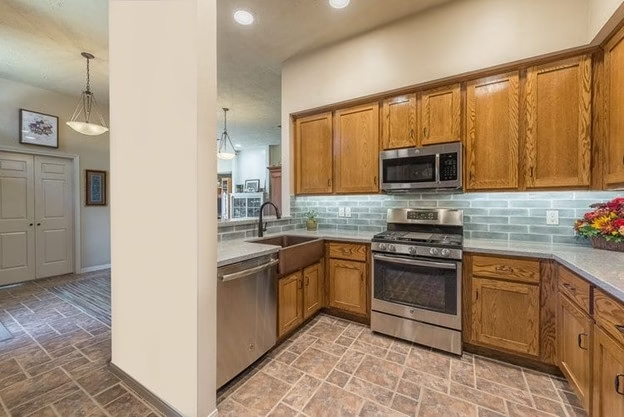
Why Kitchen Cabinet Decisions Matter
Cabinets are one of the most used systems in a kitchen. Every drawer, hinge, and surface gets repeated use, often multiple times a day. When cabinet decisions are made based only on appearance, the result is usually frustration over time.
What matters more is how the cabinets are constructed, how they respond to moisture and movement, and how easily they can be adjusted or maintained as the home settles. These decisions influence durability, daily usability, and even indoor air quality depending on the materials selected.
Kitchen Cabinet Types and What They Mean for Performance
When people search for kitchen cabinet types or different types of kitchen cabinets, they are usually trying to understand what separates one option from another. The difference is not just how they are made, but how they perform over time.
Manufactured Cabinets
Manufactured cabinets are the most common option across the country. They are produced in a controlled setting and offered through a catalog of sizes, finishes, and configurations.
They can range widely in quality. Some are built with lower-cost materials and hardware, while others are produced at a much higher level with more durable finishes.
The main limitation is flexibility. If a size or feature is not offered in the catalog, it typically cannot be created. This can lead to filler pieces or design compromises in certain layouts.
Site Built Cabinets
Site built cabinets are commonly used by volume builders. These cabinets are constructed directly in the home and often rely on existing walls for structural support.
This approach reduces material costs, but it introduces tradeoffs. The cabinet boxes are not fully independent, and face frames are often made from plywood rather than solid wood. The result is a system that can be harder to modify later and may not hold up as well over time.
Because they are assembled in place, consistency in joinery and finish quality can vary depending on site conditions.
Custom Shop Built Cabinets
Custom shop built cabinets combine flexibility with controlled construction. They are built off-site in a dedicated shop, allowing for tighter assembly, better material selection, and more consistent quality.
This approach allows for full customization without relying on a fixed catalog. Cabinet boxes are fully constructed rather than dependent on surrounding walls, and joinery tends to be stronger and more precise.
Material selection becomes a major advantage here. Lower-quality cabinets often rely on materials like MDF that do not respond well to moisture and may contain higher levels of VOCs. Shop-built cabinets can be constructed using higher-grade plywood and low-formaldehyde materials, which contributes to both durability and a healthier indoor environment.
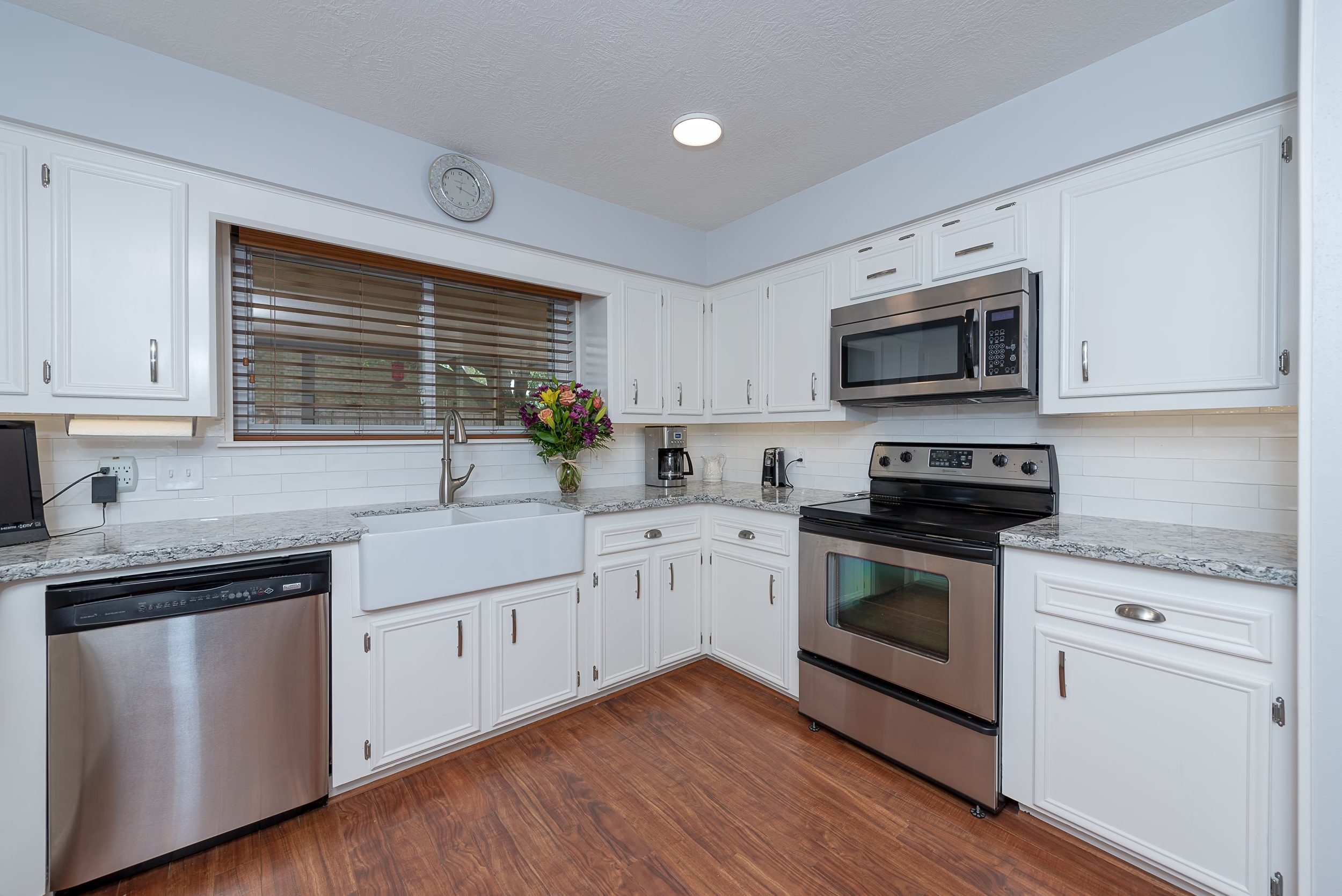
Materials That Affect Cabinet Durability and Indoor Health
The material inside a cabinet is rarely visible, but it has a significant impact on how the cabinet performs.
Plywood vs. MDF
Plywood is generally more stable and more resistant to moisture. It tends to hold fasteners better and maintains its structure over time.
Medium Density Fiberboard (MDF) is often used as a cost-saving material. While it can create smooth painted finishes, it does not tolerate water well and can break down more quickly in areas like kitchens where humidity and spills are common.
Material selection also affects indoor air quality. Some engineered wood products contain higher levels of formaldehyde and other VOCs, which can off-gas into the home over time. According to the EPA Indoor Air Quality, pressed wood products such as particleboard and MDF are among the more common sources of these emissions in residential environments. These are not always visible decisions, and they are often not clearly presented during cabinet selection.
Hardware That Impacts Daily Use
Cabinets are only as functional as the hardware that supports them. This is where many long-term frustrations begin.
Drawer Slides
A drawer that sticks or does not close properly quickly becomes a daily annoyance. Higher-quality drawer slides provide smoother operation and maintain their performance over time. They also tend to handle weight better, which matters for items like cookware and utensils.
Hinges and Door Function
Cabinet doors rely on hinges that allow for adjustment as the home naturally shifts over time. Concealed or European-style hinges are commonly used because they offer more flexibility for alignment.
There are also different door configurations, including partial overlay, full overlay, and inset. Each requires a slightly different hinge system and affects how the cabinet looks and functions.
Soft-close features are now common and help reduce wear by preventing doors and drawers from slamming.
Knobs and Pulls
Hardware on the surface of the cabinet plays both a functional and aesthetic role. While there are many styles available, some homeowners choose to eliminate knobs and pulls entirely by incorporating edge profiles that allow doors and drawers to be opened from the side.
This creates a cleaner appearance and can make cleaning easier, but it requires careful design to ensure usability.
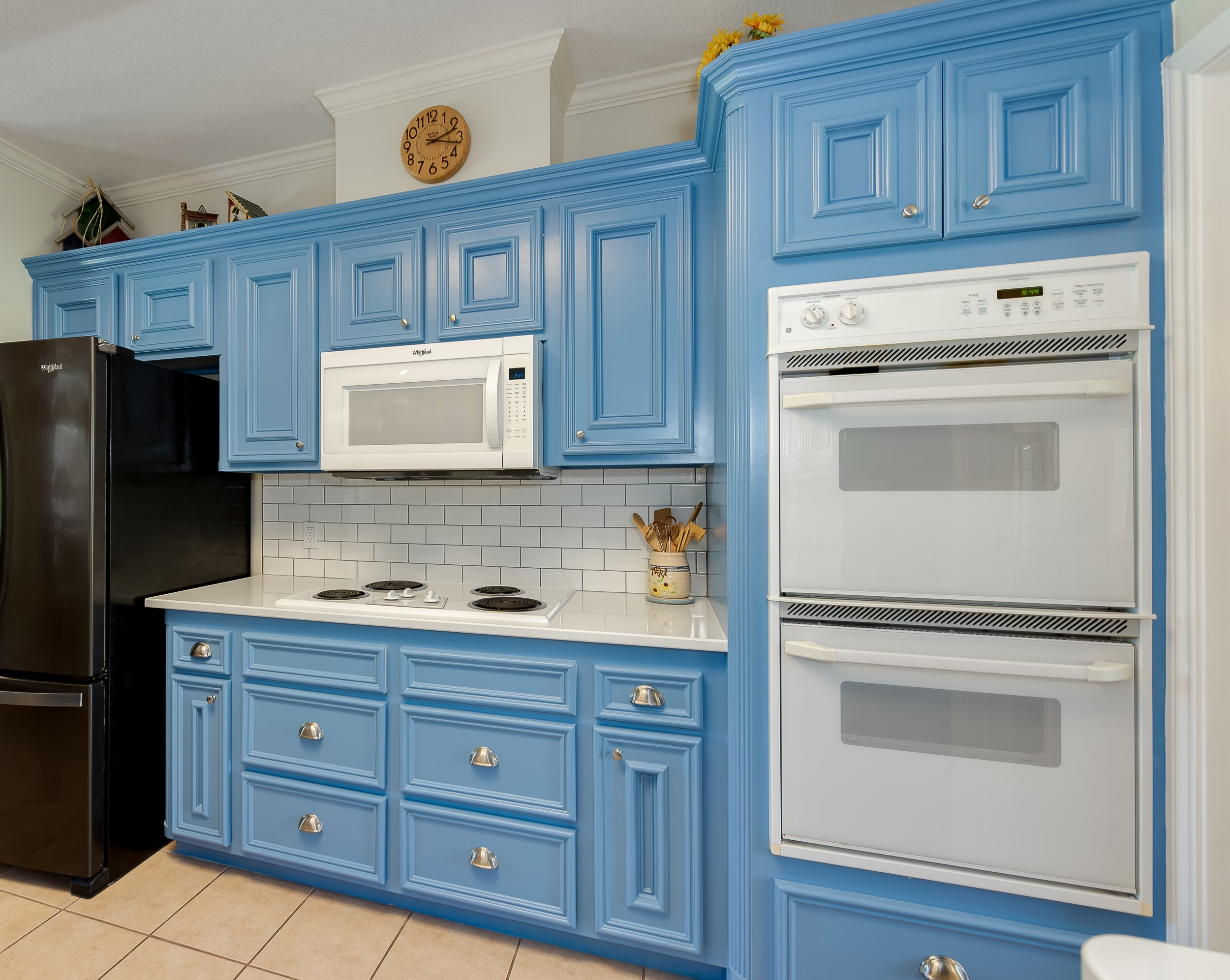
Cabinet Doors, Drawers, and Finish Choices
The visible portion of kitchen cabinets is what most people focus on first, but these choices also affect maintenance and long-term appearance.
Raised panel doors introduce more detail but can be harder to clean. Flat panel designs are simpler and often easier to maintain. Glass-front cabinets can highlight specific areas but require a higher level of organization to keep them looking intentional.
Finish selection also plays a role in how cabinets age. Painted cabinets can show wear more easily, while stained finishes tend to conceal minor blemishes over time. Some finishes, like lacquer used in faster on-site applications, may yellow as they age.
Layout and Design Considerations
The number and placement of cabinets matter just as much as the type.
A common assumption is that more cabinets always improve a kitchen. In practice, this can lead to crowded layouts and reduced access to natural light. Upper cabinets, in particular, are often harder to reach and can limit opportunities for windows.
In many cases, reducing upper cabinets and incorporating dedicated pantry space creates a more functional and comfortable kitchen. Pantry storage is often easier to use and can be more cost-effective than adding additional cabinetry.
The goal is not to maximize cabinet count, but to design a layout that supports how the kitchen is actually used.
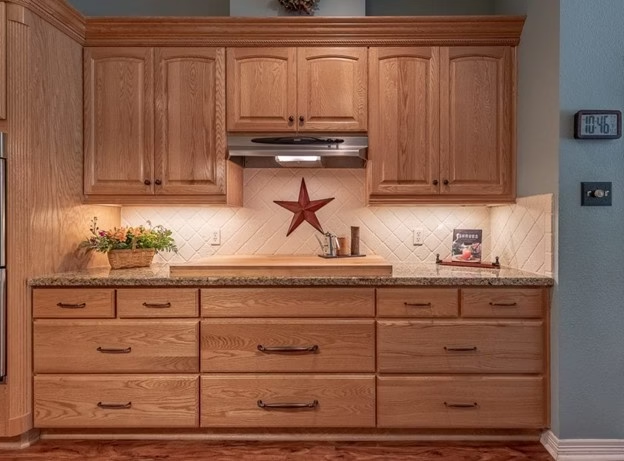
How Cabinet Decisions Impact Long-Term Performance
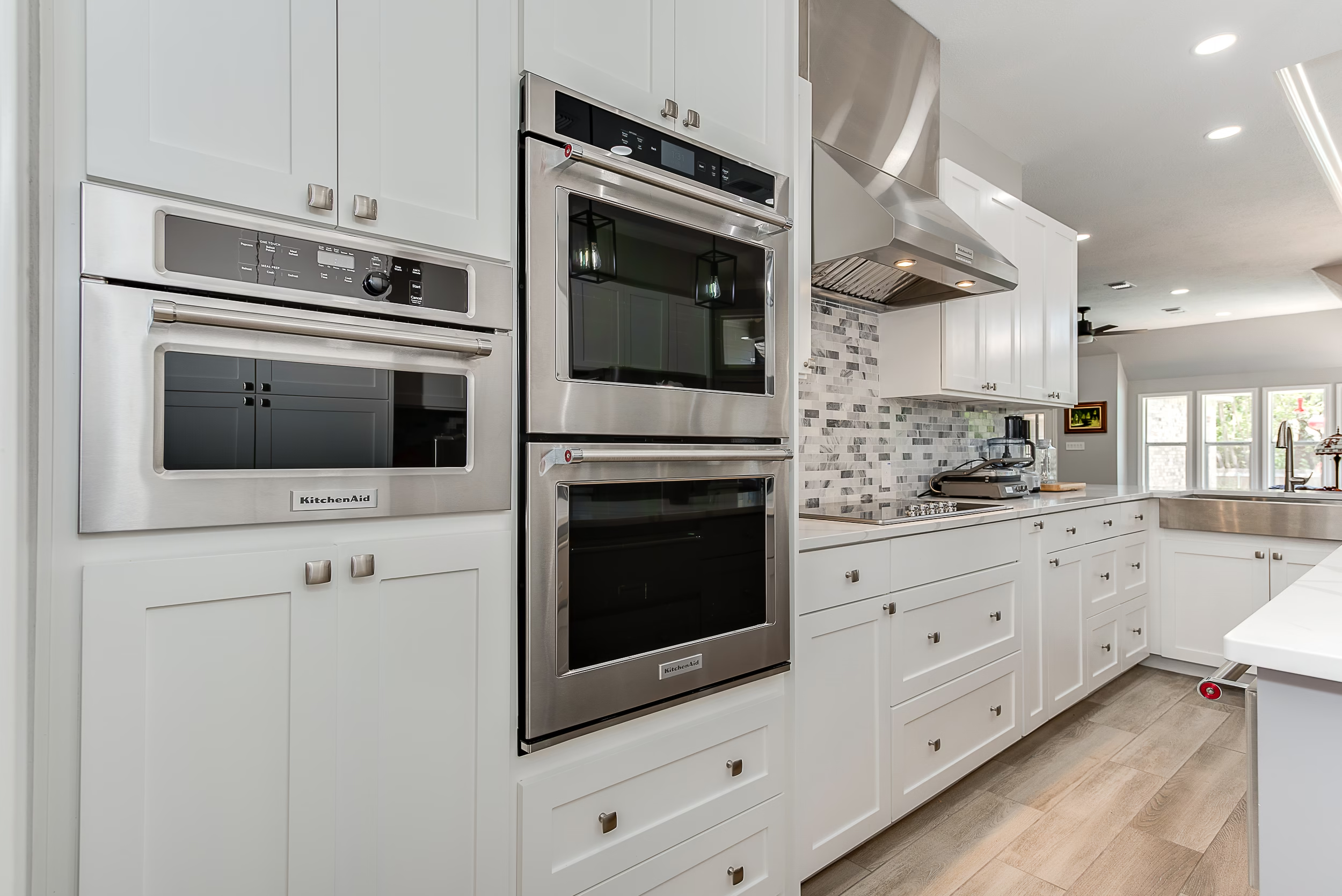
When cabinets are built with stronger materials, better hardware, and thoughtful layout decisions, they tend to require less maintenance and remain functional longer.
Lower-quality construction may look acceptable at first but often leads to issues such as misaligned doors, sticking drawers, and material breakdown. These problems are rarely tied to one decision. They are usually the result of several small compromises made early in the process.
Taking the time to understand these factors upfront creates a kitchen that continues to perform without constant adjustment or repair.
How Stearns Design Build Approaches Cabinet Decisions
When beginning a kitchen remodel in College Station or Bryan, cabinet selection is not treated as a catalog choice. It is part of a larger planning process that connects layout, material selection, and long-term use.
This is the stage where we evaluate how the kitchen will be used, what level of durability is needed, and how different cabinet types will perform in that environment. We look beyond finishes to understand how each decision contributes to the overall function of the space.
The goal is to guide decisions in the right order so that the final result supports daily life, not just the initial design.
Frequently Asked Questions
What are the main types of kitchen cabinets?
The main categories include manufactured cabinets, site built cabinets, and custom shop built cabinets. Each differs in how it is constructed, how customizable it is, and how it performs over time.
Are custom cabinets worth the investment?
Custom cabinets often provide better material control, stronger construction, and more flexibility in design. Whether they are worth it depends on the goals of the project and how long the homeowner plans to use the space.
What is the most durable cabinet material?
Plywood is generally more durable and moisture-resistant than MDF. It tends to hold its structure better over time, especially in kitchen environments.
How do I choose between different types of kitchen cabinets?
The decision should be based on how the kitchen will be used, the level of customization required, and how important long-term durability is compared to upfront cost.
Do more cabinets make a kitchen better?
Not always. A well-designed kitchen focuses on accessibility, light, and efficient storage. In many cases, fewer cabinets combined with better layout and pantry space creates a more functional result.