How to Connect Interior and Exterior Design and Why It Changes the Way Your Home Feels
Connecting interior and exterior design means creating continuity between the spaces inside your home and the environment around it. In residential design, this directly affects how a home feels to live in, not just how it looks. When this relationship is considered early, the result is a space that feels grounded, cohesive, and naturally settled over time.
What This Means in Residential Design
Most homes are designed in sequence rather than in relationship. The interior is planned, selections are made, and only after that does the exterior begin to take shape. Even when both are well done, they often feel like separate decisions that happen to share the same property.
Designing for connection requires a different starting point.
Instead of asking what the interior should look like on its own, the question becomes how the interior and exterior will relate to each other from the beginning. What you see when you look out matters just as much as what surrounds you when you are inside. The two are constantly in conversation, whether the design acknowledges it or not. This idea of designing the inside and outside as part of the same system is becoming more widely recognized in residential design, especially as homeowners begin to value cohesion over isolated decisions.
That connection is not created through one defining feature. It is built gradually through decisions that reinforce each other, often in ways that are not immediately obvious but become more noticeable over time.
Why This Matters to the Way You Live
A home that feels connected tends to feel easier to live in, even if you cannot immediately explain why.
When visual relationships are considered, your eye is not forced to constantly adjust between unrelated elements. Movement through the home feels more natural because the space is not working against itself. Views become something you engage with rather than something that sits in the background.
This shows up in quiet ways. Light entering the home feels more integrated when it interacts with materials that relate to what is outside. Spaces feel more settled because there is less visual tension competing for attention. Over time, that consistency creates a sense of calm that is difficult to replicate with isolated design decisions.
The goal is not to blur the boundary between inside and outside. It is to make that boundary feel intentional instead of abrupt.

Common Misunderstandings About Connecting Interior and Exterior Design
One of the more common assumptions is that connection means direct matching. In practice, that tends to create spaces that feel forced rather than cohesive. What matters is relationship, not replication. A shared tone, a similar depth of color, or a consistent level of contrast can create continuity without making the design feel repetitive.
Another misconception is that this only works in homes with large openings or expansive views. While architecture can amplify the effect, the underlying principle applies regardless of scale. A single window can create a meaningful connection when the interior acknowledges what is happening beyond it.
It is also easy to assume that this is primarily a landscaping decision. In reality, the interior carries just as much responsibility. Finishes, layout, and even smaller details contribute to whether that connection feels natural or disconnected.

How This Shows Up in Real Homes
Color as a Point of Reference
Color decisions often happen too late and too independently from what already exists outside.
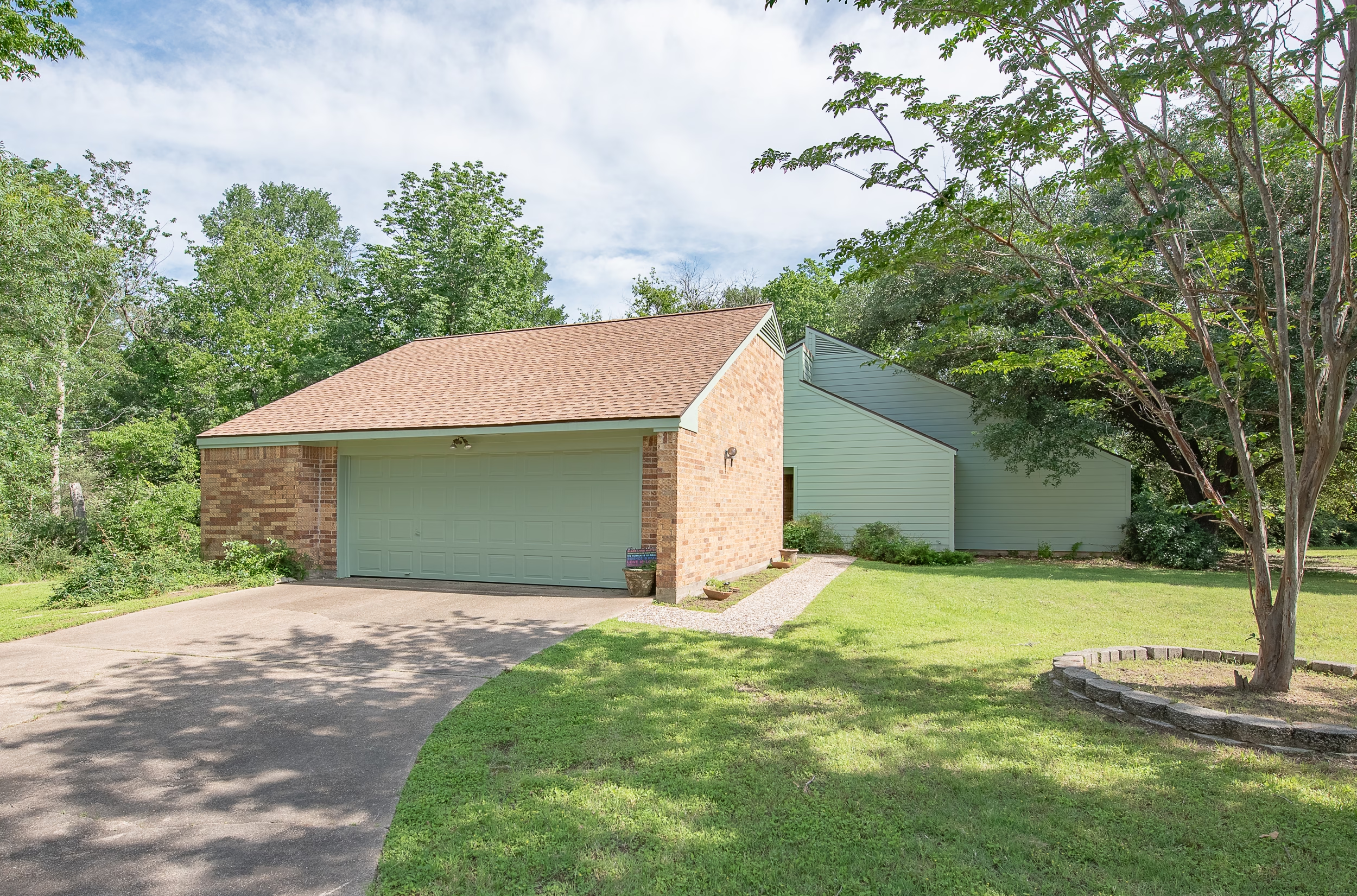
When the surrounding environment is considered earlier, it becomes a reference point rather than an afterthought. This does not mean pulling exact colors from a tree or a garden and placing them inside. It means understanding the overall character of those colors and allowing them to influence the interior palette.
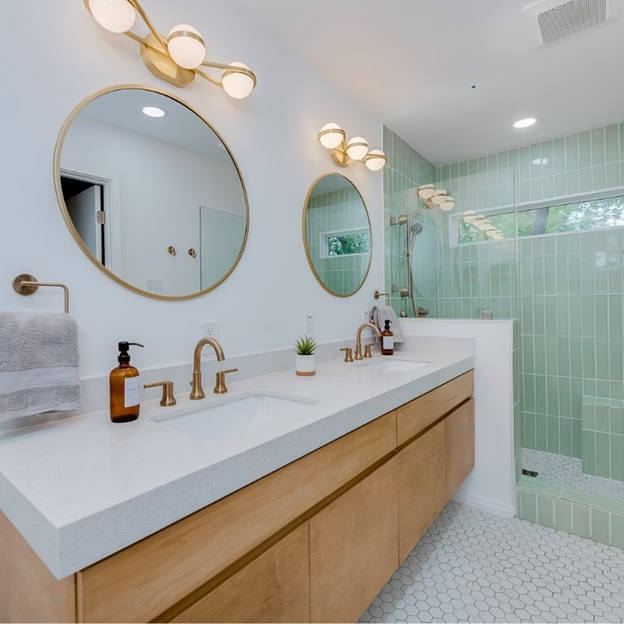
A muted green, a warm neutral, or even a subtle shift in undertone can be enough to create a relationship. As those exterior colors change throughout the year, the interior continues to feel aligned because it was never dependent on a single moment in time.
Lines That Extend Beyond the Room
Lines are one of the quieter ways connection is established, but they are often more powerful than color.
When structural or visual lines continue toward an exterior space, the eye follows them without interruption. Rooflines, ceiling details, floor direction, and even the alignment of openings can all contribute to this effect.
This does not require dramatic architectural moves. Smaller decisions, like how materials are oriented or how furniture is arranged, can either support or interrupt that flow. When those choices are consistent, the transition between spaces feels more natural and less defined by a hard edge.
Designing With the View Instead of Around It
Views are often treated as something to preserve rather than something to design with.
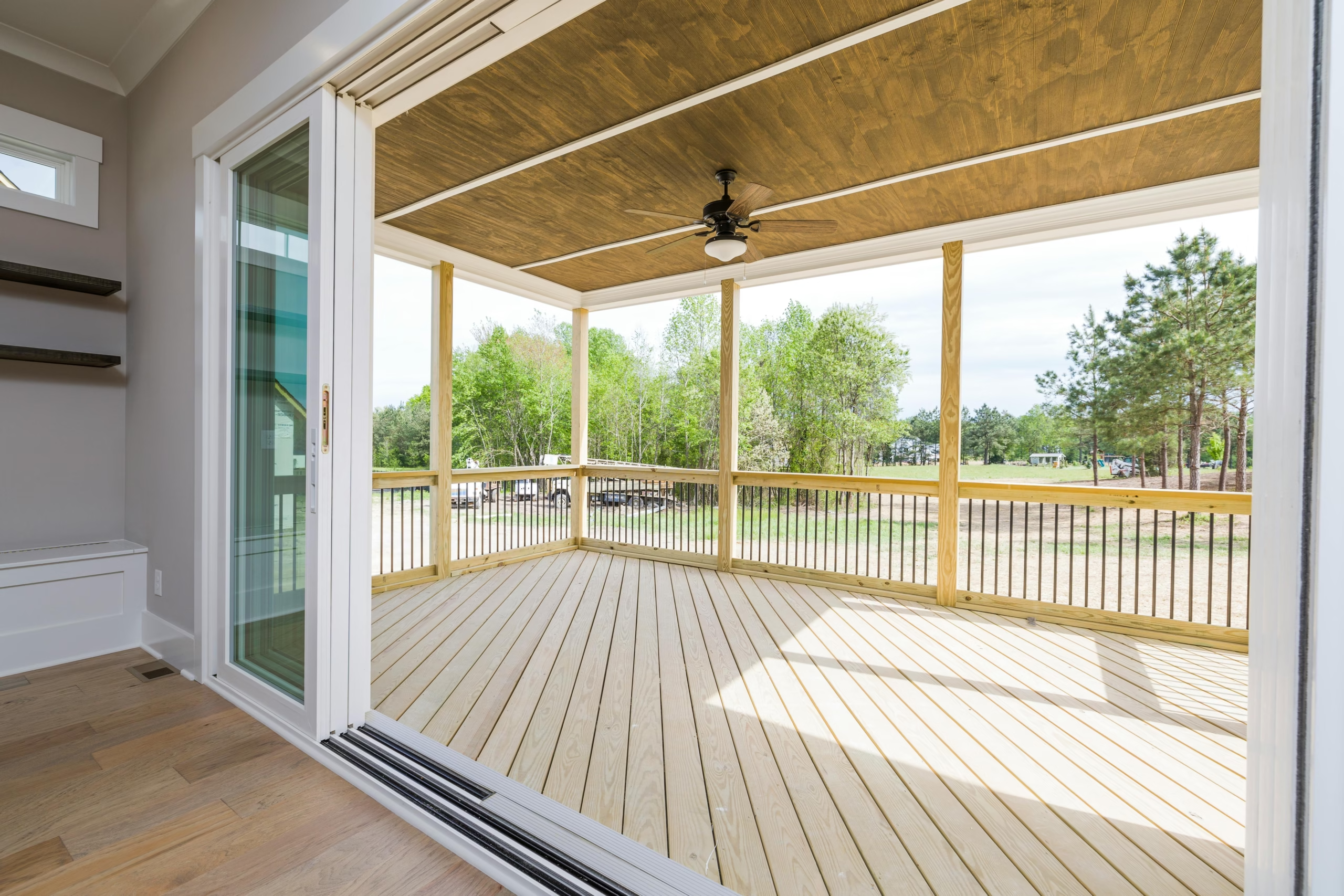
A more intentional approach considers what the view contributes to the experience of the space. That might mean framing a specific feature, aligning a room to take advantage of a certain direction, or simply avoiding decisions that compete with what is already there.
Even modest conditions can become meaningful when they are acknowledged. The goal is not to create a perfect landscape, but to recognize what exists and allow the design to respond to it.
Allowing the Environment to Change Over Time
One of the more overlooked aspects of connection is that the exterior is always changing.
Light shifts throughout the day. Colors deepen or soften depending on the season. Growth introduces variation that cannot be controlled. When the interior is designed with enough awareness, those changes enhance the space rather than disrupt it.
Materials, colors, and layout decisions can all support that flexibility. Instead of feeling outdated as conditions change, the home continues to feel appropriate because it was designed with that change in mind.

How Stearns Design Build Approaches This
We approach this as part of early design thinking, not as a finishing layer.
Before selections are finalized, we look at how the home is positioned, what it looks out onto, and how those conditions can inform the direction of the design. That allows us to guide decisions in a way that keeps the interior and exterior working together instead of drifting apart as the project progresses.
This protects homeowners from a common outcome where each part of the home feels well considered on its own but lacks a sense of cohesion when experienced together.
It also leads to a result that holds up better over time. When a home is designed in relationship to its surroundings, it tends to feel more settled and less dependent on trends or isolated design choices.
Frequently Asked Questions
How do you connect interior and exterior design without major construction changes?
Connection can be improved through smaller decisions, especially when attention is given to color relationships, layout, and how views are framed. Even without structural changes, those adjustments can shift how the space is experienced.
Do interior and exterior colors need to be the same?
They do not need to match. They need to relate in a way that feels intentional. That relationship is often created through undertones and overall color temperature rather than exact color selection.
Where should a homeowner start when thinking about this?
A good starting point is to look at the most used spaces in the home and consider what is visible from them. From there, the question becomes whether the interior supports that view or ignores it.
Does this approach depend on having a strong outdoor feature?
It does not. While prominent features can make the connection more obvious, even simple conditions can be used to create a sense of continuity when they are acknowledged in the design.