How Spray Foam Insulation Affects Energy Efficiency and Building Performance
Spray foam insulation (SFI) is often discussed as a solution for improving energy efficiency, but its value depends heavily on how and where it is used. While it can serve as both insulation and an air sealing material, it also introduces cost, environmental, and health considerations. Understanding the role SFI plays within a complete building envelope is critical to evaluating when it makes sense and when other approaches may be more appropriate.
Why Spray Foam Insulation Is Critical to Energy Efficiency
Insulation alone does not determine how energy efficient a home will be. Air movement through the building envelope plays an equally important role. Uncontrolled air leakage allows conditioned air to escape and outside air to enter, increasing heating and cooling demands.
SFI addresses both of these issues simultaneously. When installed properly, it insulates and limits air movement by expanding into gaps and seams within the building assembly. In applications where air sealing is difficult to achieve through other methods, this characteristic can make spray foam insulation worth its additional cost.
In many cases, the performance benefit attributed to SFI comes more from its air sealing ability than from its insulating value alone. Other insulation materials can provide similar thermal resistance per inch, but they do not inherently stop air movement.
Common Problems With This Application
Despite its performance potential, spray foam insulation presents several challenges that should be considered carefully.
Cost is the most obvious limitation. SFI is significantly more expensive than many traditional insulation materials. Using it throughout an entire home does not always produce a proportional increase in performance.
There are also environmental and health considerations. The production of spray foam insulation releases ozone depleting gases, and improper installation can result in off gassing. These factors are especially relevant in remodeling projects, where occupants may be present before the material has fully cured.
Another concern is long-term reliability in certain applications. While spray foam adheres well when properly installed, other insulation products suspended in roof or ceiling assemblies may lose effectiveness over time. This distinction influences where SFI is most appropriate within the building envelope.
High-Level Overview of How Spray Foam Insulation Is Used Properly
Spray foam insulation performs best when it is used selectively rather than universally. A performance-focused approach typically involves:
-
Identifying where air sealing is most difficult to achieve
Areas such as rooflines and attic transitions tend to benefit most from spray foam insulation. -
Locating the thermal and air barrier intentionally
Placing the building envelope at the roofline can improve performance when mechanical systems are located in attic spaces. -
Using complementary insulation strategies elsewhere
Walls and other assemblies can achieve comparable insulation levels through alternative materials and careful detailing. -
Confirming performance after installation
Testing soon after application helps verify that the intended air sealing and insulation levels have been achieved.
This approach prioritizes performance outcomes over material quantity.

Materials and Systems Commonly Used
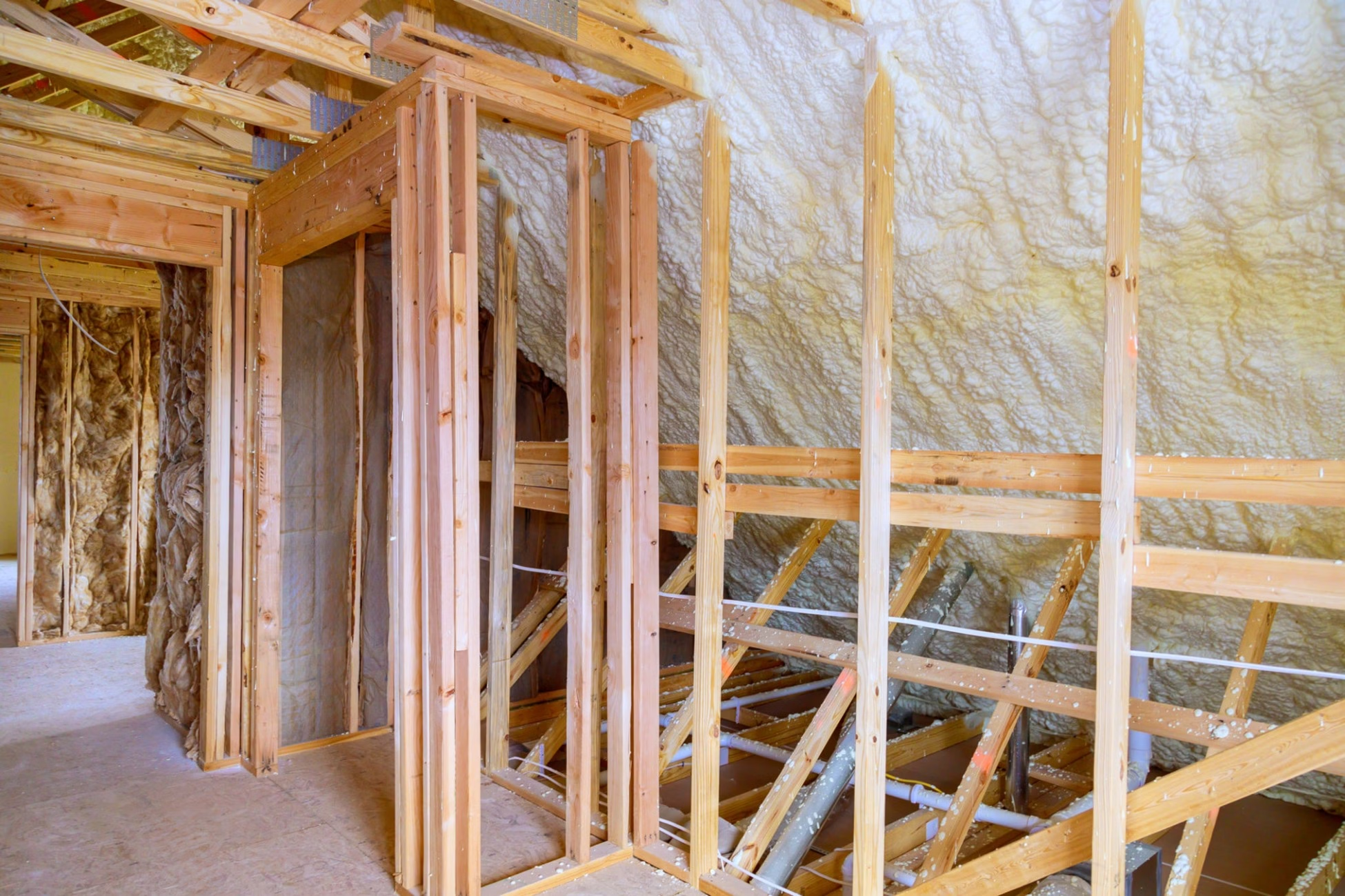
In our work, SFI is most often used on the underside of roof decking. This location places both the thermal envelope and the air barrier at the roofline, which is one of the most critical points for controlling heat transfer and air movement.
For wall assemblies, dense pack cellulose insulation is commonly used instead of spray foam. Cellulose provides a similar per inch R value to commonly used spray foam products while offering environmental benefits due to its recycled content.
Advanced framing techniques further improve performance by reducing unnecessary lumber and minimizing thermal bridging. When combined with careful attention to air sealing details in framing, moisture barriers, and drywall installation, these assemblies can achieve an envelope that performs comparably to a fully spray foamed structure.

How This Impacts Long-Term Performance
When applied appropriately, spray foam insulation contributes to lower heating and cooling loads by reducing air leakage and maintaining consistent thermal boundaries. This can lead to improved comfort and reduced energy use over time.
However, tighter building envelopes also require mechanical ventilation to maintain indoor air quality. As air leakage is reduced, intentional ventilation becomes necessary to replace the air that would otherwise enter through uncontrolled gaps.
When possible, energy recovery ventilators are used to manage this exchange efficiently, allowing fresh air to enter while minimizing energy loss.
How Stearns Design Build Approaches Spray Foam Insulation
Our approach to spray foam insulation is based on using it where it provides clear performance advantages rather than treating it as a default solution. We evaluate each project to determine where air sealing is most critical and whether SFI is the most appropriate way to achieve it.
By combining selective use of SFI with advanced framing, dense pack cellulose insulation, and detailed air sealing practices, we aim to create building envelopes that are durable, efficient, and balanced in terms of cost and environmental impact.

Frequently Asked Questions
Does spray foam insulation always improve energy efficiency?
Spray foam insulation improves energy efficiency primarily through air sealing. Its impact depends on where it is installed and how it integrates with the rest of the building envelope.
Is spray foam insulation better than cellulose insulation?
Spray foam insulation and cellulose insulation can provide similar thermal performance. The difference lies in air sealing capability and application location rather than insulating value alone.
Is spray foam insulation appropriate for older homes?
It can be, but remodeling conditions, occupant presence, and existing assemblies must be evaluated carefully before use.
Why is spray foam insulation most often used at the roofline?
The roofline is a critical point for both air leakage and heat transfer. Applying spray foam insulation at the underside of roof decking helps establish a continuous thermal and air barrier in an area where other materials may lose effectiveness over time.
Does using spray foam insulation require mechanical ventilation?
Tighter building envelopes reduce uncontrolled air movement. As a result, mechanical ventilation is often necessary to maintain indoor air quality when spray foam insulation significantly improves air sealing.