Why Mood Boards Matter in Your Remodel
Mood boards are visual tools that help homeowners translate ideas into a clear design direction. In homes, they affect communication, confidence, and how cohesive the final space feels. When mood boards are used intentionally during a remodel, they reduce confusion, support better selections, and help create spaces that reflect the people who live there.
What This Concept Means in Residential Design
A mood board is a collection of images, materials, and references that are assembled to inspire a design or a goal. Merriam-Webster defines a mood board as “a collection of objects, images, etc. that is assembled often on a flat surface and used as inspiration for something (such as a design or goal)”.
In residential design, mood boards help turn loose ideas into something visible. Many homeowners begin a remodel with a general vision, but not a fully formed plan. They might know they want a kitchen that feels welcoming, a porch that supports quiet mornings, or a bathroom that feels calming after a long day. Those are real design goals, but they can be difficult to communicate with words alone.
Mood boards provide a way to organize inspiration so it can be shared. They can be digital, like a Pinterest board that collects images of a dream closet, backyard goals, or a home office setup. Houzz is another online option, and it is especially useful because it allows homeowners to save specific products and styles of home design. Mood boards can also be physical. A homeowner can flip through a magazine, cut out images of a sofa, bed frame, or porch style they love, and glue those images onto paper.
No matter the format, the purpose is the same. A mood board gives ideas a clear place to live so they can be seen, compared, and communicated.

Why This Matters to the Way You Live
Remodeling is not only about construction. It is about changing how a home supports everyday life. The choices made during design influence daily comfort and the emotional experience of a space. When a remodel starts without a clear direction, it is easier for decisions to feel scattered. That can lead to second guessing, frustration, and a final result that does not feel as cohesive as it could.
Mood boards help homeowners stay connected to the reason they started the project. They give a visual reminder of the feeling a homeowner is working toward, not just the list of tasks required to get there. For many people, that sense of clarity reduces the “trust the process” anxiety that can show up during remodeling, especially when a space is stripped down and the finished result is still hard to imagine.
Mood boards also support motivation. When homeowners can picture the end result, it becomes easier to stay engaged in the process and make decisions with confidence. They help shift the experience from reacting to options to making choices that align with a clearly defined vision.

Common Misunderstandings About This Concept
-
Mood boards are only about style.
Mood boards do support style choices, but they also support organization and clearer communication throughout the design phase. -
Mood boards are just for designers.
Homeowners benefit from mood boards because they help turn personal preferences into something visible and shareable. -
Mood boards are too informal to matter.
In remodeling, small differences can lead to big misunderstandings. Being able to show the exact countertop material, paint color, or wallpaper reference reduces communication errors. -
Mood boards lock you into one direction.
Mood boards can evolve. Their purpose is to clarify what resonates and keep decisions aligned as the design is refined.
How This Shows Up in Real Homes
In real remodeling projects, mood boards influence the practical decisions that shape a space. They help connect inspiration to selections, especially when homeowners are comparing many options for finishes, fixtures, and materials.
Most people have experienced how difficult it can be to explain a visual idea in words. When someone says, “Let me just show you,” they are acknowledging that images communicate more clearly than descriptions. Mood boards bring that clarity into the remodeling process. The human brain processes visuals far faster than text, and consistent visualization of specific images can support focus and perseverance. This matters when a homeowner is navigating the many choices that come with remodeling.
Mood boards also help the selection process feel more grounded. Instead of sorting through endless tile, wood, or stone options with no clear direction, a mood board provides context. It becomes easier to see what fits the overall vision and what does not.
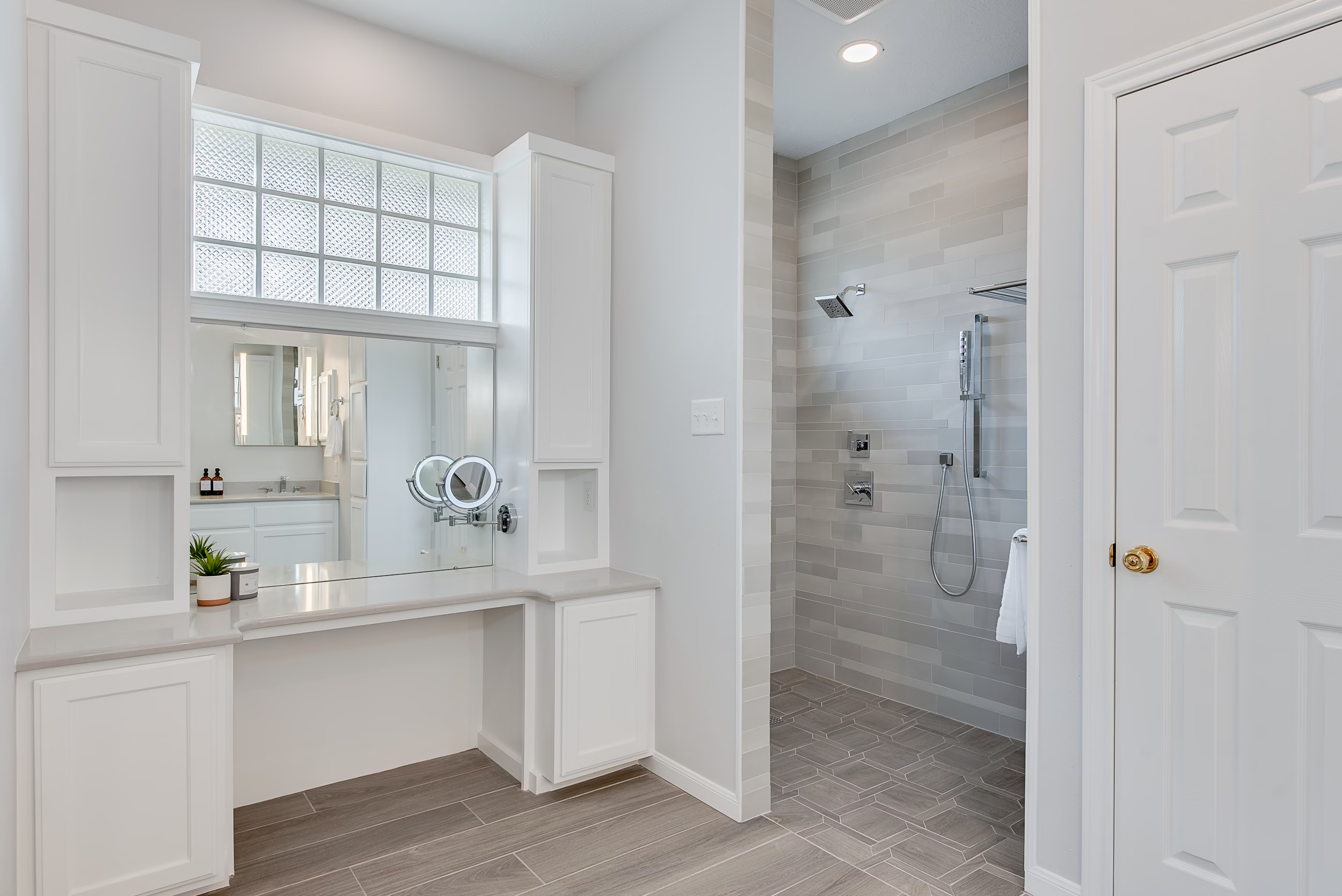
For example, if a homeowner wants a neutral bathroom to feel more personal and nature-inspired, a mood board might include green shower tile, pebble-stone flooring, and a ceramic-style sink. Those references create a visual theme that guides the rest of the selections. Over time, the small decisions begin to support a cohesive whole, rather than competing with one another.

How Stearns Design Build Approaches This Concept
At Stearns Design Build, mood boards and client inspiration are integrated into the design process to support clarity and communication. Mood boards give clients time to explore what they envision and help create a shared visual understanding between the client and the team.
The role of mood boards shows up in two phases. During the feasibility phase, Stearns Design Build shares four basic design templates with clients: classic, industrial, modern, and rustic. These guides help homeowners see how different styles might feel in their homes and can help them identify what suits them. Clients can also express interest in more than one style, which allows the team to combine what they want from each.
Later, during the concept design phase, Stearns Design Build uses Houzz.com to gather a client’s inspiration. Clients can make notes on photos and products, describing what they like about particular styles. They can also choose specific wishes for items like faucets, knobs, light fixtures, mirrors, and built-ins. From there, the designer creates a mood board that consolidates these ideas in one place. This consolidation supports clearer communication and provides a more accurate estimate of costs.
Mood boards also give clients creative freedom and space to experiment before decisions are final. By working from a shared visual direction, the remodeling process becomes more cohesive and less prone to misunderstanding.

Frequently Asked Questions
What is a mood board?
A mood board is a collection of images, objects, or references assembled to inspire a design or a goal. In remodeling, it helps organize ideas and communicate what you want your space to look and feel like.
Do mood boards have to be digital?
No. Mood boards can be digital, like a Pinterest board or a collection on Houzz, or they can be physical, like magazine cutouts glued to paper. The format matters less than having your ideas organized in one place.
How do mood boards help during a remodel?
Mood boards support clearer communication by showing your preferences visually, including materials, colors, and styles. They also help keep the design phase moving smoothly and reduce the chance of misunderstandings.
Where does Houzz fit into the mood board process?
Houzz is used during concept design to gather inspiration, notes, and even specific product wishes like fixtures and built-ins. That inspiration is then consolidated by the designer into a mood board that brings everything together.
What if I am drawn to more than one design style?
That is common. During feasibility, Stearns Design Build shares multiple design templates, and clients can express interest in more than one. Those preferences can be blended to reflect what you want from each style.