Modern Contemporary Home Renovation
This modern contemporary home renovation addressed the visual heaviness, inefficient layouts, and underutilized spaces typical of many late 1990s homes. Through guided planning and intentional design decisions, we helped the homeowners unify eight interior rooms, improve daily functionality, and replace wasted square footage with solutions that support how they actually live. The result is a modern contemporary home that feels cohesive, warm, and thoughtfully resolved.
The Homeowner’s Challenge
Originally built in the late 1990s, this College Station home featured finishes and layouts that no longer aligned with the homeowners’ lifestyle. Honey-toned wood cabinetry, dark granite counters, and gray tile backsplashes appeared throughout the home, creating visual heaviness and disconnect between spaces.
Several functional challenges stood out:
-
Large-format gray tile floors felt cold and visually fragmented the home
-
An oversized built-in entertainment center dominated the den’s main focal wall
-
The kitchen felt dark despite ample space and cabinetry
-
The primary bathroom devoted significant square footage to a bathtub that was never used


While the homeowners appreciated modern design, they did not want a stark or overly minimal result. Their goal was a modern contemporary home that felt lighter, warmer, and more intentional without sacrificing storage or natural light.
Design Goals
The design goals focused on solving these problems while creating a home that felt cohesive from room to room:
-
Replace heavy, dated finishes with a lighter, more unified material palette
-
Maintain storage while reducing visual bulk
-
Balance modern lines with organic warmth
-
Eliminate wasted space and improve everyday usability
- Preserve natural light throughout the home
Our Design & Build Approach
Rather than treating each room as a separate renovation, we approached the home as a connected system. Early decisions about flooring, cabinetry finishes, and material continuity set the foundation for a modern contemporary home that flows naturally between spaces.
Where possible, existing elements were evaluated for reuse or refinement instead of default replacement. This allowed us to solve functional problems while maintaining efficiency and design continuity across the home.
Key Decisions That Shaped the Outcome
Replacing Heavy Flooring With a Unifying Foundation
Large-format, textured gray tile floors were replaced with wood-look flooring inspired by white oak. This single change immediately softened the home and visually connected each room, helping establish the foundation for a modern contemporary aesthetic throughout.


Reducing Visual Bulk in the Den Without Losing Storage
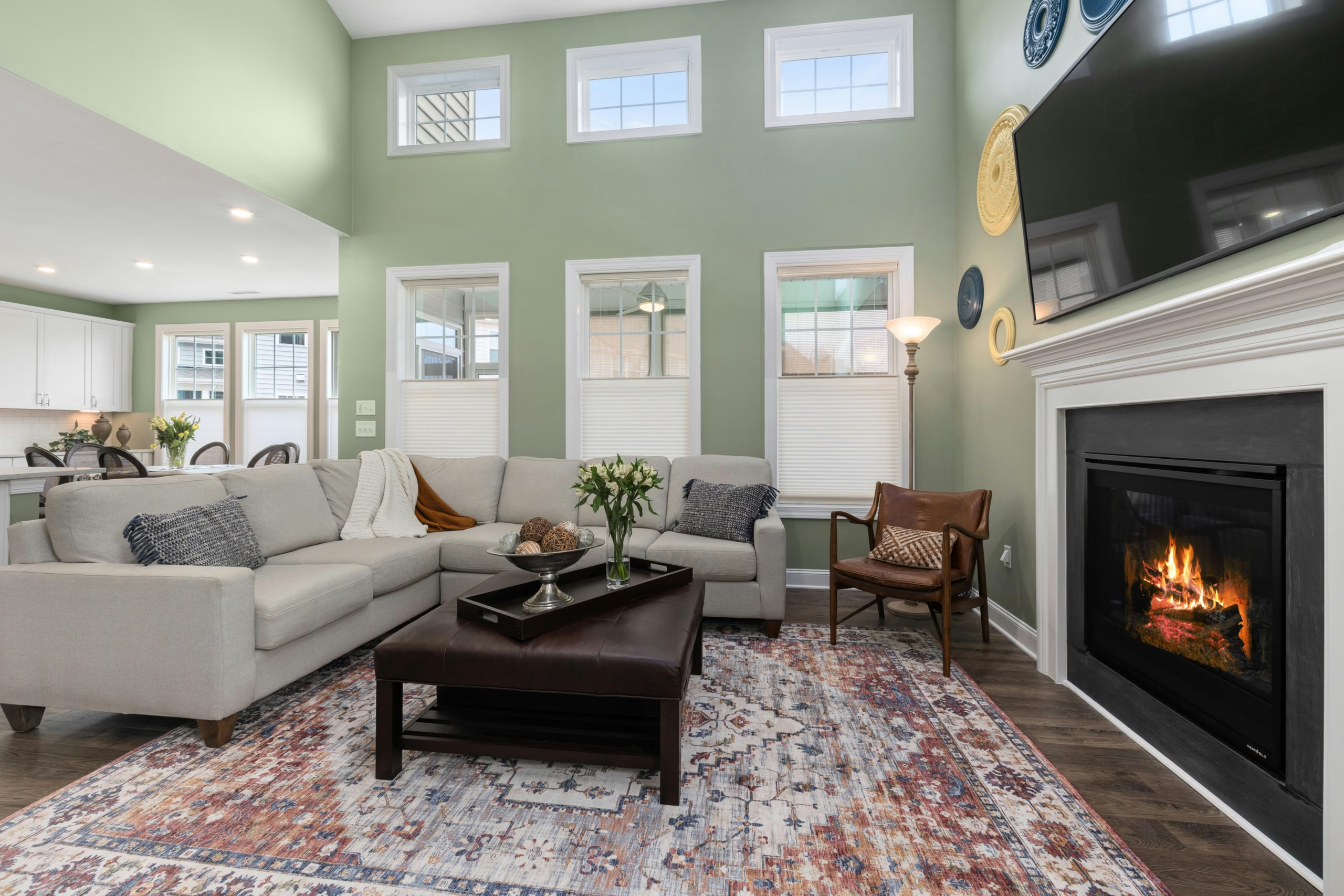
The den’s oversized built-in entertainment center overpowered the room and limited flexibility. After careful discussion, the homeowners were ready to let go of the original structure in favor of a better solution.
Select base components were reused while introducing a new floor-to-ceiling feature wall with integrated bookshelves and a concealed storage door clad in patterned wood. This preserved storage while dramatically reducing visual weight and creating a focal point that felt intentional rather than dominant.


Brightening the Kitchen While Keeping Contrast Intentional
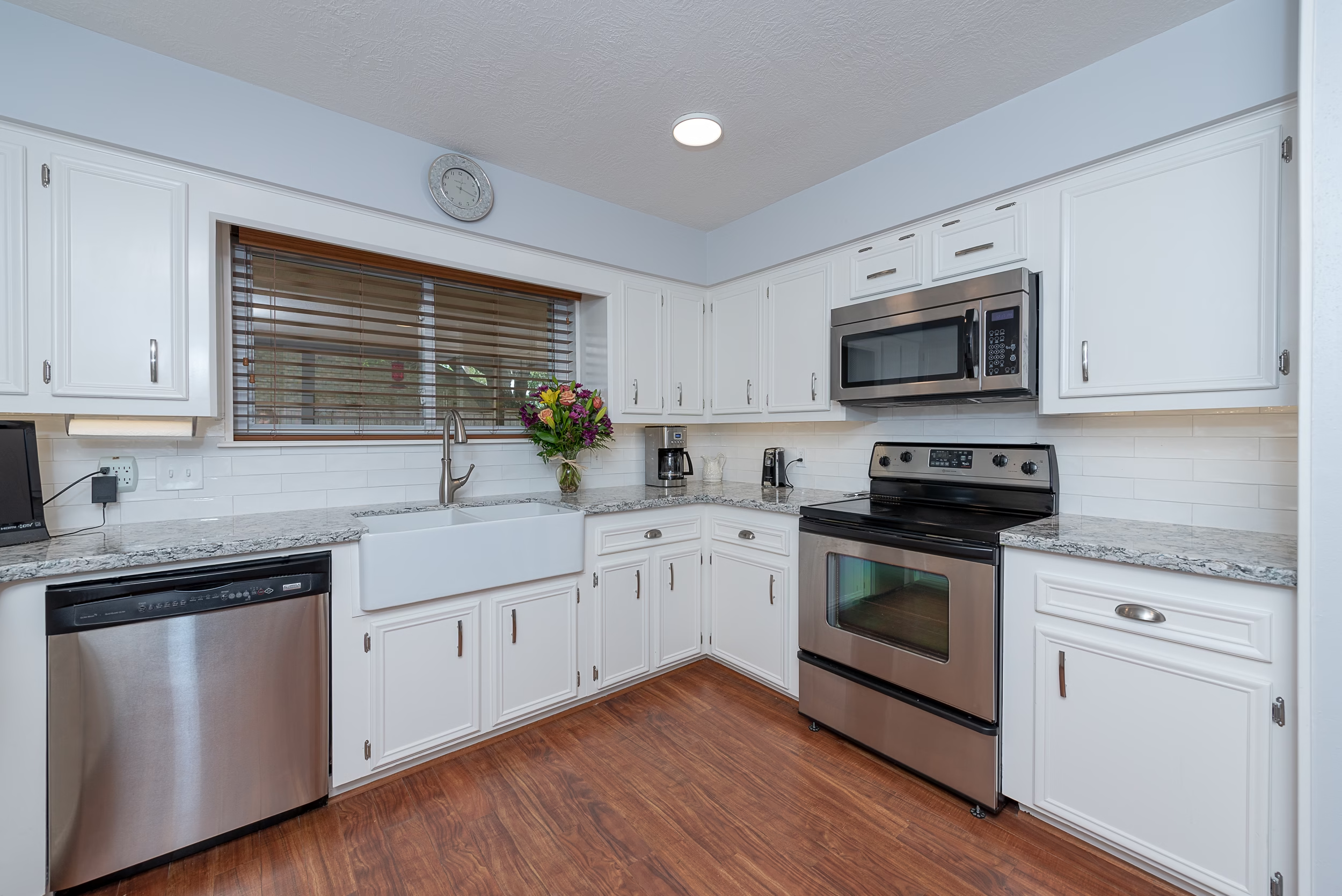
The kitchen originally featured honey-toned cabinetry, dark granite counters, and gray tile backsplashes that absorbed light. Rather than replacing all cabinetry, existing cabinets were painted in a balanced combination of white and black to align with the modern contemporary direction used throughout the home.
Black granite counters were replaced with quartz featuring a creamy white background with subtle gray veining. Carrying the quartz from countertop to backsplash eliminated visual breaks and created a seamless, lighter appearance.


Carrying Consistency Into the Laundry Room
Just beyond the kitchen, the laundry room followed the same material strategy. Matching quartz surfaces, refreshed cabinetry, and an updated sink ensured that supporting spaces felt cohesive rather than secondary.


Reclaiming Wasted Space in the Primary Bathroom
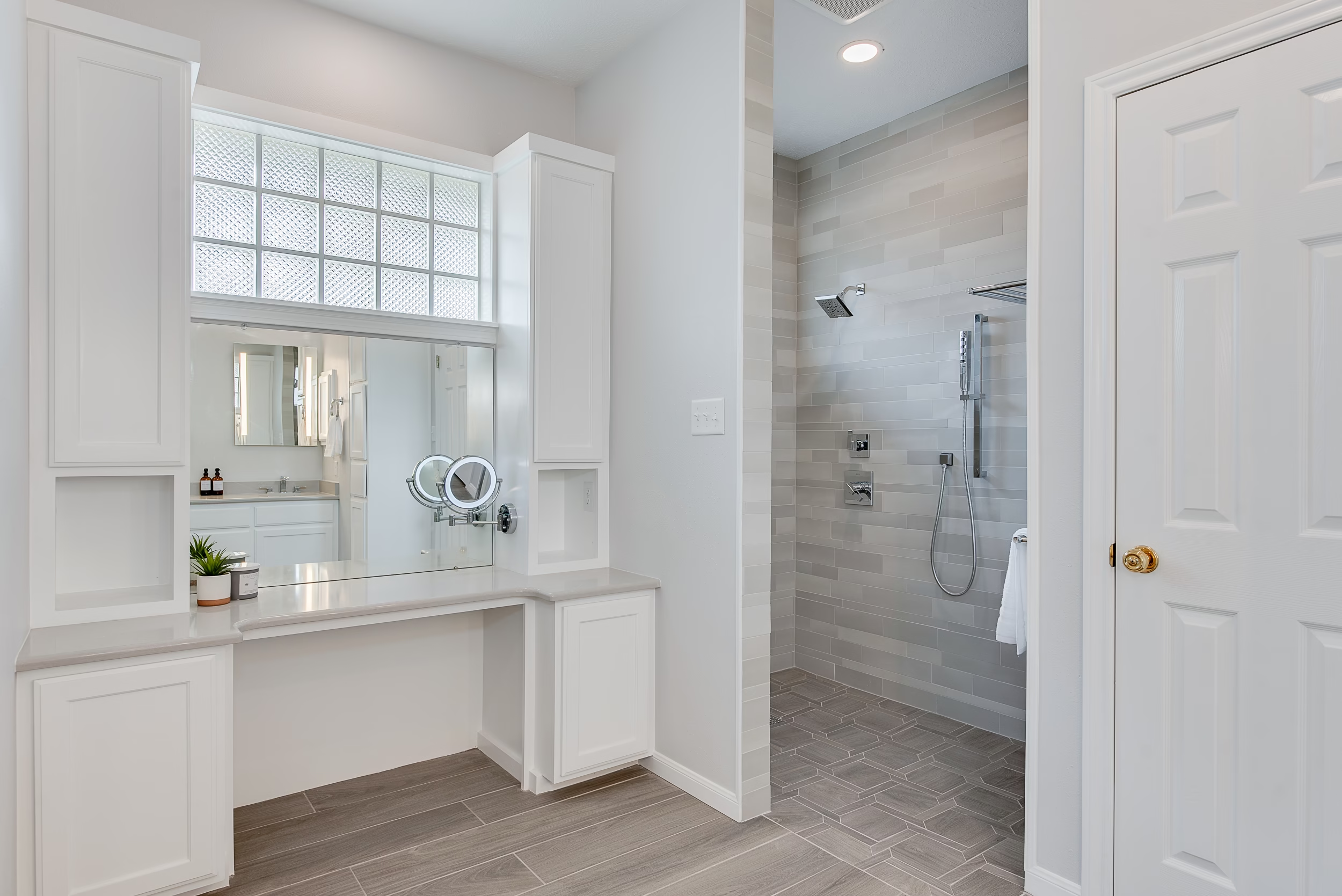
The primary bathroom dedicated significant space to a large corner garden tub that was never used. Removing it allowed both sink vanities to be relocated along a single wall, improving circulation and making the room easier to use daily.

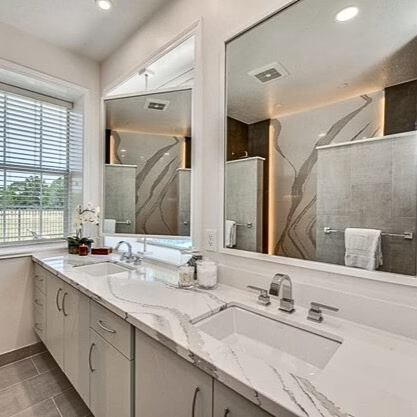
Relocating the vanity introduced a new challenge: two existing corner windows occupied the wall above the sink. To avoid sacrificing natural light, a custom swivel mirror was mounted within the window casing, allowing both function and daylight to coexist.

The walk-in shower became the defining feature of the bathroom, occupying the remaining footprint with large-format gray and black tile, a central quartz slab accent, and concealed LED lighting. Shower controls were intentionally placed behind half-walls, allowing the water to warm without stepping inside.


The Result
The completed renovation transformed the home into a modern contemporary space that feels lighter, more cohesive, and easier to live in. Visual clutter was reduced without eliminating storage, underused features were replaced with functional solutions, and each room now supports daily routines with clarity and comfort.


Lessons for Homeowners Considering a Modern Contemporary Home Renovation
-
Removing unused features can unlock better layouts and flow
-
Visual weight often matters more than square footage
-
Consistent materials across rooms strengthen cohesion
-
Preserving natural light should guide, not limit, design decisions
Frequently Asked Questions
Is a modern contemporary home achievable in a 1990s house?
Yes. Many homes from this era benefit greatly from material updates and layout refinements without requiring structural changes.
Do you have to remove built-ins to modernize a space?
Not always. Evaluating what can be reused or reworked often leads to better outcomes than full removal.
How do you solve layout issues without losing storage?
By rethinking how storage is integrated rather than simply adding more cabinetry.
Does modern contemporary design work for whole-home renovations?
Yes. This approach is especially effective when applied consistently across multiple spaces.