Home Addition Considerations: What to Know Before You Build
Home addition considerations protect the long-term performance, livability, and value of your home. A successful addition depends on site constraints, realistic budgeting, thoughtful prioritization, intentional design, and the right professional team. When approached as a structured process instead of a quick solution, it prevents costly redesigns, misalignment, and construction complications later.

Why Home Addition Considerations Are Critical
A home addition is not simply an expansion of square footage. It is a structural, financial, and lifestyle decision that must integrate with an existing house, site conditions, and daily routines. When early considerations are overlooked, problems tend to appear later in ways that are harder and more expensive to correct.
From a durability standpoint, additions must align with existing foundations, rooflines, drainage patterns, and mechanical systems. When these relationships are not addressed early, homeowners often face comfort issues, uneven wear, or ongoing maintenance concerns.
Health and comfort also depend on thoughtful planning. Additions influence daylight, airflow, acoustics, circulation patterns, and privacy. Small oversights can affect how the entire home feels and functions day to day.
Most significantly, early decisions directly affect long-term cost. Projects that begin without clarity around constraints, priorities, and scope often experience redesign cycles, scope changes, or budget drift that could have been avoided with stronger upfront planning.
Common Home Addition Mistakes Homeowners Encounter
Many homeowners approach an addition believing it is comparable to building new construction. In reality, remodeling involves demolition, integration with existing systems, and construction within an occupied home, all of which introduce complexity.
Another common challenge is beginning design work without first understanding property limitations. Local zoning requirements, setbacks, and site realities can significantly influence what is possible, and overlooking them often leads to frustration later.
Budget expectations also frequently evolve once homeowners better understand the scope of work. Additions often involve structural upgrades, system modifications, and material improvements beyond the visible square footage.
Finally, many families begin with general ideas but unclear priorities. Without alignment around needs versus wants, decision-making becomes difficult once design and budgeting move forward.

High-Level Overview of Key Home Addition Considerations
1. Site and Property Constraints
Before design begins, it is important to understand what the property allows. Setbacks, easements, drainage patterns, utility locations, and lot configuration all influence where and how an addition can be built .
This early clarity protects homeowners from investing time and energy into designs that may not be feasible.
2. Budget Alignment and Financial Clarity
Budget planning is not simply a number-setting exercise. It is the framework that guides every decision that follows. Unlike new construction, additions require demolition, integration with existing systems, and construction within an occupied home, which increases complexity and cost considerations .
Clear financial alignment early helps avoid redesign cycles and supports more confident decision-making throughout the project.
3. Priorities and Lifestyle Needs
Understanding priorities helps translate goals into a realistic plan. Most homeowners begin with a mix of needs and preferences, but distinguishing between them helps manage scope and reduce decision fatigue later.
Priorities also shape how space is organized, how storage is integrated, and how the addition supports daily routines rather than simply adding square footage.
4. Functional and Emotional Design Thinking
Good design is not only about appearance. It is about how the home works and how it feels to live in. Additions should respond to circulation patterns, storage needs, furniture layout, natural light, and emotional comfort within the space .
When approached thoughtfully, design decisions support both function and long-term satisfaction.
5. The Right Team and Process Structure
Home additions require coordination across design, engineering, permitting, and construction. Whether working with separate professionals or a unified design-build team, structured collaboration is essential.
A clearly defined process reduces uncertainty, aligns decisions early, and supports smoother execution once construction begins.
Systems That Shape Home Addition Outcomes
Several underlying systems influence the performance of an addition, even when they are not immediately visible.
Structural systems must support both the new and existing portions of the home. Mechanical systems often require extension or rebalancing to maintain comfort across the house. Envelope systems, including insulation and air sealing, affect energy performance and durability.
Understanding how these systems interact helps homeowners see why additions require careful coordination rather than isolated design decisions.
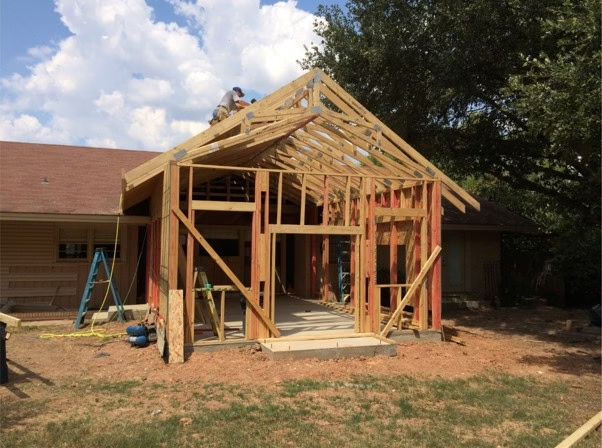
How Home Addition Considerations Affect Long-Term Performance
Thoughtful planning influences how well an addition performs years after construction is complete. When early considerations are addressed thoroughly, additions tend to integrate more naturally with the existing home and require less ongoing adjustment.
Well-planned additions also age more gracefully. They maintain comfort, minimize unexpected maintenance, and continue supporting evolving household needs.
Most importantly, clear early decisions often reduce stress during construction by limiting late-stage changes and uncertainty.
How Stearns Design Build Approaches Home Addition Planning
At Stearns Design Build, early planning exists to protect homeowners from common remodeling risks. Our process focuses on clarity before commitment, alignment before investment, and decisions in the right order .
We begin by understanding goals, site conditions, and constraints so the project starts with realistic direction. Feasibility and concept design help align vision with budget and constructability before detailed work begins. Throughout planning, we guide decisions gradually to reduce surprises and support confident choices.
This approach allows the addition to evolve as a coordinated plan rather than a series of disconnected decisions.

Frequently Asked Questions
What is the most important factor to consider before building a home addition?
Understanding site limitations and budget alignment early is often the most important step. These factors shape what is realistically possible and help prevent redesign or scope changes later.
How long does planning a home addition typically take?
Planning timelines vary depending on scope and complexity, but most projects benefit from a structured planning phase that allows decisions to develop clearly before construction begins.
Do home additions always require structural upgrades?
Not always, but many additions involve structural adjustments to ensure the new and existing portions of the home work together safely and efficiently.
Are additions more complicated than new construction?
They often are. Additions require integration with an existing structure and must account for lived-in conditions during construction.
How do I know if my home is a good candidate for an addition?
A professional evaluation of site constraints, structure, and long-term goals helps determine feasibility and the best path forward.