High Performance Wall Systems and Why They Matter for Energy-Efficient Homes
High performance wall systems are a critical part of the building envelope and directly influence energy efficiency, comfort, and durability. A complete wall system manages heat flow, moisture movement, and air infiltration together. When designed correctly, high performance wall systems reduce energy demand, improve indoor comfort, and support long-term home performance.
Why Wall System Performance Matters
In climates like Central Texas, wall systems are under constant stress from heat, humidity, and temperature swings. Because walls separate conditioned and unconditioned space, their performance directly affects how hard a home must work to stay comfortable.
High performance wall systems help:
-
Reduce cooling loads
-
Improve comfort consistency
-
Limit moisture-related issues
-
Extend the lifespan of building materials
Walls are not passive elements. They are active components of the building envelope.

Common Misconceptions About Wall System Performance
Many homes are built using wall systems that are treated as static assemblies. In reality, all wall systems are dynamic to some degree. Heat and moisture are always moving through materials, regardless of insulation levels.
Common misconceptions include:
-
Assuming insulation alone defines wall performance
-
Ignoring how walls respond to daily temperature changes
-
Designing wall systems without climate-specific considerations
-
Focusing on air tightness without understanding moisture behavior
These assumptions often limit overall building performance.

Static and Dynamic Wall Systems: A High-Level Comparison
High performance wall systems consider how materials interact over time.
-
Conventional Static Wall Systems
Most wood-framed walls rely on insulation to slow heat transfer. While effective in certain conditions, these systems often struggle in hot climates where daily temperature swings are significant. -
Dynamic Wall Systems with Thermal Mass
Walls that incorporate thermal mass can absorb heat during peak temperatures and release it later when conditions reverse. This delayed heat transfer can improve comfort and reduce mechanical cooling demand when applied appropriately.
Understanding this distinction is key to improving wall system design.
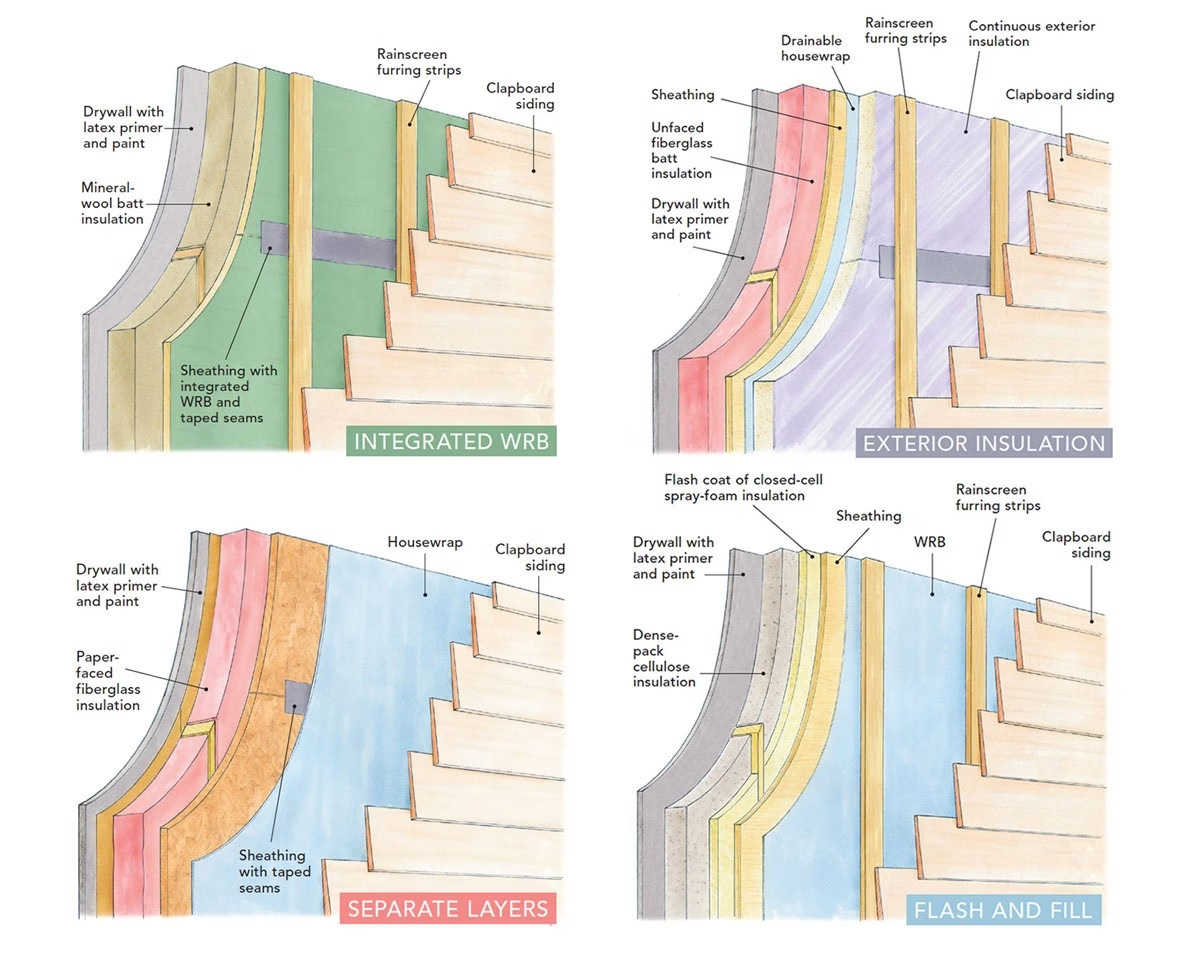
Materials and Assemblies Used in High-Performing Wall Assemblies
High performance wall systems may incorporate a range of assemblies, including wood-framed walls with continuous exterior insulation, insulated concrete systems, and other layered control strategies.
Some approaches attempt to combine thermal mass with insulation, such as insulated concrete form construction. While these systems introduce mass, overall performance depends heavily on where that mass is located within the wall assembly, not simply on its presence.
Effective wall systems are designed as complete assemblies rather than isolated products. How materials are layered and how they respond to environmental conditions plays a critical role in long-term performance.
Building science research reinforces this systems-based approach. Climate conditions influence how insulation strategies perform, which is why wall assemblies cannot be applied universally across regions. The climate regions shown below use descriptive categories developed by Building Science Corporation. These regions align broadly with, but do not map one-to-one to, the numeric climate zones defined by the U.S. Department of Energy and the International Energy Conservation Code.


Climate region map and insulation ratio reference adapted from research published by Building Science Corporation
How Wall System Design Impacts Long-Term Home Performance
Wall system design influences more than energy bills. Over time, it affects:
-
HVAC sizing and operational strain
-
Indoor comfort and temperature stability
-
Moisture management within the building envelope
-
Overall durability of the home
High performance wall systems support long-term resilience as energy costs and environmental demands increase.
How Stearns Design Build Designs High Performance Wall Systems
Stearns Design Build approaches wall systems as part of a holistic building envelope strategy. Our process emphasizes:
-
Climate-responsive wall system design
-
Integration of insulation, air control, and thermal mass
-
Careful planning before construction
-
Oversight and verification during execution
Because building science continues to evolve, we continuously refine how wall systems are evaluated and applied.

Frequently Asked Questions About High Performance Wall Systems
What makes a wall system “high performance”?
A high performance wall system manages heat, air, and moisture together rather than relying on insulation alone.
Are high performance wall systems more expensive?
Initial costs vary, but long-term energy savings and durability often offset upfront investment.
Can existing homes be improved with better wall systems?
Yes. Many remodels provide opportunities to upgrade wall performance depending on scope and structure.
Do high performance wall systems matter in warm climates?
Absolutely. Proper wall system design is especially important in hot, humid regions.