Brick Homes in Hot Humid Climates: How Exterior Masonry Impacts Performance
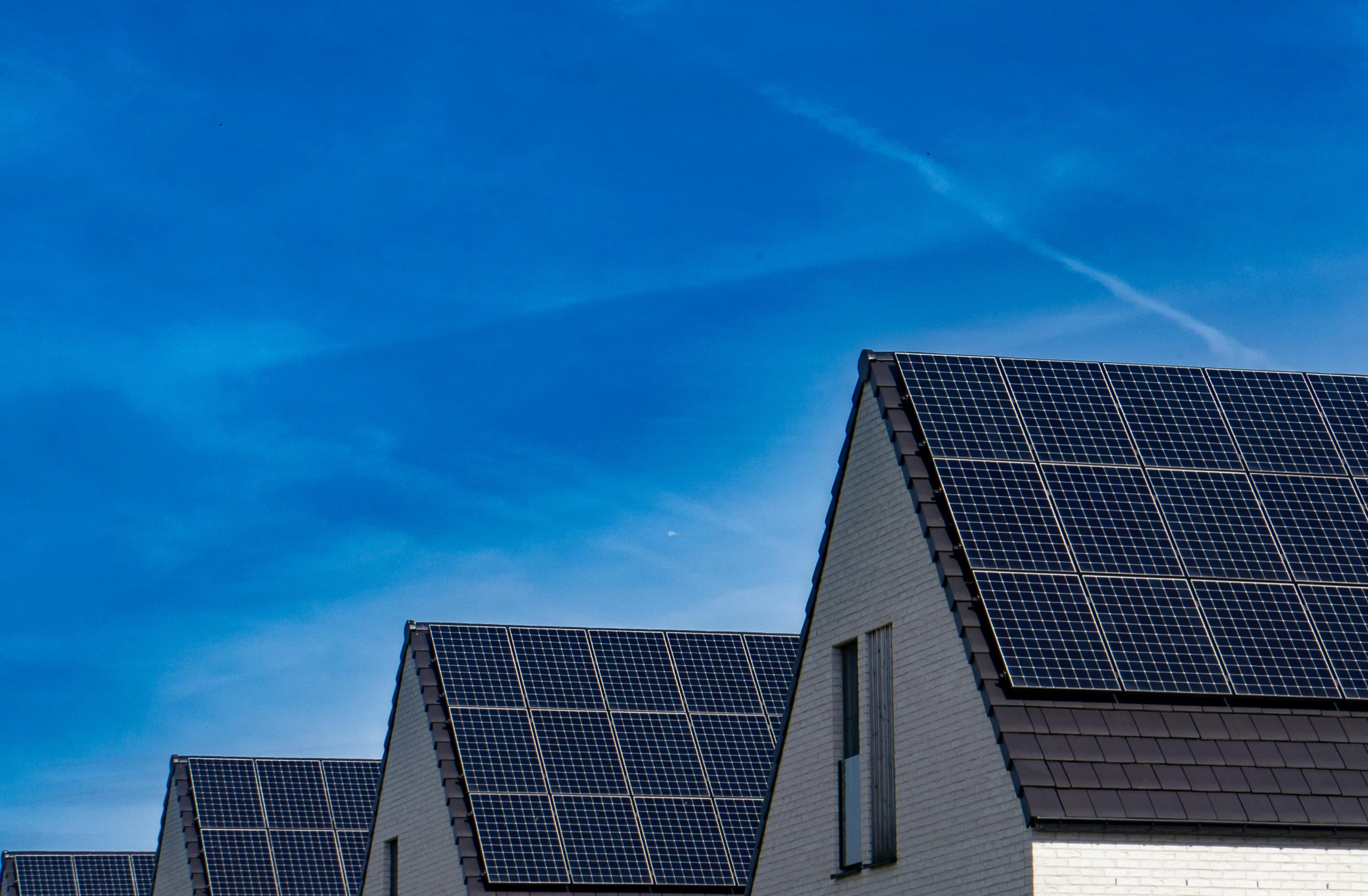
Brick is a common exterior material in many Texas neighborhoods, including Bryan and College Station. While it offers durability and visual appeal, brick behaves differently depending on climate. In hot humid regions, the way brick stores and releases heat can directly affect indoor comfort, cooling demand, and long-term building performance. Understanding how brick interacts with heat and moisture is essential when evaluating exterior wall systems.
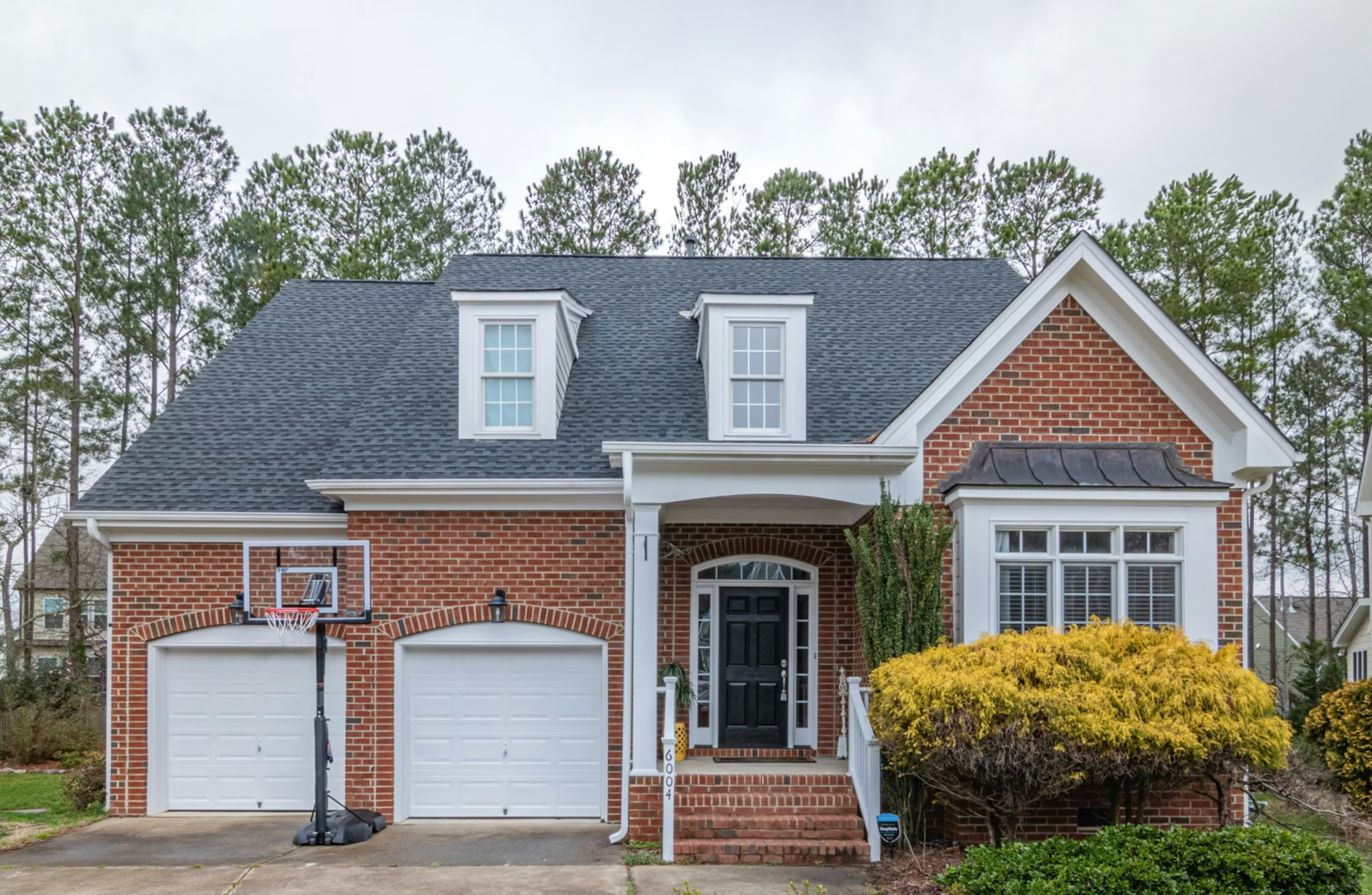
Why Exterior Material Performance Matters in Hot Humid Climates
In a hot humid climate, homes are exposed to prolonged heat, high moisture levels, and limited nighttime cooling. Exterior wall systems are not just visual elements. They play a critical role in how heat and moisture move into and out of a home.
When exterior materials retain heat or restrict drying, the result can be higher cooling loads, reduced comfort, and increased stress on mechanical systems. These effects are not always visible, but they accumulate over time and influence both energy use and durability.
Understanding Thermal Mass in Brick Homes
Brick and other masonry products are classified as thermal mass materials. Thermal mass refers to a material’s ability to absorb, store, and later release heat.
In hot humid climates, brick absorbs solar heat throughout the day. Instead of releasing that heat back into cooler nighttime air, the brick continues to radiate stored heat inward because nighttime temperatures remain elevated due to humidity. This contributes to interior heat gain well into the evening hours, even after direct sunlight has passed.
The result is a home that stays warmer longer and requires extended air conditioning operation to maintain comfort.
Why Brick Performs Differently in Hot Dry Versus Hot Humid Climates
Brick and other masonry materials are often associated with desert or southwestern architecture, which can create confusion for homeowners.
In hot dry climates, such as areas where adobe construction is common, large temperature swings occur between day and night. Thermal mass works advantageously in those conditions. Heat absorbed during the day is released into much cooler nighttime air before it significantly impacts the interior.
In hot humid climates, moisture in the air prevents temperatures from dropping substantially at night. Humid air itself behaves like thermal mass, holding heat close to the building. As a result, brick walls do not fully cool off and continue transferring stored heat toward the interior.
This difference in nighttime cooling is a key reason why brick homes in hot humid climates behave differently than masonry homes in dry regions.

Historical Clues from Vernacular Architecture
Traditional architecture often reflects climate-specific problem solving developed long before modern mechanical systems.
In hot humid regions, historic residential construction more commonly relied on lighter wall assemblies, ventilated cladding, and materials that allowed buildings to dry efficiently. Wood siding and raised structures were not aesthetic trends. They were responses to heat, moisture, and airflow demands.
This does not mean masonry cannot be used, but it does highlight that exterior material choices have long-term performance implications that go beyond appearance.
Common Performance Challenges with Brick in Humid Conditions
Brick itself is durable, but its performance depends heavily on how it is integrated into the overall wall system.
Common challenges include:
-
Prolonged heat retention that increases cooling demand
-
Reduced drying potential when moisture is trapped behind masonry
-
Increased risk of moisture accumulation if drainage and air gaps are not properly detailed
These issues are not inherent flaws in brick, but they require careful system-level planning to manage effectively.
High-Level Strategies to Reduce Thermal Mass Impact
When brick or stone is required by neighborhood guidelines or preferred for aesthetic reasons, design decisions can help reduce negative performance effects. In hot humid climates, heat retention cannot be evaluated independently from moisture behavior. Elevated humidity limits nighttime cooling and affects how building materials release stored heat. Research on humidity control and thermal comfort, including guidance published by ASHRAE, helps explain why exterior design strategies that reduce solar heat absorption play an important role in overall building performance.
Key considerations include:
-
Reducing Material Thickness
Veneer systems use significantly less mass than full-depth masonry, limiting heat storage while maintaining appearance. -
Managing Solar Exposure
Concentrating masonry away from west-facing elevations reduces late-day heat absorption during peak temperatures. -
Providing Adequate Shading
Roof overhangs, architectural projections, and landscape elements reduce direct solar gain on masonry surfaces. -
Supporting Seasonal Shade
Deciduous trees on sun-exposed sides provide summer shading while allowing winter sunlight when leaves drop.
These strategies focus on moderating heat input rather than eliminating masonry altogether.

Moisture Management Considerations for Brick Homes
In hot humid climates, moisture control is as important as heat control.
Brick is not waterproof. It absorbs moisture and must be detailed with proper drainage planes, air gaps, and flashing systems to allow water to exit the wall assembly. Without these elements, moisture can become trapped behind masonry, increasing the risk of rot, mold, and material degradation.
Proper moisture management depends on coordination between exterior materials, weather barriers, and structural components. This is an area where building science knowledge is essential.
How Exterior Masonry Choices Affect Long-Term Performance
The impact of brick homes in hot humid climates is not limited to energy bills. Over time, thermal and moisture behavior influences:
-
HVAC system workload and lifespan
-
Indoor comfort consistency
-
Maintenance requirements
-
Durability of framing and interior finishes
Exterior materials should be evaluated as part of a complete system rather than as isolated design decisions.
How Stearns Design Build Evaluates Exterior Wall Systems
When planning homes and remodels in Bryan and College Station, exterior wall systems are evaluated based on climate performance, not trends.
This includes:
-
Reviewing how materials store and release heat
-
Assessing moisture movement and drying potential
-
Coordinating exterior cladding with insulation, air barriers, and drainage systems
-
Verifying details during design and construction to ensure the wall performs as intended
The goal is not to prescribe a single material, but to ensure that whatever material is chosen functions properly within the local climate.

Frequently Asked Questions
Are brick homes inefficient in hot humid climates?
Brick homes are not inherently inefficient, but unmanaged thermal mass can increase cooling demand if the wall system is not properly designed for humidity and heat retention.
Can brick still be used successfully in this climate?
Yes, when paired with appropriate detailing, reduced mass, shading strategies, and proper moisture management.
Does brick cause moisture problems?
Brick itself absorbs moisture. Problems occur when drainage, air gaps, and flashing are missing or improperly installed.
Is siding better than brick in humid regions?
Different materials perform differently. The effectiveness of any exterior cladding depends on how it is integrated into the full wall system.