Are Home Additions Worth It for Long-Term Value and Daily Living?
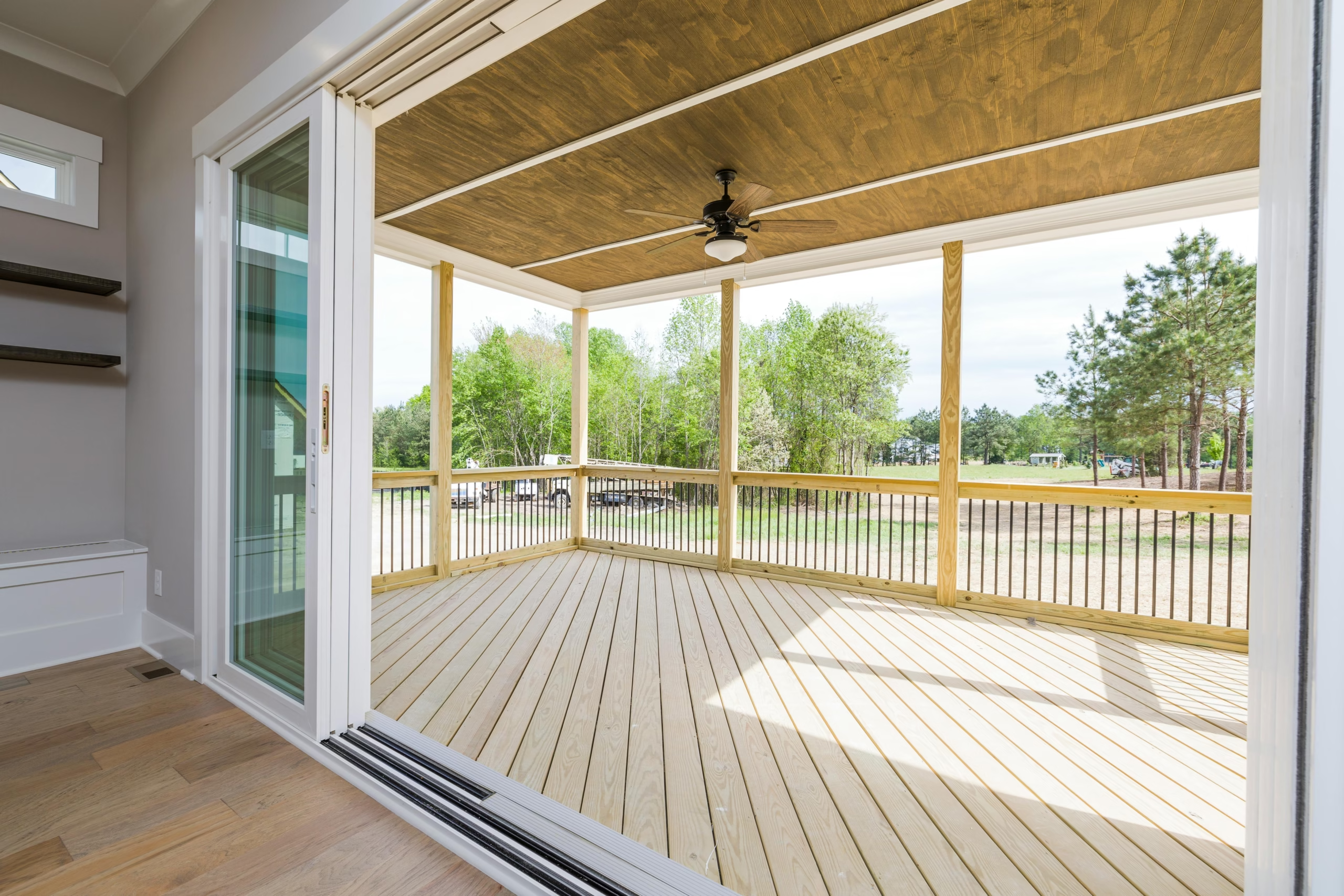
Are home additions worth it? A home addition is the expansion of your existing house to create new usable space. In residential design, it affects how you live inside your home and how your property performs over time. When planned intentionally, it can strengthen both daily function and long-term value.

What This Means in Residential Design
When homeowners ask whether home additions are worth it, they are usually weighing two types of value: financial return and lived experience.
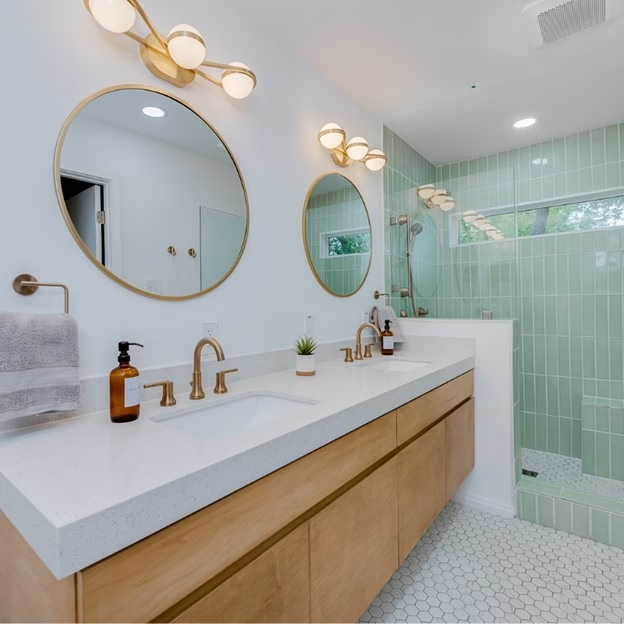
A home addition is not simply about increasing square footage. It is about reshaping how the home supports the people who live there. That might mean creating a primary suite that allows aging in place, adding a dedicated office for remote work, or expanding a kitchen so the layout matches how the family gathers.
From a design standpoint, an addition changes:
-
The balance and proportion of the home
-
Circulation and flow
-
Structural and mechanical systems
-
Exterior presence and curb appeal
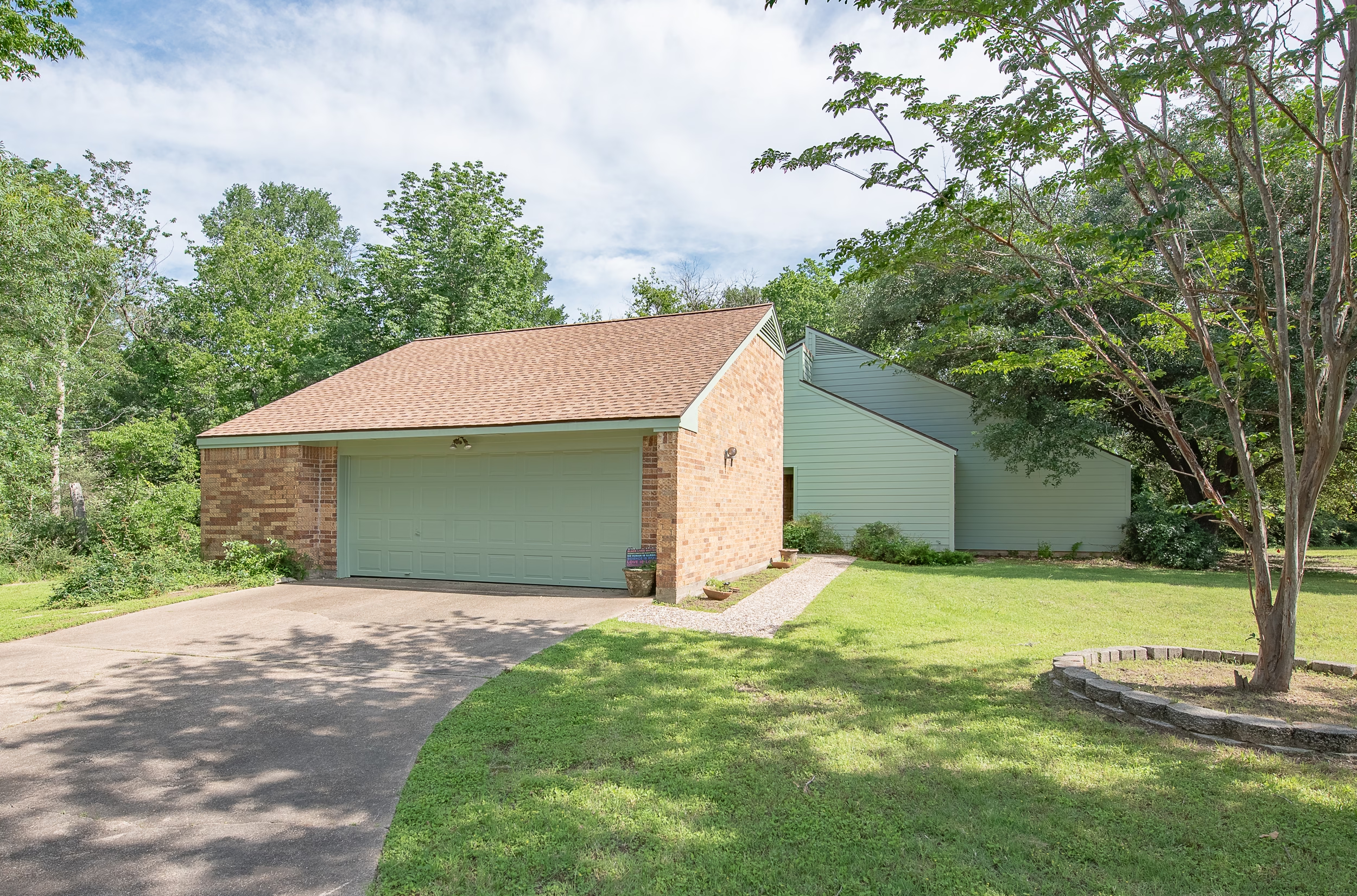
Because of this, the value of an addition is tied to how well it integrates with the existing structure. Poorly planned expansions often feel disconnected. Thoughtfully designed additions feel as though they were always meant to be there.
When homeowners consider home addition return on investment, this integration is one of the most overlooked factors.
Why This Matters to the Way You Live
The question “are home additions worth it” often begins with a life change.
A growing family.
A parent moving in.
A new work-from-home routine.
A desire to stay in a neighborhood you love.
In daily life, added space can reduce friction. Morning routines become smoother. Storage becomes sufficient. Privacy increases. Noise decreases. Rooms serve their intended purpose instead of doubling or tripling as makeshift solutions.
This is where value becomes more than resale numbers.
Does a home addition increase home value on paper? In many cases, yes. But more importantly, it can increase the value of how the home functions for you today. A space that supports your routines well often prevents premature moving decisions driven by frustration rather than intention.
When evaluated this way, home addition ROI includes both financial and lifestyle return.

Common Misunderstandings About Home Additions
Misunderstanding 1: More square footage automatically means higher value.
Added space only contributes to value when it improves usability and aligns with market expectations. Oversized or poorly placed additions can limit appeal.
Misunderstanding 2: Return on investment is purely financial.
Home addition return on investment is often discussed as a percentage. While resale value matters, comfort, longevity, and reduced disruption also factor into whether something is truly worth it.
Misunderstanding 3: Additions are always cheaper than moving.
Sometimes they are. Sometimes they are not. The financial comparison depends on scope, structural complexity, and the condition of the existing home.
Misunderstanding 4: Any addition increases marketability.
Buyers evaluate layout coherence, natural light, and integration. Additions that feel like afterthoughts may not perform as expected.
How This Shows Up in Real Homes
In practical design terms, value appears in how an addition connects to the original structure.
A primary suite addition may allow the rest of the home to function more quietly.
A family room expansion may improve circulation and natural light.
A second-story addition may preserve yard space while increasing livable area.
Each of these decisions influences home addition ROI differently.
For example, an addition that requires significant mechanical upgrades may carry a higher initial investment. However, if those upgrades modernize aging systems, they may strengthen long-term property performance.
Similarly, a well-proportioned addition that enhances curb appeal can influence how the home is perceived in online listings and in-person showings. Aesthetic continuity plays a measurable role in whether buyers view the expansion as an asset.
This is why asking “does a home addition increase home value” is incomplete without asking how it was designed, how it was built, and how it connects to the rest of the home.

How Stearns Design Build Approaches This Question
When homeowners ask if home additions are worth it, we approach the conversation as a design evaluation rather than a sales decision.
We examine:
-
The existing structure and systems
-
Lot constraints and orientation
-
Long-term living goals
-
Market context within Bryan–College Station
-
Structural and mechanical implications
Our role is to clarify what the addition changes, not just what it adds.
Sometimes the conclusion is that an addition meaningfully strengthens both function and long-term value. Other times, reconfiguring existing space achieves the same goal with less structural expansion.
As a remodeling guide, our responsibility is to help homeowners understand the full picture before committing to a major change.

Frequently Asked Questions
Does a home addition increase home value in every case?
Not automatically. Value depends on integration, market alignment, and functionality. Additions that improve livability and maintain architectural cohesion tend to perform better.
What is a typical home addition return on investment?
Return varies by region and scope. National industry benchmarks, such as the annual Cost vs. Value Report published by JLC, provide estimates comparing remodeling costs to resale value. While these reports offer helpful context for understanding return on investment, local market conditions and design integration ultimately influence actual results.
Is home addition ROI better than remodeling existing space?
It depends on the goal. If the current layout cannot support the desired function, expansion may offer stronger long-term value. If underutilized space already exists, reconfiguration may be more efficient.
Are home additions worth it if I plan to move in a few years?
Short-term ownership changes the equation. In those cases, market appeal and cost control become especially important considerations.
How do I know if my home can structurally support an addition?
A structural and systems assessment is required. Foundations, framing, rooflines, and utilities all influence feasibility and cost.