Aging in Place Renovation in Bryan–College Station
This aging in place renovation addressed the need to convert an existing area of the home into an in-law suite that would support long-term mobility and daily accessibility. The goal was to bring aging parents from a detached living space into the main house, creating a safer and more connected environment for everyday care.
The Homeowner’s Challenge
The homeowners were returning clients who needed to modify an existing portion of their home to support aging-in-place needs.
The original space included:
-
A small living room
-
Two small bedrooms
-
A small full bathroom with a tub and shower combination
-
Carpet and large-format tile flooring
-
Beige and white finishes
At the time of renovation, the in-laws were living detached from the main home. The homeowners wanted them inside the primary residence to provide better daily care and proximity.

The challenge was not centered on updating style. It was centered on function. The space needed to become practical, user-friendly, and supportive of an elderly couple’s mobility.
Design Goals
-
Improve accessibility for wheelchair and walker use
-
Reduce fall risk
-
Increase lighting visibility
-
Maintain familiarity to ease the transition
-
Support safe daily routines
Each decision was evaluated through the lens of aging in place functionality.
Our Design & Build Approach
Because this was a renovation within an existing structure, adjustments required careful planning and coordination. Door widths, flooring transitions, bathroom layout, lighting levels, and entry access all had to work together.
Rather than layering decorative updates, the focus remained on removing physical barriers and improving daily usability.
Accessibility informed layout revisions, fixture selections, material changes, and exterior modifications.

Key Decisions That Shaped This Aging in Place Renovation
Widening Doorways to Three Feet
All existing doors were widened to three feet to allow easier passage for individuals using wheelchairs or walkers. Circulation width directly impacts mobility and independence.


Replacing Knobs with Lever Hardware
Door knobs were replaced with lever handles. Lever hardware can be easier to operate for individuals with reduced hand strength or dexterity.


Replacing Carpet with Cork Flooring
All carpet was removed and replaced with cork flooring.
Carpet can create resistance for mobility devices. Cork provides a smooth surface while also offering durability. Its softer composition, compared to tile or hardwood, may help lessen impact in the event of a fall.


Maintaining a Familiar Color Palette
Walls were finished in a brown palette that matched the existing detached suite. Familiar finishes can help create a sense of comfort during transition.


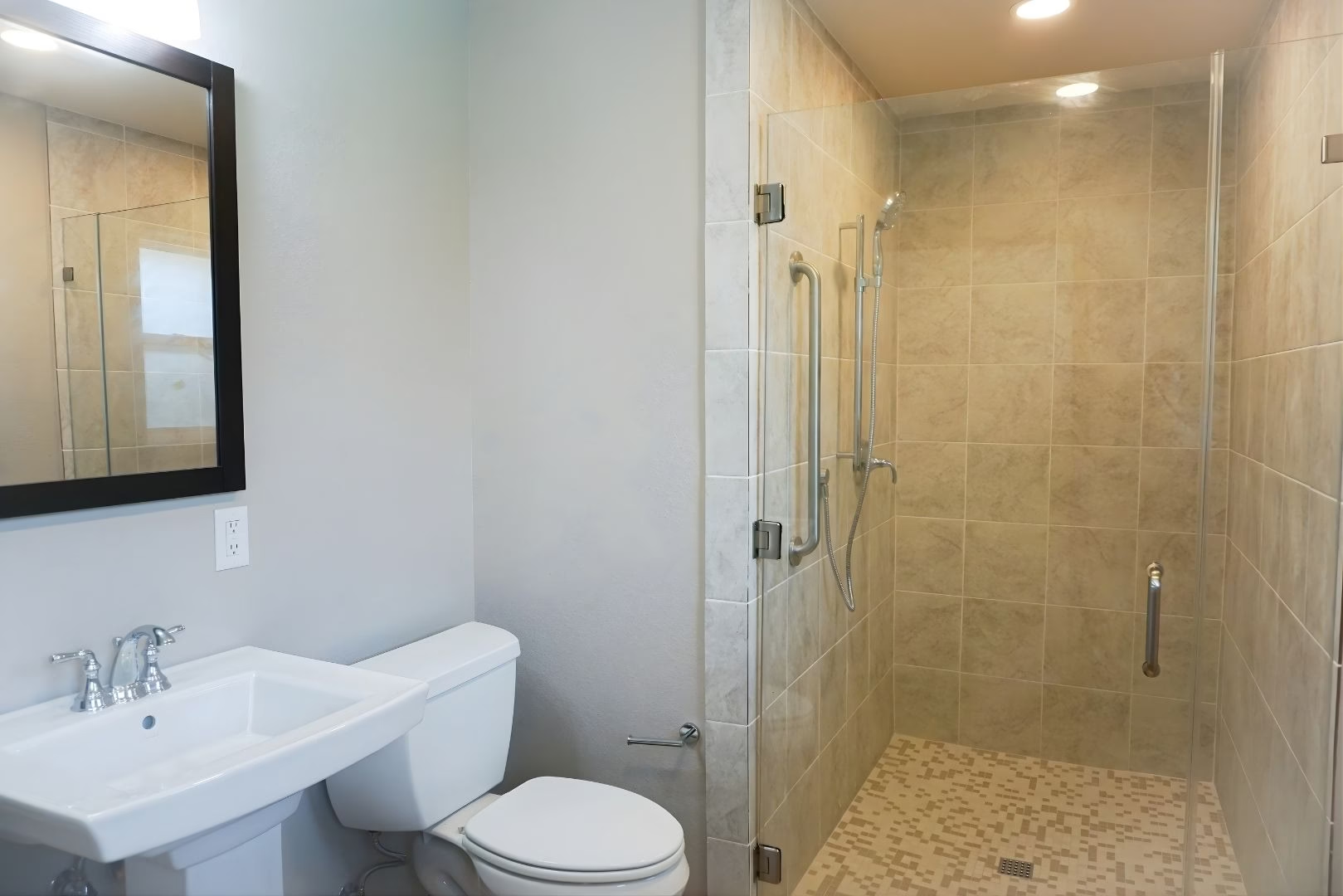
Installing a Curbless Shower
The bathroom was redesigned with a curbless shower. Removing the shower curb eliminated the need to step over a threshold, allowing easier access for those using mobility aids.
The shower floor transitions directly into the bathroom floor without interruption.


Installing an Adjustable Hand Shower
A hand shower mounted on a slider bar replaced a traditional fixed showerhead.
This allows the showerhead height to be adjusted and removed for seated use. Grab bars were installed inside the shower to assist with stability when entering and exiting.

Selecting a Pedestal Sink for Accessibility
Instead of a traditional vanity cabinet, a pedestal sink was installed. The open space beneath allows a wheelchair user to approach the sink more closely.
This reduces the need to bend forward and may help prevent water from splashing onto the floor.


Increasing Lighting Throughout the Suite
Recessed lighting was added throughout the space, along with ceiling fans with integrated lighting in the bedroom and living area.
Lighting needs increase with age. According to the U.S. Department of Energy, adequate lighting improves visibility and safety in residential environments.


Installing a Wheelchair Ramp
A wheelchair ramp was installed at the home’s exterior entry to improve ease of access when entering and exiting the house.
Interior accessibility improvements are most effective when exterior entry points are addressed as well.


The Result
The completed in-law suite now supports:
-
Easier mobility
-
Safer bathing routines
-
Improved lighting visibility
-
Reduced floor transitions
-
Greater connection to the main household
The renovation created a space that prioritizes usability and daily function while allowing the homeowners to provide closer care for their parents.


Lessons for Homeowners Considering an Aging in Place Renovation
If you are considering an aging in place renovation in Bryan–College Station, early planning around accessibility can significantly affect daily comfort and long-term safety.
Important considerations include:
-
Doorway widths
-
Flooring surfaces
-
Bathroom thresholds
-
Lighting levels
-
Exterior entry transitions
Aging in place renovations often focus less on adding features and more on removing obstacles that interfere with mobility.
Frequently Asked Questions
What makes a bathroom suitable for aging in place?
Removing barriers is foundational. In this project, a curbless shower improved accessibility by eliminating the need to step over a threshold.
Why is flooring important in an aging in place renovation?
Flooring affects mobility and fall risk. Smooth surfaces that support wheelchairs and walkers improve ease of movement.
Does lighting really need to change as we age?
Yes. Vision changes over time, and increased lighting levels can improve safety and daily comfort.
Is widening doorways necessary?
Standard door widths can restrict mobility devices. Widening doorways improves maneuverability and future flexibility.