
How to Recognize Greenwashing in Construction Before You Invest in “Green” Upgrades
Greenwashing in construction is the practice of presenting materials or features as environmentally responsible without accounting for their full impact. In homes, this affects how products are chosen and justified. When viewed more completely, it often changes what actually improves long-term performance and sustainability.
What This Means in Residential Design
Most homeowners encounter “green” decisions at the material level. Flooring, countertops, insulation, windows. Each product comes with a story attached to it, often focused on a single positive trait.
Fast growth. Recycled content. Energy production. Low emissions.
Those traits are not false. The problem is that they are incomplete.
A material can perform well in one category while creating unintended consequences somewhere else. Transportation, manufacturing methods, durability, labor conditions, and how it performs over time all shape whether something is truly sustainable.
When those parts of the story are left out, the decision is no longer about sustainability. It becomes about perception.
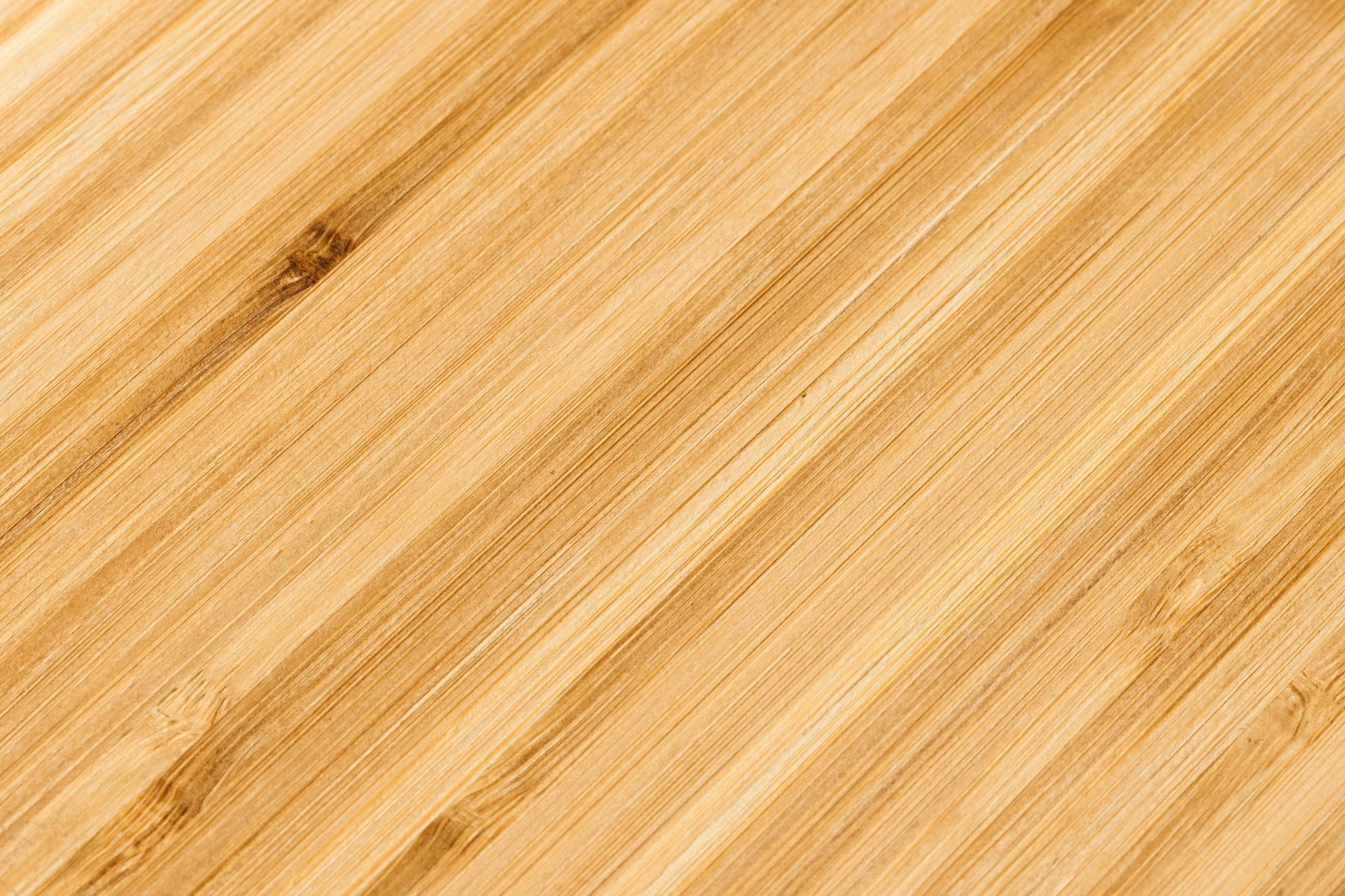
Bamboo flooring is a clear example of how this happens. It is often presented as a rapidly renewable alternative to hardwood. That part is true. Bamboo grows quickly, regenerates without replanting, and can be harvested in high volumes.
But that is only one piece of the equation.
Most bamboo used in the United States is transported across the Pacific Ocean. That introduces fuel use and environmental impact far removed from the jobsite. In regions where bamboo is harvested, increased demand has led to clear cutting, monoculture farming, and erosion on steep terrain. Manufacturing conditions vary widely, and some products have been produced with limited oversight, affecting both quality and safety.
None of this makes bamboo inherently “bad.” It simply shows that the label “green” does not hold up when the full system is considered.
Why This Matters to the Way You Live
Decisions made under the assumption of sustainability tend to carry long-term expectations. Lower impact. Better performance. Healthier indoor environments.
When those expectations are based on partial information, the results often feel disconnected from what was promised.
A home filled with materials chosen for their image rather than their performance can still struggle with comfort, durability, and maintenance. In some cases, it can even introduce new issues that were not anticipated during selection.
This also affects how money is spent.
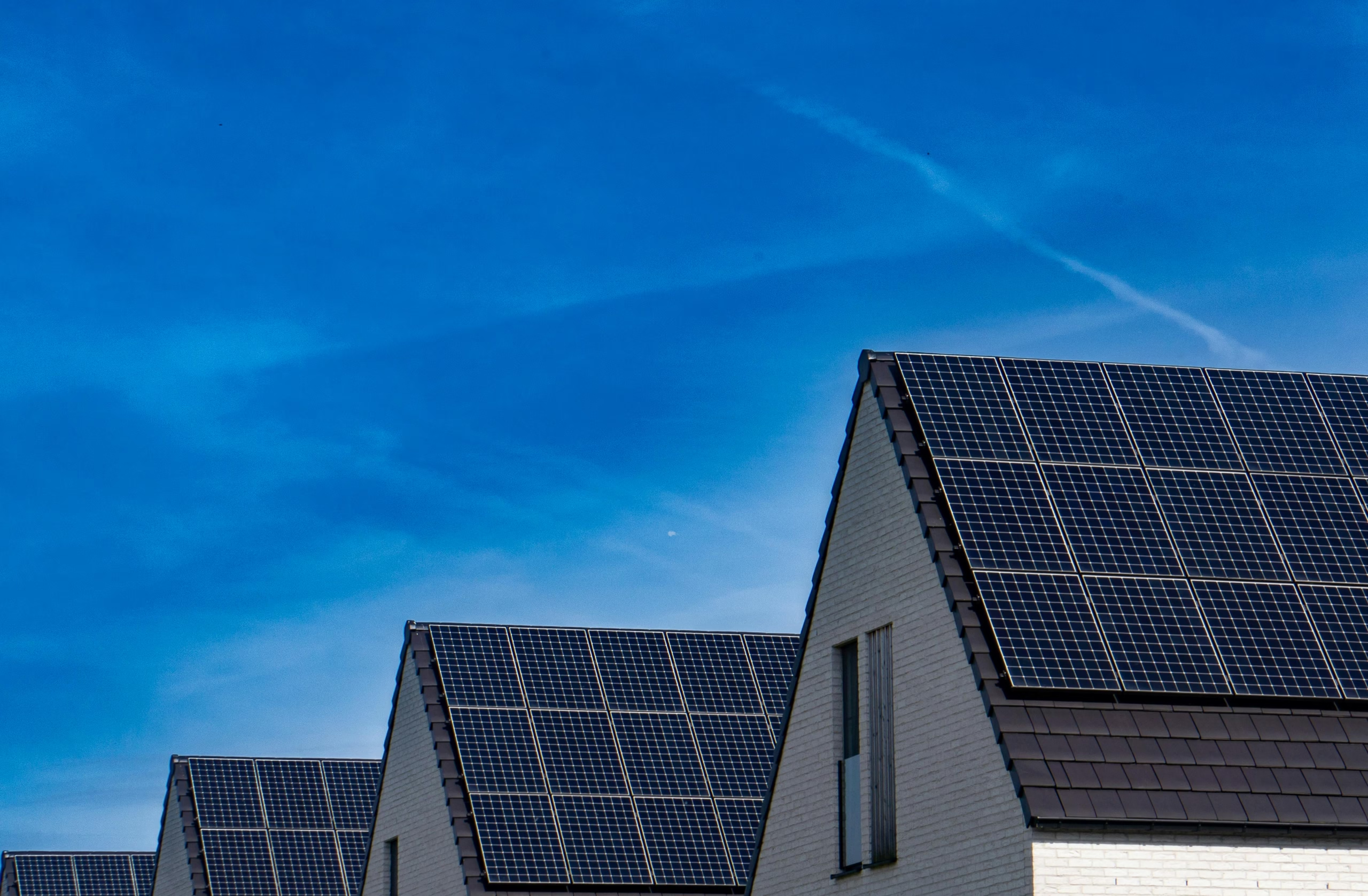
There is a pattern in construction that architect Peter Pfeiffer has described as “eco-bling.” These are visible upgrades that signal sustainability but do not always create the largest impact. Solar panels are a good example. They can be a meaningful part of a well-designed home, but when added to a structure with poor efficiency, they often address the symptom rather than the cause.
Improving air sealing, insulation, and overall building performance can reduce energy demand more effectively, sometimes with a smaller investment. When that foundation is in place, other upgrades begin to make more sense.
Without that context, it is easy to invest in what looks sustainable instead of what actually changes how the home performs.

Common Misunderstandings About “Green” Materials
One of the most persistent assumptions is that sustainability can be assigned to a single product. That a flooring material, appliance, or feature can carry that responsibility on its own.
In reality, sustainability is the result of a system.
It includes how materials are sourced, how they are manufactured, how far they travel, how they are installed, and how they perform over time. It also includes human factors such as labor practices and working conditions.
Another misunderstanding is that visible features are always the most meaningful ones. Elements that draw attention often feel like progress, even when less visible improvements would have a greater effect.
This is how greenwashing takes hold. It simplifies a complex system into something that can be marketed and easily understood, even if that understanding is incomplete.

How This Shows Up in Real Homes
These decisions rarely happen in isolation. They are part of a larger set of trade-offs that shape how a home functions.
A flooring selection might be influenced by sustainability claims without considering durability in a humid climate. A highly visible upgrade might take priority over improvements that affect comfort throughout the entire home. Materials may be chosen based on origin stories while overlooking how they respond to moisture, wear, or daily use.
Over time, those choices begin to show up in subtle ways.
Rooms that are harder to keep comfortable. Materials that do not age as expected. Systems that require more adjustment than anticipated. None of these are usually traced back to a single decision, but they are often connected to how those decisions were made.
When sustainability is approached as a complete system rather than a label, those outcomes start to align more closely with expectations.
How Stearns Design Build Approaches This
Most homeowners are not looking to evaluate global supply chains or material sourcing practices. They are trying to make good decisions for their home without being misled.
That is where guidance matters.
Our approach is to slow the conversation down early and expand the context around each decision. Instead of focusing on whether a product is labeled “green,” we look at how it fits into the performance of the home as a whole.
This includes how materials interact with the local climate, how they contribute to comfort and durability, and how they support long-term use. It also means asking questions that are not always part of the marketing story, so decisions are based on complete information rather than partial claims.
The goal is not to avoid certain products or promote others. It is to build a clear understanding of what each choice creates over time, so the finished home supports the way it is meant to be lived in.
Frequently Asked Questions
What is greenwashing in construction?
Greenwashing in construction is when materials or features are presented as environmentally friendly without accounting for their full impact. It often highlights one positive trait while leaving out factors like manufacturing, transportation, durability, or long-term performance.
Is bamboo flooring a sustainable option?
Bamboo can be a renewable material, but its sustainability depends on how it is grown, processed, and transported. When those factors are considered together, it does not always perform as a low-impact option in every situation.
Are visible “green” upgrades always worth it?
Not always. Some highly visible upgrades can be effective, but they may not create the largest impact if the home’s underlying performance has not been addressed first. Improvements to efficiency and building performance often shape long-term results more directly.
How can homeowners avoid greenwashing?
The most effective approach is to look beyond individual claims and understand how a decision fits into the home as a whole. Asking how a material is sourced, how it performs over time, and how it interacts with the rest of the home can reveal whether it truly supports sustainability.